The International Press Institute (IPI) today welcomes the passing of a law by the new Tisza government which overhauls the Orbán-era framework governing the country’s public media and media regulatory bodies as an important first step towards restoring press freedom.
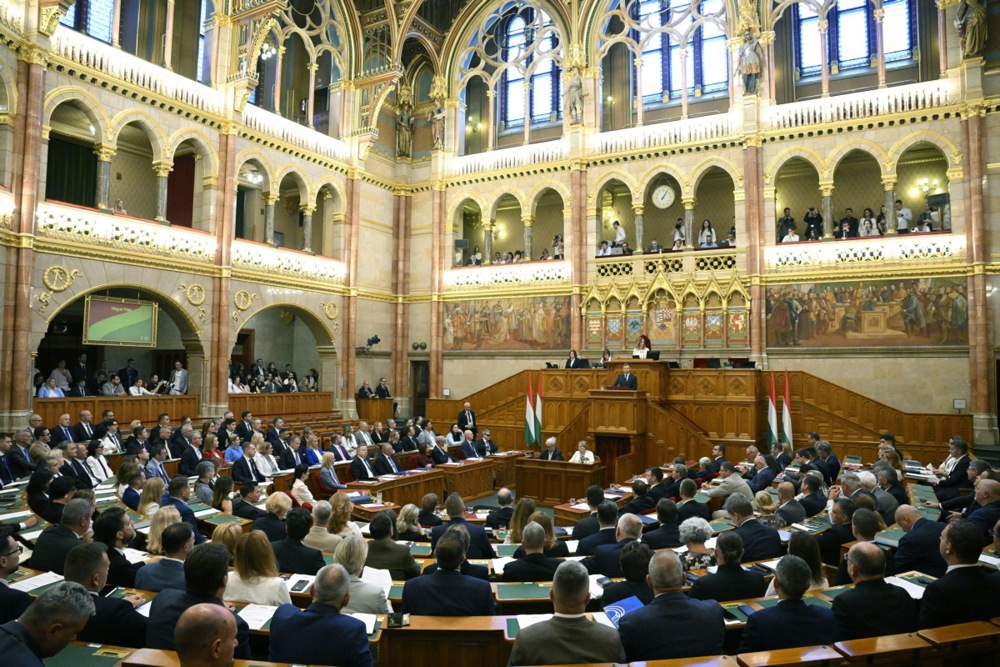
The media law was passed by the parliament on 23 June, a month-and-a-half after the party assumed office after a sweeping election victory. The bill was submitted to parliament on 12 June and passed in an expedited process without public consultation, amidst wider EU mandated reforms.
The new media law significantly amends the governance structures of the public media and the media regulation bodies, and establishes a new multi-year model for funding the public media. The law also establishes a new Press Fund aimed at supporting community and minority media.
According to a preliminary assessment by IPI, the law contains a number of positive elements that should serve as a framework for restoring independence to the public service broadcasting and depoliticising the media regulator – two elements of media freedom severely eroded under Fidesz rule.
In IPI’s view, although the bill was passed in an expedited process, the law represents a rule-of-law oriented effort to dismantle the country’s politically captured media system and appears to align domestic legislation with key elements of the European Media Freedom Act (EMFA).
In this context, IPI welcomes the public commitment by Judit Grósz, the Ministerial Commissioner responsible for the transformation of public media, that this immediate law will be complimented by a “comprehensive” media reform bill in the autumn which will undergo a standard public consultation.
While IPI recognises the justification for a fast-track procedure in securing immediate media reforms post-election, for the next stage of reforms IPI urges Tisza to include the expertise and perspectives of domestic and international civil society during a public consultation.
As outlined in IPI’s initial recommendations, this should be complimented by the establishment by Tisza of a high-level parliamentary working group tasked to develop a comprehensive and holistic plan for media reform, supported by independent media experts, domestic civil society and academics.
IPI also urges the new government to ensure this initial legislation is now followed with further reforms, particularly on state advertising transparency, media ownership transparency and media concentration. Ahead of the election, IPI outlined our top 10 priorities for media reform.
IPI Director of Advocacy Amy Brouillette said: “This legislation is a welcome first step in the wider set of reforms required to free Hungary’s media from political control and protect it from future state capture. Tisza truly has a historic opportunity to lead the way — in the region and beyond — in developing a model framework for building a genuinely independent media system.
“We welcome the government’s stated commitment to continuing these reforms in the autumn, and urge it to open that process to domestic and international media freedom and civil society expertise — ensuring it is participatory and inclusive of a wider array of legal, regulatory, and market reforms. This will also help ensure that the resulting framework — as well as the process for developing it — serve as an innovative model for other countries emerging from autocratic rule.”
- Analysis: Tisza’s victory offers historic opportunity for media freedom reform in Hungary
- Hungary: IPI outlines 10 media freedom reform priorities
This statement was coordinated by IPI as part of the Media Freedom Rapid Response (MFRR), a Europe-wide mechanism which tracks, monitors and responds to violations of press and media freedom in EU Member States and Candidate Countries
