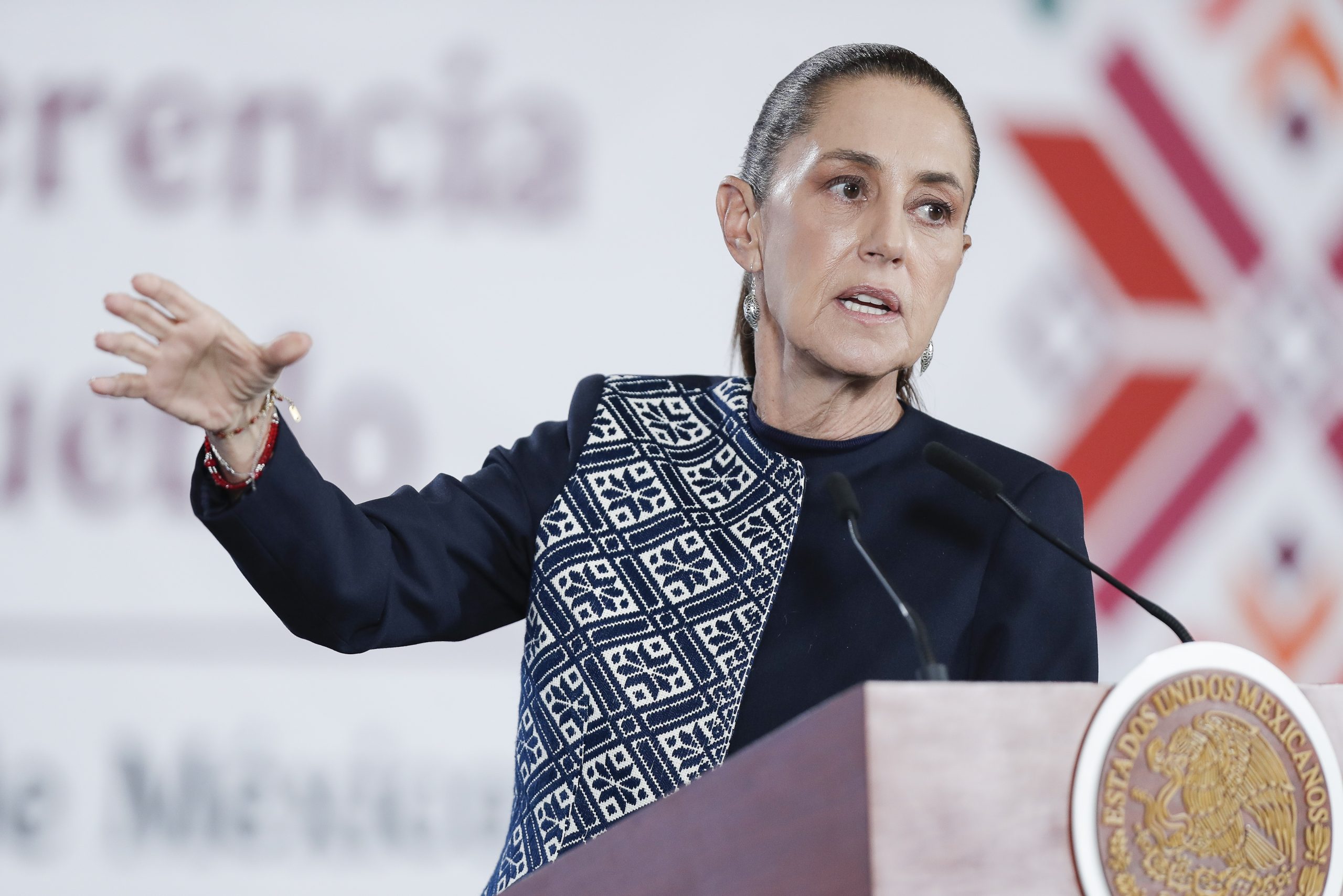
Following the violent killings of seven Mexican journalists in the first seven months of 2026, the International Press Institute (IPI) urgently demands the government of President Claudia Sheinbaum take immediate action to halt the spiral of violence against members of the press, in line with her stated commitment to defend the safety of journalists.
Nearly two years after President Sheinbaum took office in October 2024, promising to strengthen protections for journalists working in the country, Mexico remains one of the most dangerous countries in the world to be a journalist.
While Mexico has several regional and national measures for the protection of journalists, these mechanisms have largely failed to stop killings of members of the press. At particular risk are local journalists, who often cover sensitive topics including official corruption, organised crime, and environmental issues — many of which are interlinked.
At least one of the journalists killed this year was under state protection at the time of his death, and many more had reported or otherwise publicised threats they had received in connection with their reporting prior to their murders.
At the same time, the vast majority of killings of journalists in Mexico go unsolved, with few perpetrators facing justice. Even in cases where arrests are made of those directly responsible for carrying out the killings, the so-called “masterminds” behind the attacks often elude justice. The national and federal government’s failure to conclusively, transparently, and credibly investigate killings of journalists has only emboldened further violence, creating a vicious cycle of impunity.
“Mexico’s entrenched violence against journalists reflects the systemic failure of successive Mexican governments to protect journalist safety”, said IPI Executive Director Scott Griffen. “The escalation in attacks in the first half of this year shows that the Sheinbaum administration has failed to address this deep crisis, despite the president’s pledges to safeguard press freedom and combat impunity.”
“IPI calls on President Sheinbaum to take effective action — in line with the campaign promises she made — to protect Mexico’s journalists. This must include breaking the cycle of impunity by ensuring that the perpetrators of crimes against the press are held accountable as well as reforming and strengthening existing mechanisms for protecting journalists.”
An uptick in killings
Seven journalists have been killed in Mexico in 2026 alone, many of which are concentrated in the Mexican state of Veracruz, which has long been a particularly dangerous place for the practice of journalism amid the persistent presence of powerful drug cartels and organised crime groups.
On January 8, Carlos Castro, director of Codigo Norte Veracruz, which covers crime, became the first journalist to be killed in Mexico in 2026 after he was shot at a restaurant in the city of Poza Rica, Veracruz.
Castro had returned recently to Veracruz after temporarily leaving the state due to threats he had received from municipal police officers. After attending the journalist’s funeral, Castro’s partner and a friend were reported missing by their families. No arrests have been reported at the time of this statement’s publishing.
Juan David Gámez, who managed local news channel Táctica SS, which reported on police activity and organised crime, was shot and killed on March 18 while riding his motorcycle near his home in the Mexican state of Nuevo León. Days before his death, he posted online about threats he had received. No arrests have been reported at the time of this statement’s publishing.
Luis Ángel López Valdez, a crime reporter with Vanguardia de Veracruz, was killed on June 11, also in Poza Rica, after being shot at least 18 times by unidentified armed men while travelling in a taxi. López Valdez had reportedly previously received threats from public security officials related to his work. No arrests have been reported at the time of this statement’s publishing.
On July 3, journalist Roxana Guzmán, who directed Veracruz news outlet Pulso Informativo del Sureste, which covers crime news, was confirmed dead by authorities nearly a month after a video documenting her violent abduction from her home by unknown armed individuals went viral. Eight individuals have been arrested in connection with Guzmán’s killing, including four municipal police officers who authorities said provided support to her killers.
The same day Veracruz authorities confirmed Guzmán’s killing, the Human Rights Commission of the Mexican state of Guerrero confirmed the death of freelance journalist Manuel Alejandro Moreno Serna (known as Alex Serna), whose remains had earlier been discovered by local authorities in a metal drum on the side of a highway.
Serna, who had gone missing weeks earlier, had received death threats related to his recent reporting on alleged environmental violations perpetrated by local companies and authorities. No arrests have been reported at the time of this statement’s publishing.
On July 16, Josué Martínez was shot and killed in a drive-by shooting near his home in the Mexican state of Puebla in front of his young son. Martínez was the director of Noticias San Martin Texmelucan, a local outlet specialising in security issues. He had reportedly received threats in the months before his killing connected to his reporting on local officials. A week after his killing, a local official was arrested after he reportedly attempted to bribe investigators.
Less than a week later, veteran journalist Francisco Leyva was killed on July 22 in the Mexican state of Oaxaca after gunmen on a motorcycle shot him while he was sitting in a chair eating at a local food stall.
Leyva worked for the Oaxaca state public broadcaster and was known for his reporting on official corruption and links between government actors and organised crime. He had previously reported receiving death threats in connection to his work. Days after his death, the Mexican state Attorney General’s office announced it was taking over the investigation into Leyva’s killing.
IPI has reached out to the Guerrero, Nuevo León, Oaxaca, Puebla, and Veracruz state attorney general’s offices requesting updates on the status of all of these cases.