As the world marks International Day to End Impunity for Crimes Against Journalists, IPI today calls on the international community to take urgent and concrete steps to end the global crisis of impunity and uphold their obligations under international law to investigate, prosecute, and punish crimes committed against members of the media. We reiterate our 2025 General Assembly resolution calling on states to exercise the political will necessary to tackle rampant impunity for crimes against the press – which is strengthening authoritarianism around the globe.
Around the world, the free press is under threat – and journalists are facing an increasingly complex threatscape. Attacks on journalists and independent media are intensifying – not only in number, but also in their sophistication and ferocity – reflecting an increasingly hostile environment for the press.
This includes legal harassment, online threats, and ever more sophisticated modes of surveillance to physical attacks – and in the most serious cases, the killing of journalists. Yet in nearly all cases, such crimes go unpunished. This impunity prevails despite states’ international commitments to ensure accountability and years of efforts by advocates urging concrete action to end this global epidemic.
The failure of states to take real action to address this crisis of impunity has hastened the erosion of human rights and the rule of law, as authoritarianism gains ground in many parts of the world.
Journalists inform the public, share ideas and opinions, and hold the powerful to account for actions and decisions that impact the public’s rights and freedoms. Together with other independent institutions, the media are indispensable to the system of checks and balances at the heart of functioning democracies and of free societies.
Attacks on the press therefore strike at the heart of democracy itself – undermining the independent institutions that protect free societies from tyranny and unchecked power.
Nowhere is the crisis of impunity more evident than in Gaza. At least 235 journalists have been killed by Israeli forces – many deliberately targeted – since the start of the war two years ago, making this the deadliest conflict for journalists on record. Just days after the war began, Reuters journalist Issam Abdallah was killed by an Israeli strike in Lebanon, in what a new UN investigation has found was a targeted attack. Since Abdallah’s death, not a single case has been credibly and independently investigated. This includes photojournalist Mariam Abu Dagga – an IPI World Press Freedom Hero – who was killed in an Israeli strike in August 2025.
The total impunity for the killings of journalists in Gaza represents a dangerous breakdown of international law and rules of war – and sends a clear signal that journalists anywhere in the world can be targeted and killed without repercussions, and the international community will do little or nothing to stop it.
Entrenched impunity for crimes against the press is rampant in many parts of the world – inside conflict zones and out – including in Haiti, Mexico, Sudan, and Ukraine. According to IPI monitoring, 17 journalists have been killed during Russia’s war on Ukraine in connection to their work. Among the stark examples is the brutal murder of 27-year-old Ukrainian journalist and IPI 2025 World Press Freedom Hero Victoria Roshchyna, who died in Russian captivity in 2024. Russian authorities informed her family she had died while in prison, without explanation.
Since the outbreak of civil war in Sudan in 2023, journalists have faced intimidation, detention, violence, and killings, with no accountability for perpetrators. In Haiti, journalists are targeted amid spiraling gang violence and political instability, with killings and kidnappings of journalists met with total impunity. In Mexico, journalists covering corruption, crime, and local politics are routinely murdered or disappeared, making it one of the deadliest countries for journalists outside active war zones, with impunity levels among the highest in the world.
Justice delayed, denied
Under international law, states must investigate and prosecute such violations, yet most often authorities fail to meet these obligations. Deadly attacks on journalists go unpunished, and when cases do advance, justice is slow and incomplete – achieved largely through the persistence of victims’ families and civil society.
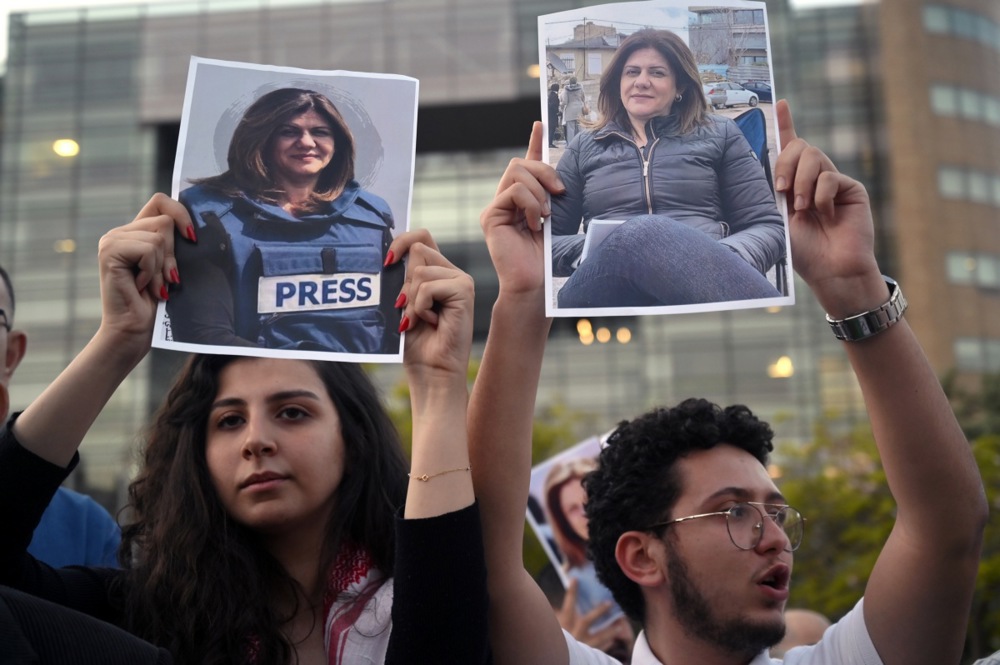
Since IPI’s 2022 campaign highlighting 11 key cases of journalists who have been killed with full or partial impunity, very few have seen any progress toward accountability. In the cases of veteran Palestinian-American journalist Shireen Abu Akleh and Washington Post columnist Jamal Khashoggi – which made headlines around the world – hopes for justice have all but evaporated as the governments involved have failed to pursue credible, independent investigations and hold those responsible accountable.
In many cases, justice grows ever more elusive with each year of inaction by authorities. Such has been the case with Mexican crime reporter Regina Martínez Pérez, who was beaten and strangled to death inside her home in 2012. Despite failing to credibly solve her murder, the investigation into her killing – which was marked with numerous irregularities – was closed by authorities and never reopened.
When progress toward justice does occur, it is often partial and delayed. In June 2025 – more than eight years after the murder of Maltese journalist Daphne Caruana Galizia – two gang members received guilty verdicts for supplying the car bomb used in the assassination. Yet while five individuals have now been found guilty of participating in the hit, the alleged mastermind is still awaiting trial early next year, and was released on bail in February 2025.
In India, the trial to bring those responsible for the 2017 shooting of journalist Gauri Lankesh to justice has dragged on for more than three years, with no end in sight. In some cases, legal proceedings to prosecute those who commit crimes against journalists have been abandoned completely. In October 2025, a Ghanaian court dismissed the legal case against the primary suspect in the 2019 brutal killing of journalist Ahmed Hussein-Suale, claiming insufficient evidence.
This year, after more than 34 years, the Colombian government finally accepted full responsibility for the 1991 murder of two journalists from newspaper El Espectador – showing how long justice can take. In many cases, it is only through the relentless determination of a slain journalist’s family and colleagues, and the sustained advocacy of civil society, that justice is finally served.
Progress requires political will
These cases highlight the global nature of the crisis of impunity and accountability in which blatant violations of laws and norms by the powerful have become routine, and perpetrators face little or no risk of justice. Impunity for these crimes is like a contagion: eroding the rule of law, weakening trust in democratic institutions, and fueling further violence. It sends a clear and chilling message that journalists and other public watchdogs can be harassed, silenced, or even killed without consequence.
What is clear is that laws and international agreements alone are not enough: it requires political will and political leaders who are committed to upholding the rule of law – and who believe in free societies and the rules and rights-based order – to stand up for these commitments and principles in practice. This means they must investigate, prosecute, and punish crimes against journalists – even when the pursuit of justice means holding political allies and powerful elites to account.