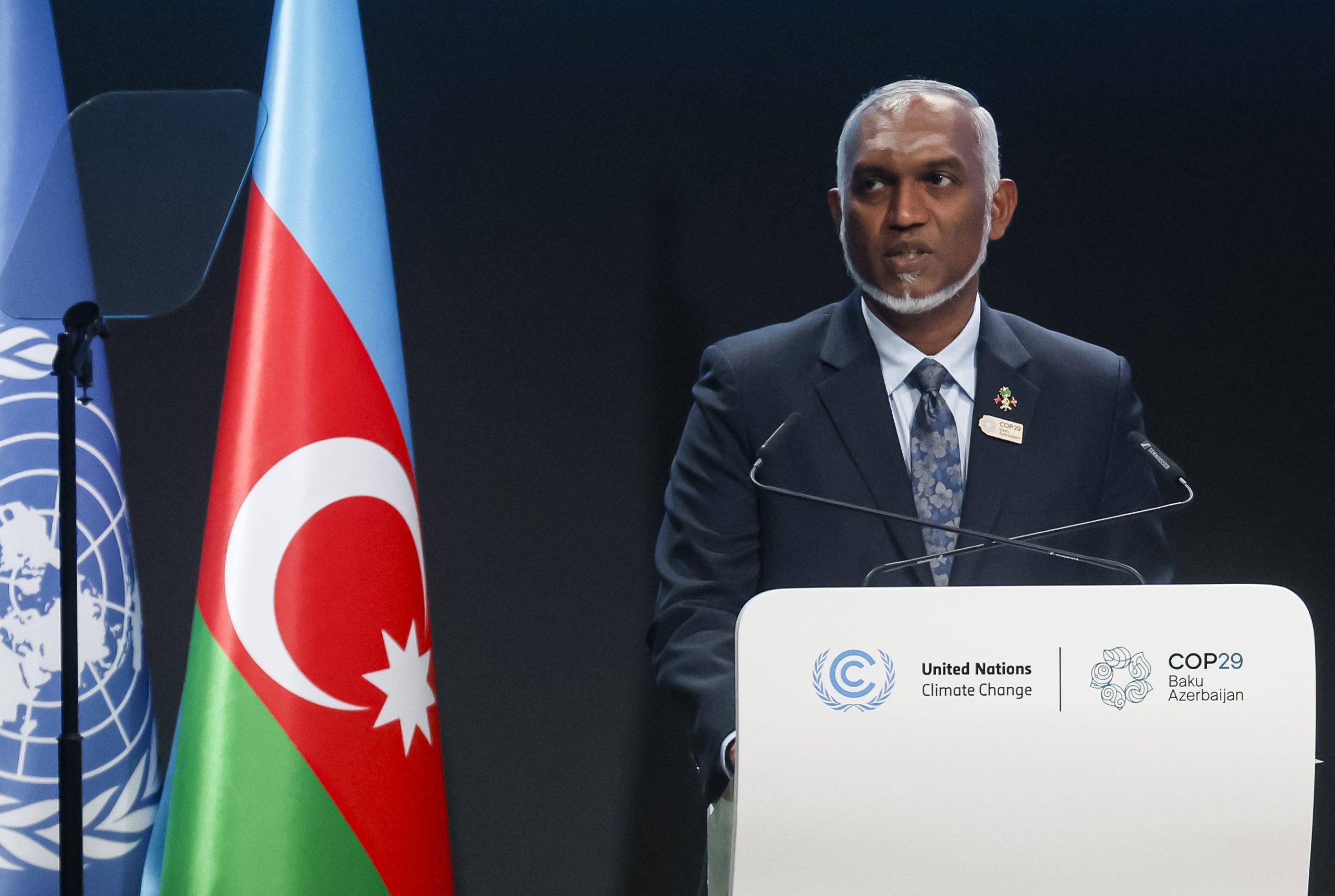
The International Press Institute (IPI) joined six press freedom and human rights organisations in writing to Maldives President Mohamed Muizzu expressing concern over an April 27 police raid of Adhadhu News’s office, during which reporting equipment was seized and several journalists were placed on travel bans. In the letter, the groups urge President Muizzu to reverse course immediately and reaffirm the Maldives’ commitment to press freedom and media independence.
Read the full letter:
Your Excellency President Dr. Mohamed Muizzu,
We, the undersigned press freedom and human rights organizations, write to express our serious concern about the recent action taken by Maldivian authorities against independent news outlet Adhadhu News and the wider implications of this for press freedom in the country. We urge your government to swiftly reverse course and reaffirm your commitment to a free and independent press.
On April 27, police officers from the Serious and Organized Crime Department raided Adhadhu’s office in Malé, seizing journalists’ laptops and hard drives. The search warrant cited Section 612(a) of the Penal Code, referring to the offense of “Qazf” – the false accusation of adultery under Islamic law – as grounds to search for evidence related to the “Aisha” documentary, which alleged presidential misconduct and abuse of office. The raid took place on the same day an Adhadhu journalist publicly questioned Your Excellency about those allegations during a televised press conference.
Authorities subsequently imposed travel bans on Adhadhu CEO Hussain Fiyaz Moosa and Managing Editor Hassan Mohamed, and summoned senior staff for questioning. Taken together, these developments appear to indicate your government is using the criminal justice system to intimidate journalists and obstruct reporting on matters of public interest.
We also note with concern the increasing use of broadcast restrictions and technical “broadcast safety” requirements — such as the 60-second delay — as a pretext to censor real-time political discourse. The Maldives Media and Broadcasting Commission (MMBC) in late April ordered Channel 13 to halt its live transmission of opposition protests, and in August last year suspended the station’s live feed of a People’s National Front rally. Centralizing media oversight under the MMBC in September 2025 has seemingly facilitated these self-initiated (suo moto) investigations, which disproportionately target dissent and restrict the public’s right to witness peaceful political assembly. Restrictions on reporting peaceful political assemblies must meet strict tests of legality, necessity, and proportionality.
We believe these developments have highlighted several urgent press freedom issues. Firstly, the use of criminal law in response to contentious reporting; secondly, unreasonable government searches and seizures in connection with journalists’ reporting; and finally, arbitrary use of travel bans and police summons to target media workers.
Under the Criminal Procedure Code of the Maldives, mandatory safeguards govern the search and seizure of computer data within privileged professional domains, such as journalism. These provisions require courts to explicitly account for the privileged nature of journalistic material when issuing warrants. Critically, the code stipulates that such data may only be searched or inspected in the presence of a representative from a professional industry body — a safeguard designed to protect confidential sources and editorial independence. Furthermore, law enforcement is legally restricted to accessing or confiscating material relevant to the specific investigation only, prohibiting the wholesale seizure of newsroom equipment that interferes with a media outlet’s ability to function.
We respectfully urge your government to:
- Publicly reaffirm the Maldives’ commitment to press freedom and media independence.
- Immediately return all materials seized from Adhadhu and protect confidential source information. Lift without delay the travel bans imposed on Hussain Fiyaz Moosa, Hassan Mohamed, and any other journalists.
- Cease coercive police measures against Adhadhu staff in connection with the Aisha documentary.
- Ensure media disputes are addressed through civil remedies and independent regulation, not criminal prosecution.
- Ensure that all coercive measures against journalists — including searches, summons, and travel restrictions — comply with due process requirements in the Maldives Constitution and Criminal Procedure Code, and with international human rights law, and are subject to meaningful, independent judicial oversight.
- Refrain from using regulatory bodies and technical requirements to arbitrarily obstruct or halt the live broadcast of peaceful political assemblies and opposition events, ensuring all such measures align with the International Covenant on Civil and Political Rights.
- Guarantee independent oversight of any investigation involving allegations against senior public officials.
The Maldives has earned recognition in the past for periods of vibrant public debate and media freedom. The precedent set by the raid on Adhadhu, the travel bans on editors, and punitive restrictions on reporting risk undermining that record.
We note that in the 2026 RSF World Press Freedom Index, the Maldives ranked 108th out of 180 countries, falling four places from 2025. These rankings should serve as an opportunity for your government to strengthen its commitment to press freedom and implement the structural reforms necessary to protect journalists.
How your government responds in the coming days will be watched closely by the Maldivian public and the international community. We urge your administration to choose restraint and accountability, and to uphold the fundamental rights to freedom of expression and a free press guaranteed under Articles 27 and 28 of the Constitution of the Maldives. Protecting these rights is essential to the democratic governance your administration has pledged to defend.
We stand ready to engage constructively with your office and relevant institutions in support of these aims, and we will continue to monitor developments closely.
Yours respectfully,
Committee to Protect Journalists (CPJ)
CIVICUS: World Alliance for Citizen Participation
FORUM-ASIA
Human Rights Watch (HRW)
International Press Institute (IPI)
Reporters Without Borders (RSF)
Robert & Ethel Kennedy Human Rights Center