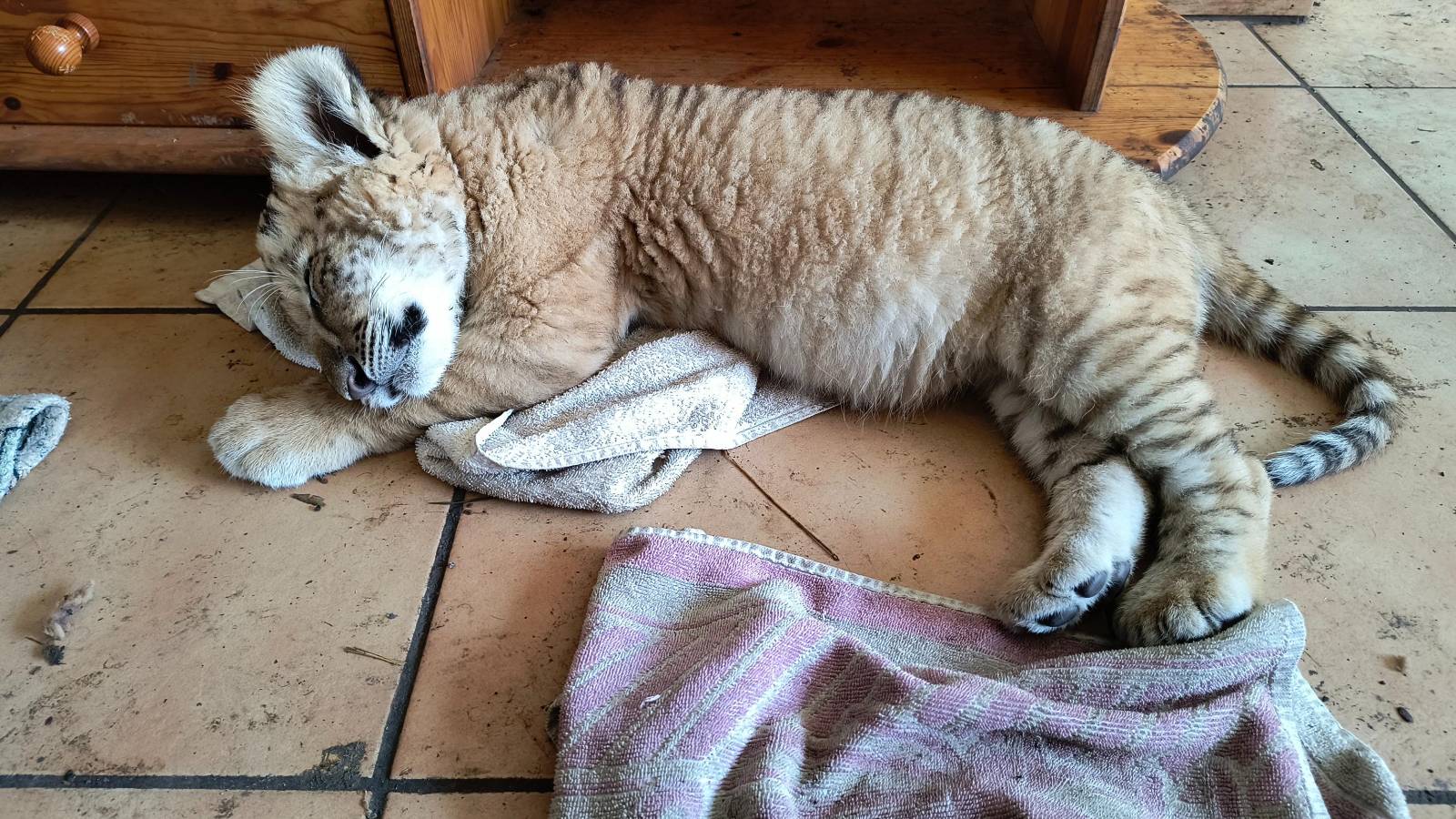
Goliath, a rare lion-tiger hybrid born prematurely in May 2025, was just weeks old when visitors began handling and photographing him at Noah’s Ark backyard zoo in Suceava, Romania. He never had a chance at a normal big cat life.
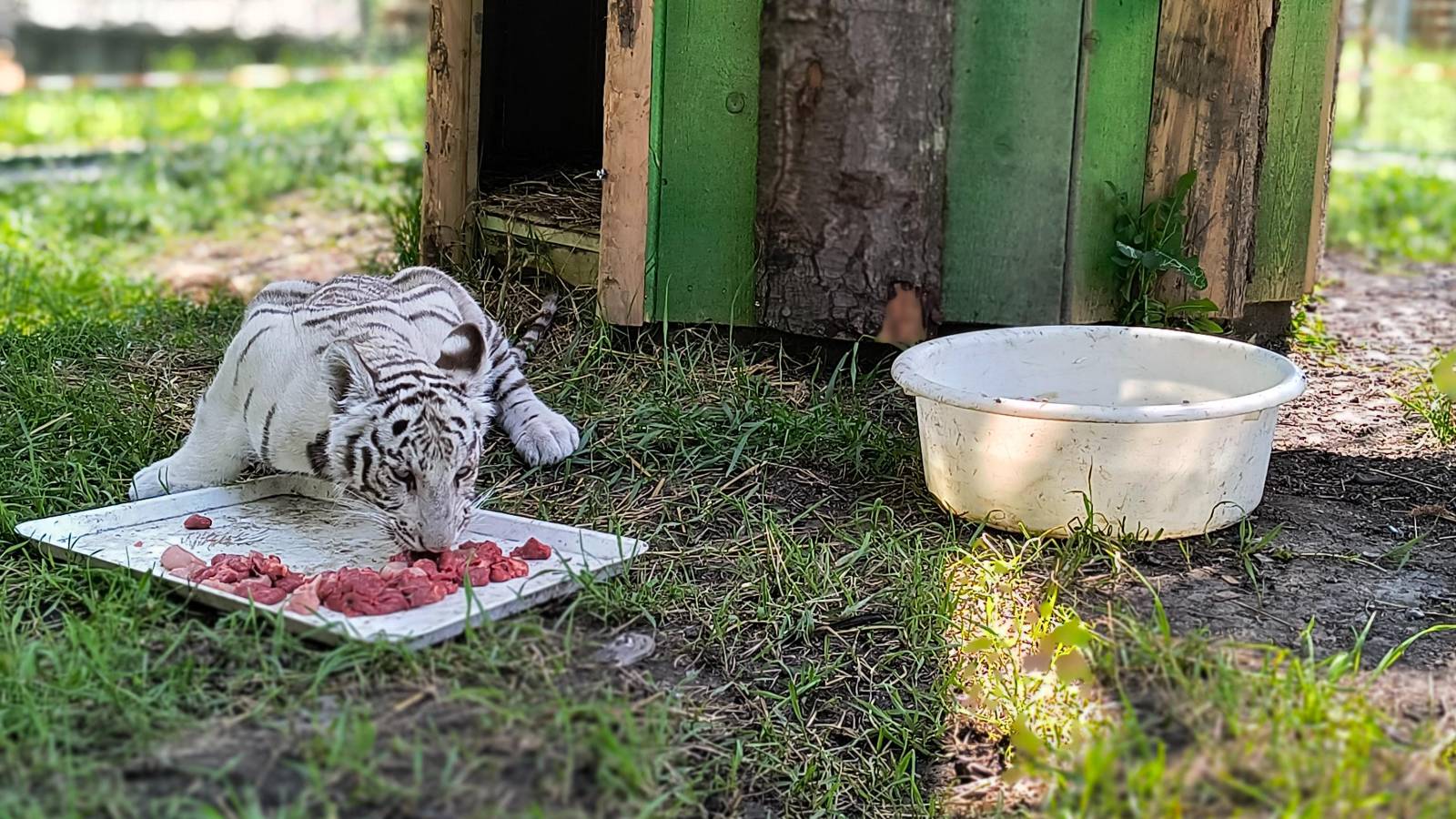
For an admission fee of 50 lei (€10), zoogoers could also interact with Fina, an injured white tiger. At a second zoo, officially closed, corvids, lions, a hawk, and a wolf-Akita hybrid languished in cages, watched only by a guard dog.
The exotic animal trade in the European Union is thriving. The reason? A web of legal loopholes and inconsistent enforcement, according to a cross-border investigation supported by IPI’s IJ4EU fund.
Protected animals do not require permits under the UN Convention on International Trade in Endangered Species of Wild Fauna and Flora (CITES) if declared captive-bred or in transit, and breeders can falsely label wild-caught animals as captive-bred — something authorities cannot easily verify without DNA testing.
Meanwhile, open Schengen borders make the movement of animals relatively easy. And there is no EU-wide definition of companion animals, meaning what is illegal to keep as a pet in one country may be legal in another.
“What we found, when we were in Albania for example, is that there is a trafficking route from Romania to Albania for wild animals,” journalist Michael Bird told IPI in an interview.
Noah’s Ark, owned by construction boss-turned-zookeeper Dorin Soimaru, is just one of many facilities operating in these grey zones, where weak oversight and fragmented laws allow the trade to flourish.
“Soimaru seemed to get a lot of animals from Slovakia,” Bird said. “There seems to be a lot of animals from Czechia, as well. It is a very internationalised trade.”
Bird, alongside journalists Ovidiu Stancu, Vjosa Cerkini, and Damira Kalac, conducted the investigation Animal Hustlers, which delved into the breeding, trade, and exploitation of exotic animals in the EU.
The project resulted in a multimedia special report, a documentary, and a slew of articles in English, Romanian, Montenegrin, Bosnian, and Albanian.
Bird and Stancu have a long history of working on animal welfare investigations. In 2023, they conducted an IJ4EU-funded investigation called Bears Uncovered, which lays bare a conservation crisis affecting 26 countries in Europe in which bears live in the wild. Their experience has led them to develop a sixth sense for knowing when something involving animals is off.
Whenever Soimaru acquired a new animal, he would go to the local media to show it off. Bird and Stancu had a feeling something criminal might be happening, and they decided to dig deeper. The first step was to go and see Noah’s Ark as ordinary visitors.
“You see the condition the animals are under and you think, well, obviously these news reports are not really accurate or they are missing things and there is something very bad happening,” Bird said.
Under-cover infiltration
Bird and Stancu then infiltrated Noah’s Ark by disguising themselves as business owners working in Dubai, representing a made-up Libyan soon-to-be zoo owner, Ahmed Al-Sadek.
Preparations were thorough. The team thought of how to dress. Fake Gucci or a fake Rolex would not constitute a credible character. They had to use fake names, but these had to be explainable should they accidentally drop their IDs while in the zoo.
They created a website for a fictitious Tripoli zoo, complete with invented animals like Milly the snake and Pistachio the camel. If Soimaru had asked to speak to “Mr Al-Sadek”, a Libyan contact in London was ready to take the call.
In the end, Soimaru had no interest in the webpage nor speaking with the Tripoli zoo-owner, because he does not speak English.
“What goes to show with these projects is that there is so much that you build that you don’t use or you don’t see,” Bird said. Stancu added that with an investigation like Animal Hustlers, it’s better to be overprepared.
For months, the journalists returned once or twice a week, gradually cultivating a “friendship” with Soimaru.
“It is a question of psychology,” Bird said. “At the beginning, he wonders who you are and what you want. And then you are there so often, he starts to hope you are coming this week.
“It’s kind of like when you become friends with someone. Sometimes you forget the first time you met them or why you met them… Once you gain their friendship, they cease to question your motivation for being friends.”
At the zoo, the pair had to act convincingly while juggling multiple tasks. Soimaru liked to drink and pressed them to join him, but when he wasn’t looking, Bird discreetly poured his drinks back into the bottle to stay sober. All the while, they were recording, asking questions, and helping with chores around the zoo.
There was a constant risk the owner would grow suspicious, jeopardising months of work. But the promise of profit kept him engaged — a pattern Bird and Stancu had also seen in fur-farm investigations. With margins tight, operators tend to seize any opportunity and push to make a deal.
The main driver of the success of this project was the promise of an acquisition of an animal, Bird and Stancu agreed.
Doing all this under constant strain and fear was no easy task.
The outcome
But even harder for Bird and Stancu, who are both animal lovers, was witnessing the suffering of Soimaru’s animals.
“You go into a situation whereby you see animals in pain, and your immediate reaction is you have to extract those animals from that situation, you have to take them out,” Bird said.
“And the problem is that you’re also there to get the story so that maybe in the future something more comprehensive can happen like they can close down the zoo or rehome the animals.”
Eventually, Soimaru’s trust ran so deep that he left Bird and Stancu in charge of the zoo while he went off to run errands.
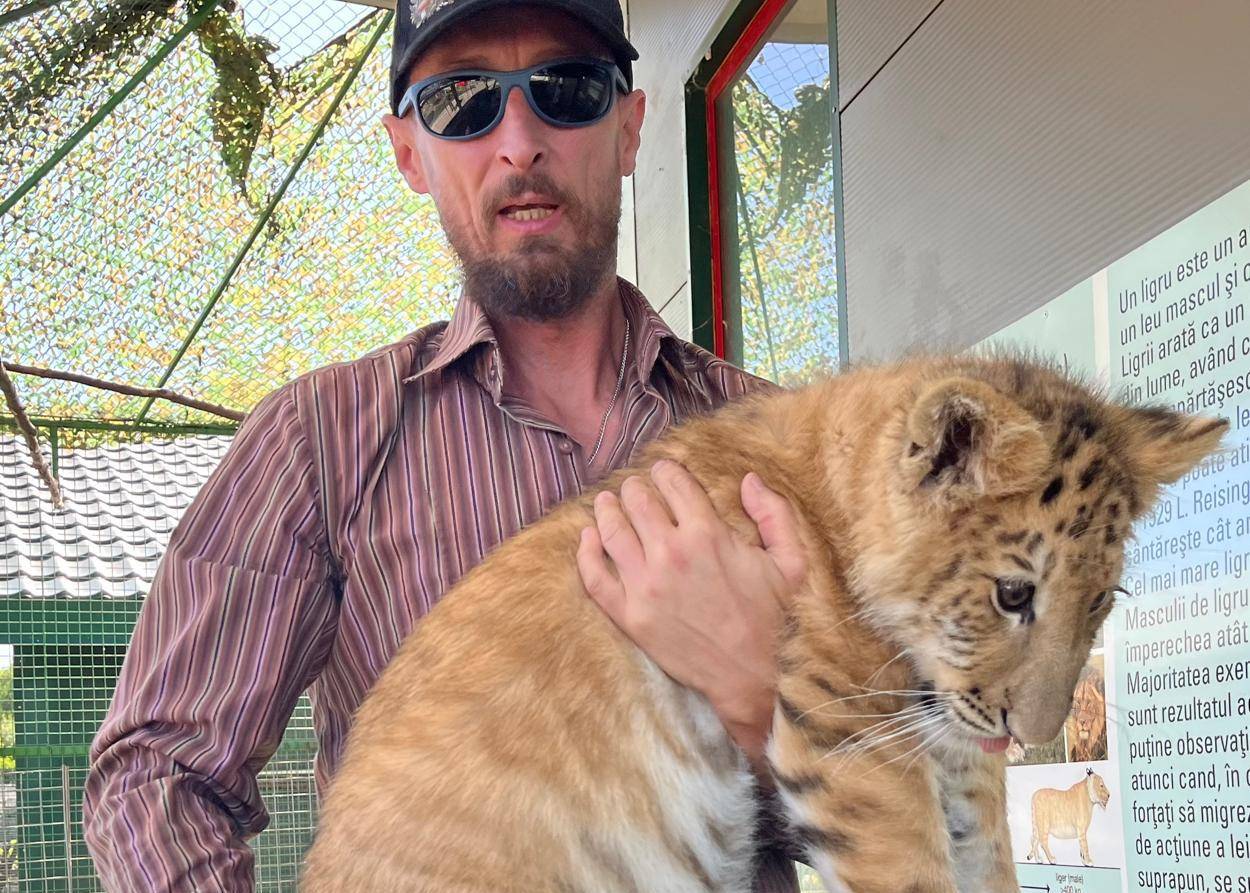
“At some point, Ovidiu was holding the liger, Goliath, and taking him to sleep for a little while, and he said to me, why don’t we just take him now in the back of our car?” Bird recalled.
While that would have been easily doable for the crew, legally that would have been theft. Bird and Stancu had to trust in their investigation and hope it would bring real consequences.
However, the outcome proved frustratingly incomplete.
Before publication, the Animal Hustlers team shared footage of Noah’s Ark Zoo with law enforcement, leading to a fine for Soimaru. Later, after children were bitten and labour inspectors uncovered serious violations, authorities raided the zoo in September 2025 and shut it down.
Soimaru anxiously tried to sell his animals to Bird and Stancu, who said “Mr Al-Sadek” wanted to negotiate. Soimaru was not happy with their offer, and the “friendship” ended.
Soimaru still has the animals, and Stancu thinks he will likely open the zoo again at some point.
Throughout his interactions with the journalists, Soimaru was brazen about his actions, boasting of his ability to acquire, trade, and move exotic animals across borders with ease, while openly skirting regulations and showing little concern for what would happen to the animals as they grew older.
He also offered pragmatic justifications — normalising the trade, citing economic necessity, and pointing to legal grey areas — showing a mindset in which animal dealing is treated as business, enabled by weak enforcement, and sustained by demand.
The problem is that authorities lack not only legal powers but also the practical means to remove the animals. Transporting a single big cat can cost upwards of €10,000, and suitable destinations — whether zoos or sanctuaries — have limited capacity and require complex coordination.
Solutions
On the project’s landing page, the Animal Hustlers team lays out a range of possible legal and administrative measures to curb the exotic animal trade in Europe.
Chief among them is a centralised EU database to track all wildlife imports, modelled on the United States’ Law Enforcement Management Information System, which records and monitors wildlife trade data. The team also calls for CITES permits to be fully digitised to reduce fraud and improve traceability.
“In the long term, the EU legislation should be more homogenised and holistic,” Stancu said. Bird added that a common European framework should clearly define what constitutes a zoo and what qualifies as a pet.
One option is the use of “positive lists”, already in place or under development in countries including the Netherlands, Belgium, France, Spain, Italy, and Malta, which specify which animals may be kept as pets.
An EU-wide list could sharply curb the trade, potentially combined with an amnesty allowing existing animals to live out their lives without penalising owners. While this would close many of the loopholes currently exploited, it also carries the risk of pushing the trade further underground.
Bird and Stancu also called for captive-born animals to be classified as wild animals to prevent the breeding of animals for trade.
They argued that small backyard zoos should be banned, describing them as both cruel and economically unsustainable — conditions that can drive owners towards illegal activity. In their view, only well-funded institutions, backed by major sponsors or sufficient public support, can meet acceptable standards of animal welfare.
Bird and Stancu are now trying to raise awareness by setting up a campaign and a petition to change these laws. For now, their efforts will focus on Romania, but eventually they are hoping to take their advocacy abroad.
As for Goliath, he didn’t live to see his first birthday. A major fire broke out at the zoo on May 6, killing the liger and one other animal, and sending Soimaru to hospital with smoke inhalation.
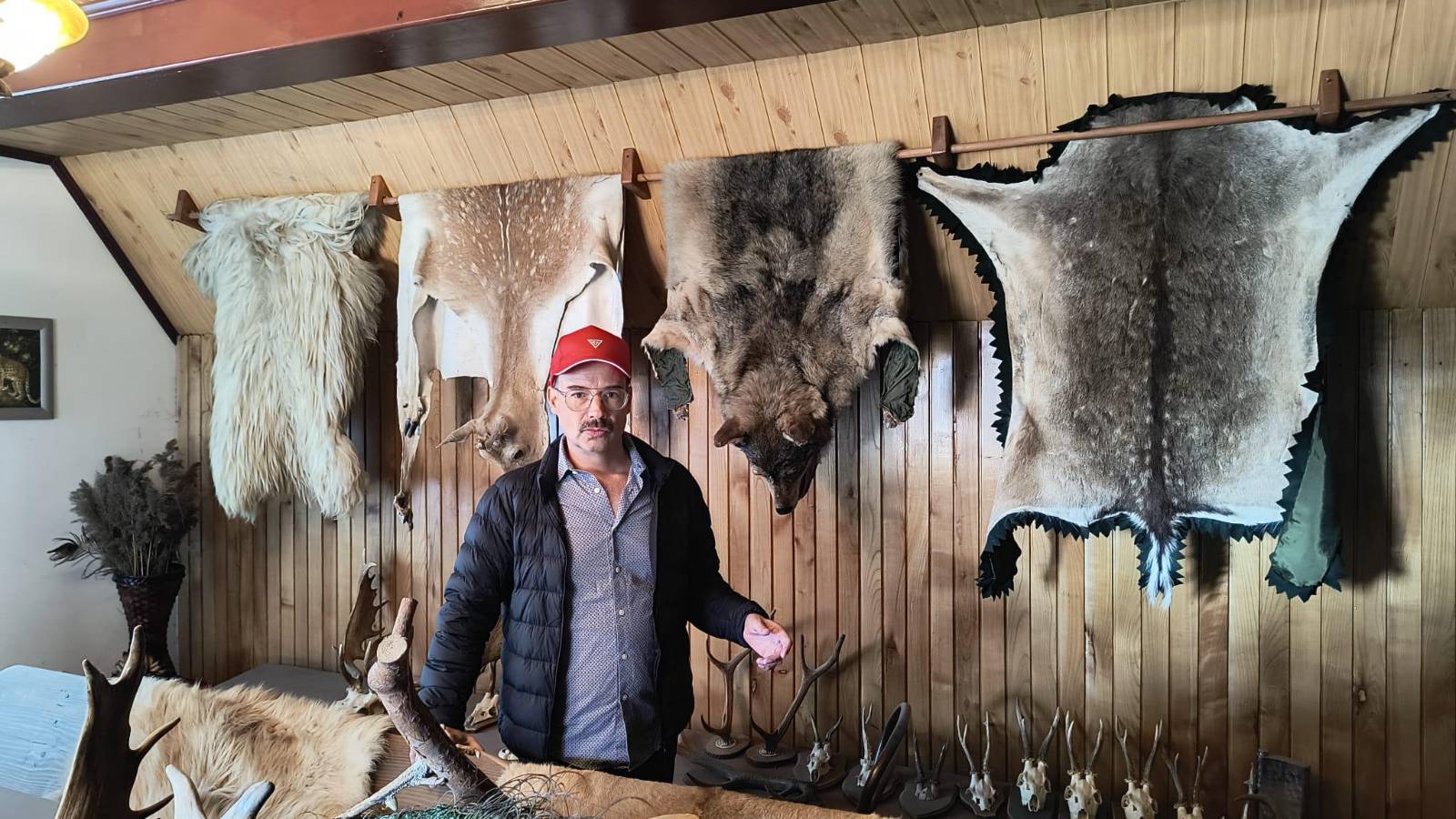
The future also looks bleak for Fina, the white tiger, whom Soimaru reportedly threatened to turn into a decorative fur if she did not recover from her injury.
For the journalists, returning to Suceava is too dangerous.
For more on this IJ4EU-supported investigation, see Animal Hustlers.
* This story was updated with news of the death of the liger, Goliath, in a fire at the zoo on May 6, 2026.