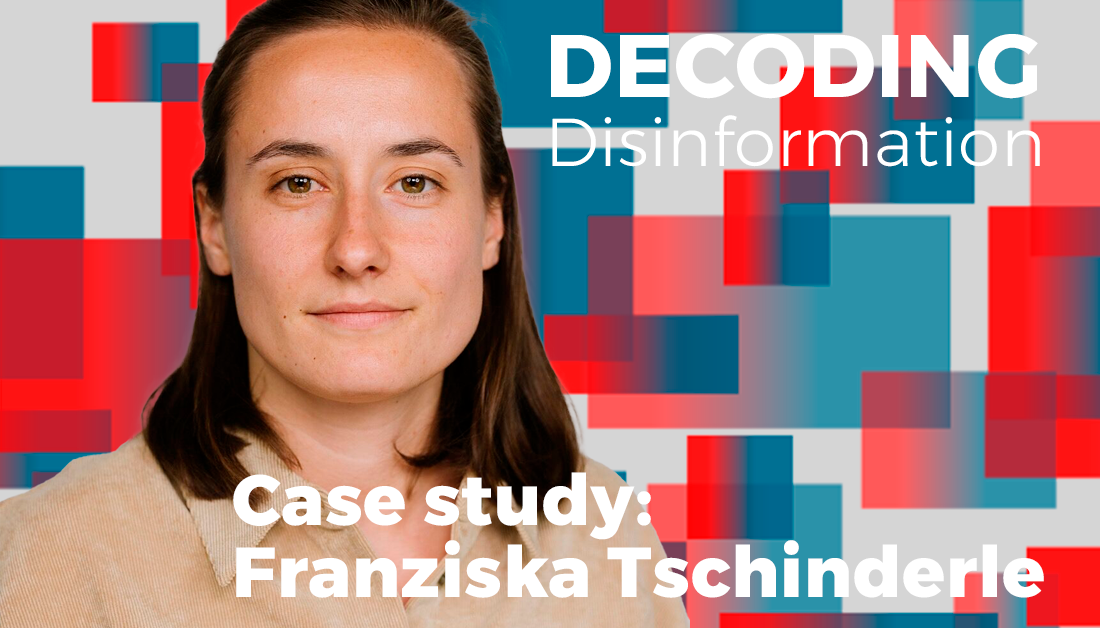
Austrian reporter Franziska Tschinderle was smeared and discredited for five days in a row on Hungary’s most important TV news broadcast simply for doing her job.
The campaign targeting Tschinderle is the subject of a new investigation published today by the German newspaper taz as part of the IPI-led Decoding Disinformation Playbook project. Over the course of a year, a team of taz journalists spoke with former high-ranking employees of the state media system in Hungary as well as academics, activists, and politicians.
Their research shows how government-controlled private and state media in Hungary are being weaponised to intimidate critical voices.
The case
On April 6, 2021, Tschinderle inquired at the Fidesz press office in the EU Parliament about a meeting of Prime Minister Viktor Orbán with politicians from other European right-wing parties. Starting the following day, she was regularly targeted on TV channel M1, the 24h news channel of the Hungarian public broadcaster. For at least five days, the channel ran several reports with a screenshot of the email she sent to the Fidesz party alongside a profile photo of the journalist.
Tschinderle was neither forewarned nor given the opportunity by the channel to comment. The reports depicted her as a provocateur. “They tried to portray me as ridiculous as possible,” Tschinderle said. Even Austrian Foreign Minister Alexander Schallenberg (whose ÖVP party had been in the EPP bloc with Fidesz before the latter quit to avoid expulsion), intervened and protested sharply.
Attacks on journalists by the Fidesz government are not uncommon in Hungary. In the 13 years since Orbán has been in office, he has largely brought the media – public and private – under his control. The Tschinderle case, however, is exceptional even by Hungarian standards. It is “unimaginable” that a comparable question from a foreign journalist to Germany’s governing party would make the headlines of Germany’s public broadcaster,Tschinderle said.
This is the third case study released as part of the project Decoding the Disinformation Playbook. IPI, taz, and Faktograf are working together to decode populist propaganda in Europe targeting fact-checkers and investigative journalists – who are both essential players in the fight against disinformation.