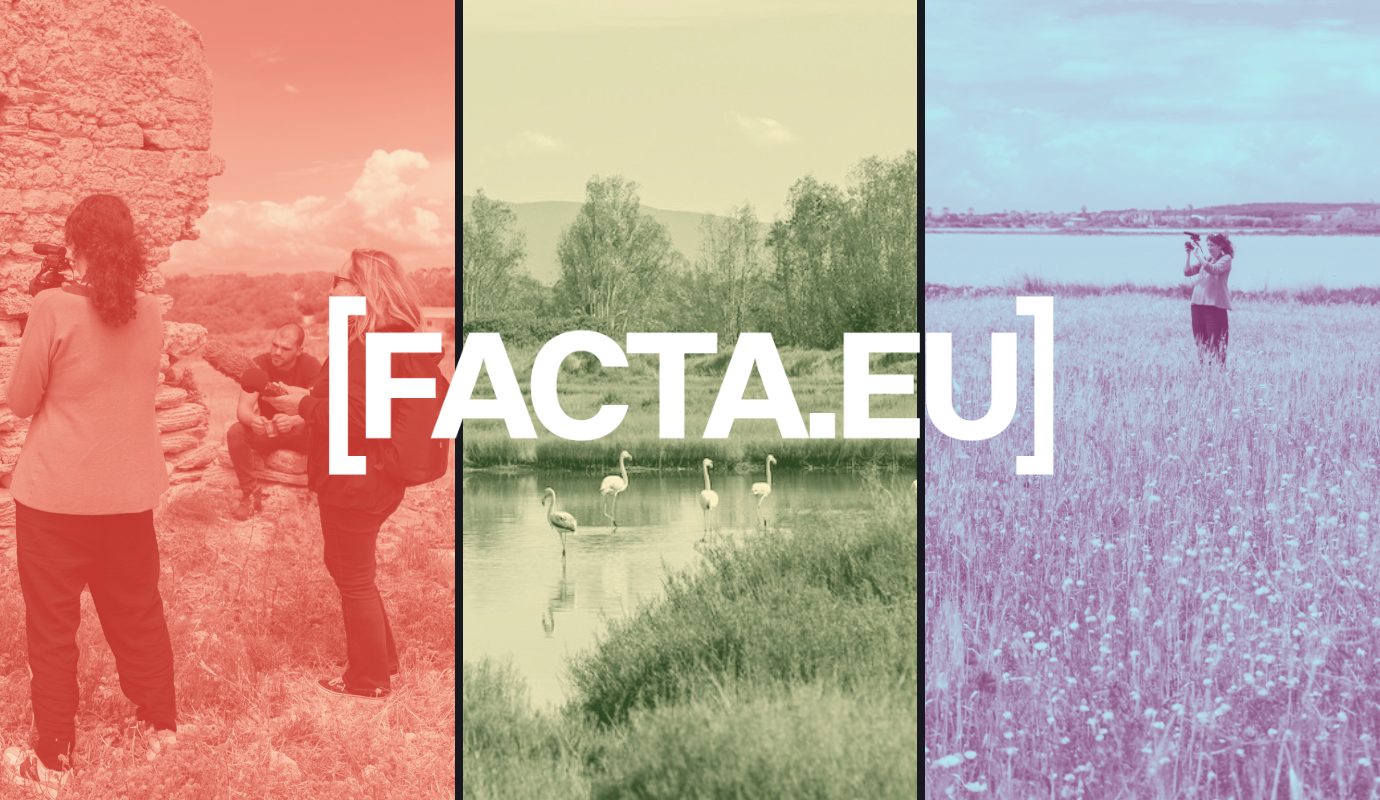
FACTA is an independent Italian non-profit media outlet that applies the scientific method to investigative and data journalism — founded in 2023 to strengthen democracy through evidence-based reporting. The content is published in Italian and English, often in syndication with other Italian media. The team strongly believes that rigorous, transparent, open science and public interest journalism can help inform the public debate and build scientific citizenship.
FACTA joined IPI’s New Media Incubator to build on their previous investigations about wetlands and specifically peats. Through training and mentorship, the team prototyped and launched a niche newsletter called Paludi (“Peats”).
“In Italy, wetlands are everywhere and nowhere at the same time: salt marshes, lagoons, peatlands, river deltas, and urban wetlands. They are crucial ecosystems for biodiversity, climate mitigation, water management, and protection from extreme events. Yet, they are often invisible in media narratives, public policies, and even collective imagination,” says Giulia Bonelli, FACTA co-founder and Board member.
From asking the right question to co-designing Paludi
Initially, FACTA’s ambition was broad. The team imagined Paludi as a product that speaks simultaneously to scientists, environmental activists, and the local communities. But one of the most valuable aspects of the learning was precisely the opportunity to challenge these assumptions.
The Incubator challenged FACTA to answer a key question: Who are we building this for?
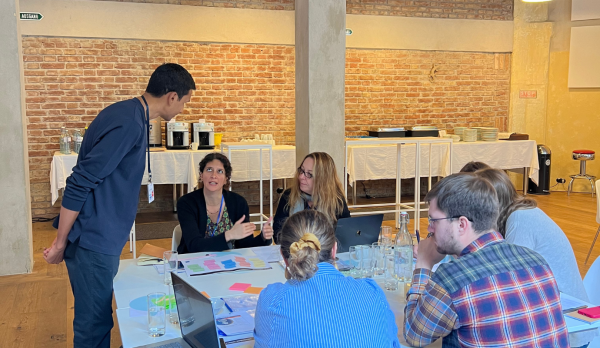
To find out, FACTA conducted a structured audience needs analysis inspired by the audience engagement framework introduced by coach Khalil A. Cassimally. The team mapped four dimensions of audience needs (Know, Understand, Feel, Do) and realised that one group, in particular, was underserved in the Italian media landscape: the scientific community working on environmental issues.
“Researchers repeatedly told us they struggled to find journalism capable of representing scientific complexity without oversimplification, while also connecting their work to broader public debates. Many described a sense of isolation, fragmentation, loneliness, and difficulty communicating across disciplines,” says Bonelli.
This fundamentally reshaped Paludi. The team narrowed the focus to scientists and researchers as the core audience, while keeping content accessible to the broader audience.
 Paludi’s unique value proposition
Paludi officially launched on February 2, 2026 – World Wetlands Day. It is a weekly Italian newsletter dedicated to wetlands and other overlooked ecosystems — spaces often perceived as marginal, but essential for biodiversity, climate mitigation, and local communities.
What emerged is a hybrid format: part investigative journalism, part environmental storytelling, part community-building experiment. Each issue connects local stories to broader environmental and political dynamics, while experimenting with a more participatory editorial process.
Scientists are not simply consulted at the end of reporting for quotes: they are involved throughout the investigation, alongside journalists, local communities, and sometimes artists and cultural practitioners.
“The Incubator gave us the space and structure to prototype this approach in a much more intentional way… We refined Paludi not just as a newsletter, but as a product built around community needs and long-term engagement,” says Bonelli.
Building a media blueprint for scientific citizenship
The first months confirmed that the demand for this kind of journalism existed. Scientists started replying directly to newsletters, suggesting stories, proposing ideas, and opening potential new lines of investigation. Researchers who had never previously interacted with journalists joined discussions during FACTA’s first online community gathering, the “Aperitivo in umido”.
By the end of the programme, FACTA had:
- 10 newsletter issues published
- 250 subscribers
- 72% average Open Rate
- 14% average Click Rate
- Around 60 structured feedback and proposals
- Weekly one-to-one calls with community members
Wetlands prove to be a powerful entry point to discuss much bigger questions: climate adaptation, ecological transitions, territorial inequalities, public participation, and scientific citizenship. While the newsletter format serves as an experimental ground in making science journalism more transparent, accessible and engaging.
Through the programme, FACTA took a chance to rethink how environmental journalism can function as a form of scientific citizenship and democratic participation. Paludi is just the start.“Today, Paludi is still a small project, but the Incubator helped us understand that scale is not always the first metric that matters”, says Bonelli.
Integration of OKRs, robust audience research and feedback loops can become a blueprint for developing future science journalism products. As the team attests, sometimes the most important step is creating a space where expertise, journalism, and community can genuinely interact.
“We really want to pursue this idea that journalism should not be the end of the process, but the start. And we tested it with Paludi, which came out of an investigation, and we really want to pursue this outcome-oriented approach,” says Bonelli.
The New Media Incubator is part of the Media Innovation Europe programme (MIE), made possible with the support of the European Union.