Originally published on Journalift.org
-
Name of the media: Večer
-
Mentor: Milutin Pavićević
-
Founded in: 1945
-
Employees: 65
Večer is a Slovenian general-interest daily newspaper, tracing its origins to the end of World War II, and having an online presence since the late 1990s.
A highly professional, modern and data-driven team saw concerning insights in the collected data, not uncommon with any similar media outlet in this part of Europe – an aging loyal demographic and concerning retention metrics among younger age groups. Compared to older Slovenians (you have to be logged in to see obituaries, after all), those younger than 45 were not only less willing to create their accounts and opt in for a paid subscription, but their user sessions were too far between to create a returning habit crucial for building loyalty needed for considering a subscription. In the long run, this was a threat to their operation.
Leading up to their 80th birthday, they decided to tackle the issue head-on, offering a modern, streamlined version of their website with fresh content and more interactivity, and a social media editorial that features local news and content suiting younger audiences. In addition, they decided to dedicate a small team of key employees to build a platform for language puzzle games – to increase retention rates, create distinction and build loyalty.
The mentoring process introduced challenges unlike those I usually faced. With 6 years of experience building similar products with a team that ultimately became Zuno Games, the process was always similar – a team of people familiar with game design that had to adopt a mindset needed to build a successful casual game: data-driven mindset, backend and SSO integration, and a focus on creating short, interesting play sessions that keep you wanting more. With Večer, it was almost the opposite – the team was very experienced in web technologies, had the entire backend and identity part figured out in their heads in the first couple of days, knew the ins and outs of how to track user behavior, but this was their first attempt at making games.
We identified important questions that needed answering: how do we build a language puzzle games on a tech stack of the existing website? How do we use web analytics platforms to track user metrics important for measuring the impact of games? How do we keep the content relevant to the audience while automating as much of repetitive work as possible?
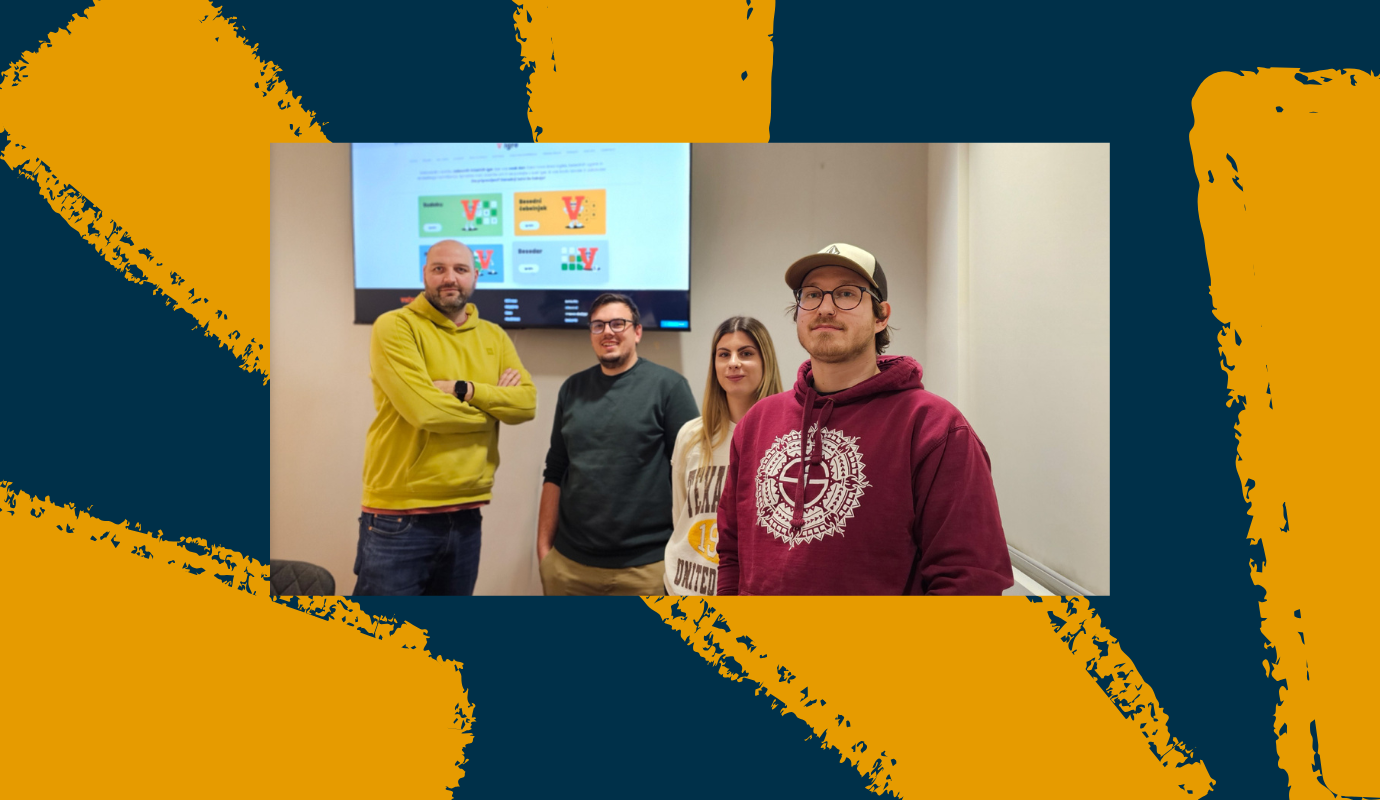
The key component in the success was a team of highly motivated design and development seniors led by Matic Lesnik, head of digital transformation for Večer. They were highly receptive, excited to work on a new project and these new challenges were met with no resistance. They figured out how the user experience would fit into the overall picture of the new website, and came up with a design that not only fits, but lifts the online identity.
Even though we knew that this would be a web (and not a game) project when it came to technology, we decided to treat it as a game, and start with a game design document. This is an important component in video game design, and outlines the game mechanics, components, metrics and steps that will make the product compelling to the end user. Treating the product as a game from the get-go allowed the team to first answer the question “what will make the user want to play our games” rather than “how are we going to build these things”. Furthermore, contrasting the finished GDD with features offered by the web technology stack allowed the team to identify the exact gaps that needed to be bridged in order to avoid the technology becoming hindrance. Doing this early meant knowing what to anticipate, resulting in better project planning (Gantt charts, story points or your buzzword of choice).
“The mentor’s expertise in gaming and analytics helped us align design, development, and data from day one. This mindset shaped the platform not only as an interactive feature, but as a long-term engagement strategy rooted in habit-building and user value.” – Matic Lesnik, Head of digital transformation for Večer
In addition, the Slovenian language lacked game-centric open dictionaries with statistics needed to automate creation of such games, and those had to be built from scratch. The team started with open dictionaries already available, but beta tests showed that these often lead to frustrating game sessions ruined by the existence of a single obscure word in the puzzle. Luckily, the decades of web content in the archive and a dev team already familiar with natural language processing made for a match made for this purpose. In a matter of weeks, they made a tool that paired dictionary entries with very reliable statistical weights, assuring not only interesting gameplay sessions – but also highly relevant ones, because tools operated on Večer’s own data.
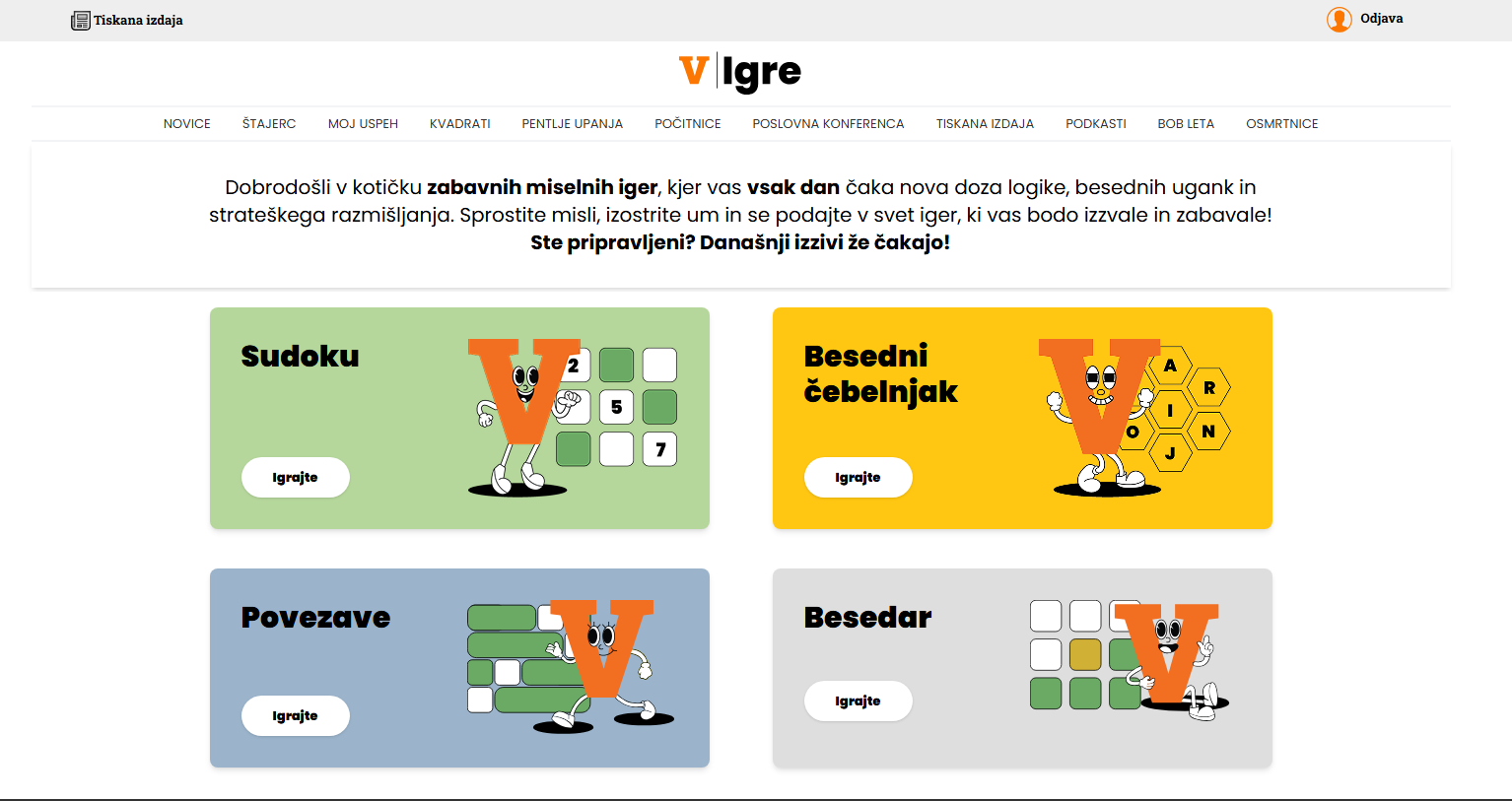
The result – a modern platform with 4 daily puzzle games, integrated into Večer’s accounts and subscription system, with a focused interaction flow meant to convert anonymous users into registered ones and registered users into subscribers. The relevance and a variety of games being part of their daily content differentiates Večer from the competition. After a little more than a month of usage, leaderboards show hundreds of registered users, with a significant percentage of them returning multiple times per week, showing that the puzzle gaming platform is starting to play a promising role in diversifying engagement, and reinforcing Večer’s connection to younger audiences.
“The mentorship was crucial in helping us think beyond content and technology. It pushed us to approach the project as a real game product — with clear user flows, engagement mechanics, and measurable outcomes.” – Matic Lesnik, Head of digital transformation for Večer
In numbers
- 90 percent of users return to play week after week, indicating a stable pattern of regular engagement over time.
- Average engagement time per user session is 6 minutes and 59 seconds.
- Besedar has emerged as the most popular game on the platform, based on usage data.
This mentorship process was conducted as a part of the Business Innovation Synergizer programme through the Media Innovation Europe project.
Business Innovation Synergizer is implemented by Thomson Media as a part of Media Innovation Europe led by the Vienna-based International Press Institute (IPI), the consortium brings together Thomson Media (TM), The Fix Foundation (TFF), and the Balkan Investigative Reporting Network (BIRN). The programme is co-funded by the European Union.