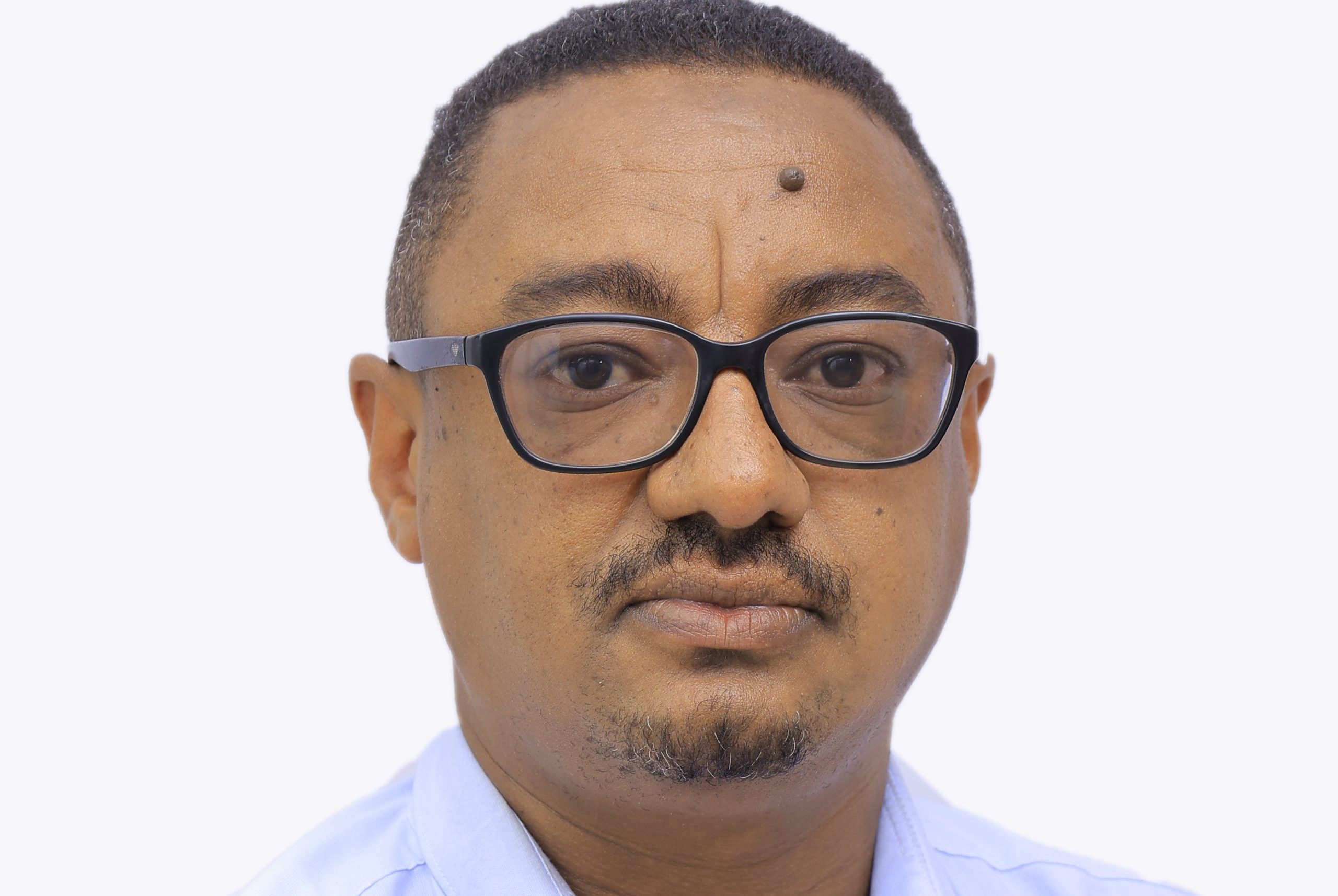
On June 8, 2025, plainclothes police officers detained Ethiopian journalist Tesfalem Waldyes at a hotel in the country’s capital, Addis Ababa. The officers took him to a nearby police station, where he was forced to spend the night on a chair. Two days later, he appeared before a court, where authorities accused Tesfalem, the co-founder and editor-in-chief of prominent online outlet Ethiopia Insider, of “disseminating false information.”
Despite a court order to release him on bail, police held Tesfalem for six days. Human rights and press freedom groups condemned the detention as an attempt to intimidate the journalist into silence.
This was not Tesfalem’s first time being harassed and detained by authorities. In October 2021, he was reported missing by family and friends before police confirmed he was in custody. Days earlier, he had posted a viral video on Ethiopia Insider’s Facebook page of a protest at a local festival. He was released after three days in custody.
In 2014, while working as a freelancer, Tesfalem was arrested and charged with terrorism alongside eight other bloggers and journalists. The case of the “Zone 9 bloggers” drew international attention and fierce condemnation from governments including the U.S. Tesfalem was jailed for more than a year before being suddenly released with all charges dropped ahead of U.S. President Barack Obama’s scheduled trip to Ethiopia.
Despite numerous arbitrary arrests and escalating attacks, Tesfalem has dedicated his career to preserving a space for public interest journalism in an increasingly difficult environment for free media in Ethiopia. In recognition of his unwavering commitment to independent journalism, IPI is proud to announce Tesfalem Waldyes as one of the distinguished recipients of the 2025 World Press Freedom Hero award, in partnership with International Media Support (IMS).
The World Press Freedom Hero award is given annually to journalists who have made significant contributions to promoting press freedom in the face of great risks.
“This honour is not only for me but also for the fellow brave journalists in Ethiopia and in exile,” Tesfalem said, in response to receiving this award. “The award is a testament to the courage and integrity of Ethiopian journalists, who are faced with arbitrary arrest, detention, intimidation, harassment, threats, persecution and violence on an almost daily basis. Their unwavering determination and resilience are embodied in this award. I wholeheartedly hope that the award will bring greater attention to the important work being done by Ethiopian journalists and the challenges they have encountered.”
A fragile freedom
After his release in 2014, Tesfalem left Ethiopia for Germany, fearing further government retaliation as the regime’s tolerance for independent media continued to wane. He spent several years living and working in exile for Deutsche Welle Amharic.
When Prime Minister Abiy Ahmed Ali took power in 2018, following the end of Ethiopia’s 20-year-long border conflict with Eritrea, many believed the country was headed for peace, reform, and liberalization.
There were some promising indications: Abiy released political prisoners, including journalists, welcomed the return of Ethiopians living in exile, and relaxed many of the harsh restrictions on the media’s ability to operate. When Abiy was awarded the Nobel Peace Prize in 2019, the Nobel Committee specifically praised the young leader for “discontinuing media censorship.”
In 2021, the Ethiopian government passed a Media Proclamation that decriminalized defamation, protected the confidentiality of journalists’ sources by law, and removed pre-trial detention for media offences. The new law was hailed as a massive step forward toward improving press freedom in Ethiopia.
These early reforms were cautiously welcomed by Ethiopia’s journalistic community. Following the change in political leadership, Tesfalem returned to Ethiopia and continued his trademark style of reporting: telling the truth, challenging official narratives, and above all, serving the public interest. He co-founded Ethiopia Insider in 2020. Under Tesfalem’s leadership, Ethiopia Insider became a constant source of credible political news and investigative reporting, and set a standard for professional journalism in the country.
Despite the early progress under Abiy, new challenges soon emerged. In 2020, war broke out in Ethiopia’s Tigray region. A near-total news blackout ensued as international media were denied access and local media feared to report on the area. In January 2021, Dawit Kebede, who worked for Tigray regional state TV, was shot and killed while in Mekelle, Tigray’s regional capital. Others faced retaliation, harassment, and arrest by federal police for their coverage of the conflict.
Despite the extreme danger, Tesfalem was determined to ensure the story of the conflict did not remain hidden. He became the first journalist who dared to travel to Tigray when the region was at war with the federal government. His daring dispatches about life under siege in Mekelle shed light on what was going on on the ground and contributed directly to a better international understanding of the conflict and its dynamics.
Crackdowns accelerate
Amid renewed ethnic conflict, Ethiopia’s political, social, and media environment became increasingly polarized, leading the Abiy government to backslide on many of the country’s newly-enshrined reforms.
In April 2025, the government passed new amendments to the 2021 media law that reversed much of the previous reforms. The slate of new provisions weakened the independence of Ethiopia’s media regulator, giving the prime minister greater political control over media licensing. The move drew sharp criticism from press freedom and civil society groups, who feared the government would now have a free hand to interfere directly in the work of Ethiopia’s independent media.
Following Tesfalem’s June 2025 detainment, police used an article of Ethiopia’s controversial legislation governing hate speech and disinformation to keep the journalist in pre-trial detention while they carried out their investigation of him. While the 2020 law was ostensibly aimed at lowering ethnic tensions and curbing communal violence, its broadly-defined definitions of what exactly constitutes “hate speech” and “false information” have since been weaponized against journalists and civil society actors.
Ethiopia’s anti-terrorism laws have also continued to be a popular tool for authorities to crack down on independent media, giving the government wide discretion to prosecute those whose actions it views “seditious,” including journalists who report on political dissent.
Now, new legislation targeting civil society threatens to shrink the space for independent media even further. The vaguely-worded draft amendments to Ethiopia’s 2019 Civil Society Proclamation would grant the government new powers to restrict how local organizations can use foreign or diaspora funding, and even force organizations to close. The legislation has been compared to the “foreign agent” laws increasingly implemented by authoritarian leaders seeking to control the flow of information in their countries.
In addition to “lawfare” style infringements on press freedom, the Abiy government has also turned to traditional means of silencing critical journalism. In 2025 alone, arbitrary arrests and enforced disappearances of journalists have escalated, as well as police raids of private outlets’ offices. In June 2023, Ethiopia Insider’s offices were burgled, resulting in the loss of some of the newsroom’s video production equipment, a number of laptops, and a smartphone. No one was charged with the robbery, which Ethiopia Insider suspected was a targeted attack on its journalistic work.
Members of the current government have also openly engaged in rhetorical attacks on the country’s independent media, with Abiy recently accusing “some” Ethiopian outlets of “working to serve their own interests” rather than “putting national interest first.”
Despite these myriad challenges, which has led many Ethiopian journalists to again flee the country, Tesfalem has continued to stand for independent journalism. Ethiopia Insider has remained a balanced and objective source of high-quality news for the Ethiopian people, while setting an example for other outlets as Ethiopia’s media space struggles to survive in a rapidly closing environment.
The World Press Freedom Hero awards
IPI will present the World Press Freedom Hero awards at a special ceremony on October 24 at the University of Vienna as part of the 2025 IPI World Congress, which annually brings together leading editors and journalists from around the world.
As IPI marks its 75th anniversary this year, we have chosen to recognize seven individuals who have displayed tremendous courage and resilience in fighting for media freedom. In addition to Tesfalem, the World Press Freedom Hero award will also be given to Mzia Amaglobeli (Georgia), Martin Baron (United States), Mariam Abu Dagga (Palestine), Gustavo Gorriti (Peru), Jimmy Lai (Hong Kong), and Victoria Roshchyna (Ukraine).
“This year’s awardees are exemplary of the current threats facing journalists worldwide as authoritarianism gains ground, impunity prevails, and new challenges to freedom of expression emerge,” IPI Executive Director Scott Griffen said. “With this award, we honour their courage, commitment, and legacy – while renewing our urgent call to protect and defend media freedom as a pillar of free society.”
“Each of the recipients of this year’s World Press Freedom Hero award have faced acute dangers and threats merely for doing their job,” IMS Executive Director Jesper Højberg said. “Two of them – Victoria Roshchyna and Mariam Abu Dagga – paid with their lives. With immense courage and persistence, the awardees have uncovered corruption, war crimes, persecution of vulnerable groups and multiple other transgressions. We all owe them our deep gratitude for their fearless commitment to exposing what those in power seek to hide.”
Since 2000, IPI has recognized more than 75 journalists who have displayed tremendous courage and resilience in fighting for media freedom and the free flow of news with the World Press Freedom Hero award. Notable past awardees include imprisoned Guatemalan journalist José Rubén Zamora, slain Palestinian-American journalist Shireen Abu Akleh, and Mexican investigative journalist Carmen Aristegui. Since 2015, IPI has been proud to present the award in partnership with IMS.