The basics of Cukr.city
The newsfeeds about Sumy in 2019 were full of demotivating sensational headlines, like theft, suicide, and accidents, explains Cukr’s CEO, Alona Serhiienko. What you could hear from local people is that “nothing ever happens in Sumy,” “there are no prospects here,” or “there are no jobs here”. That same year, a group of journalism graduates decided to rethink what’s possible and founded Cukr.city.
“We lived in a different Sumy and wanted to change people’s minds and tell them about changes, prospects, cool people, and new businesses”, says Serhiienko.
The name Cukr came from wanting something short, catchy, and memorable. In Ukrainian, it sounds like ‘sugar,’ but without one letter – ‘cukor’, as Serhiienko explains. It’s also a small tribute to the city’s history of manufacturing sugar.
Who is Cukr.city?
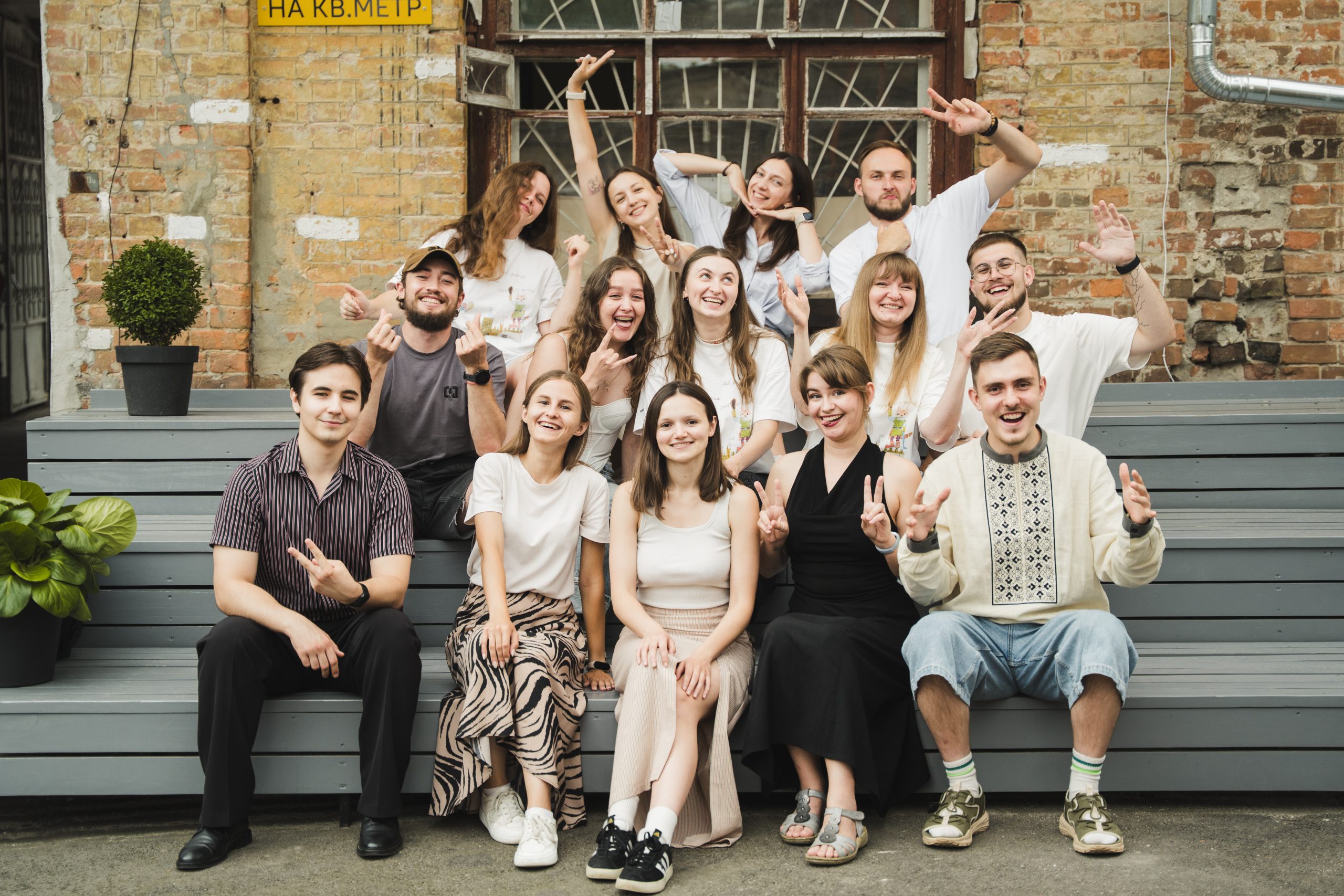
Cukr is currently a team of 24 people, mostly based in Sumy, Ukraine. Over the three years of the full-scale war, they have grown more than threefold. The core team is Dmytro Tishchenko (Chairman of the Board and Co-founder), Alona Serhiienko (CEO), Vladyslava Kudelnik (Editor-in-Chief) and Anna Olshanska (Brand Director).
Cukr also collaborates with a dozen volunteers and freelancers and is actively hiring content managers, news reporters, and communications specialists.
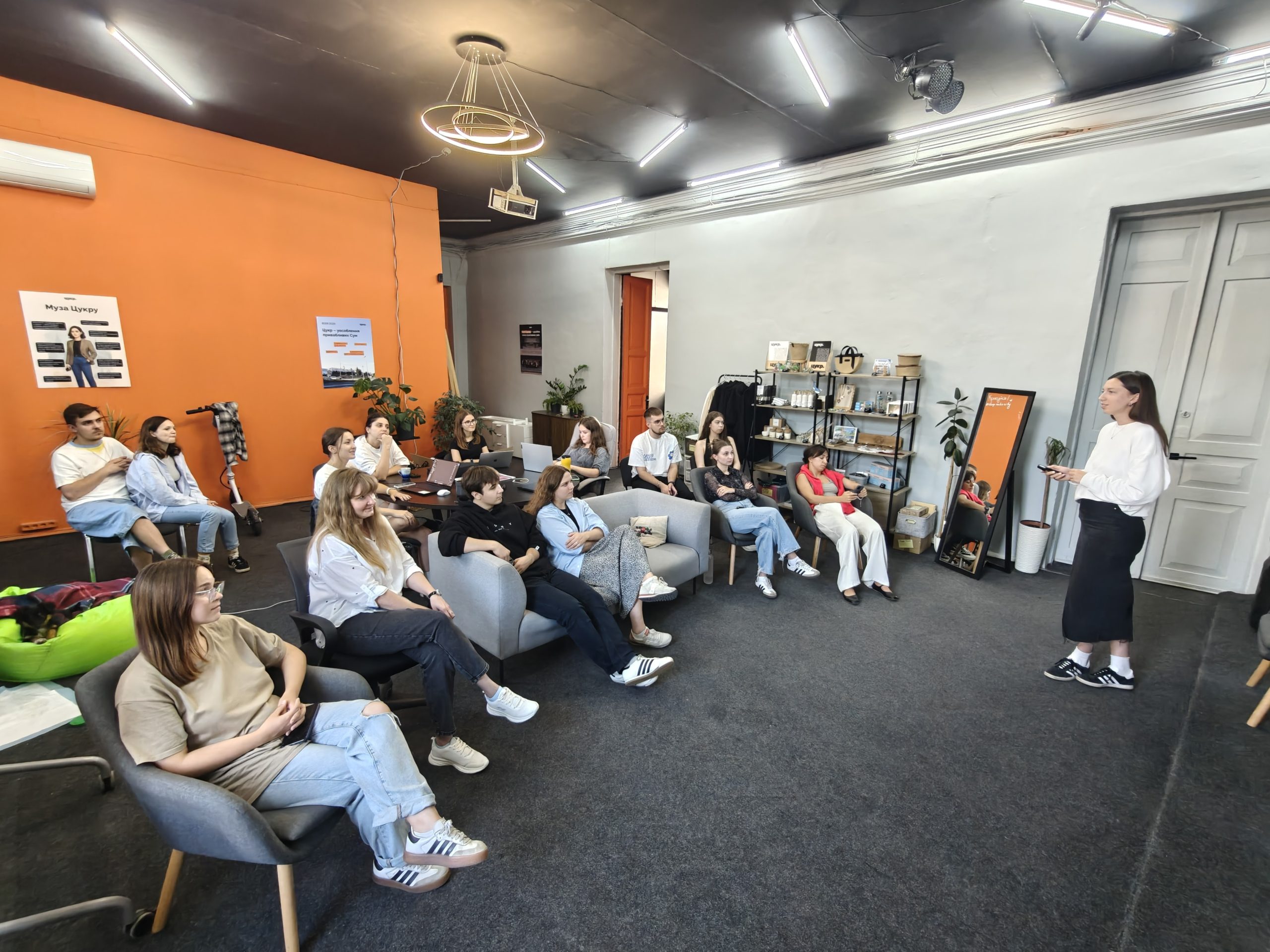
While growing the team, Cukr invests in the personal development of their staff — conducting regular 360° reviews, 1-on-1 meetings, developing individual development plans, organising retreats, and supporting mental health.
“At Cukr, we are not just colleagues — we are like-minded people who are changing the city and each other.”, says Serhiienko.
Business model and revenue
Currently, approximately 70% comes from grants from international donors, and the remaining 30% comes from non-donor income. The latter is 20% from reader revenue through the Club Cukr with 800+ members, and 10% from the profit from the store of local merchandise, as well as advertising, and outsourcing services. Most of the grants are institutional, rather than project-based, which reduces the administrative burden.
Despite a significant dependency on grants, the team regularly pursues diversified revenue streams. Cukr built a financial cushion for seven months, allowing them to spend less time seeking funding and focus more on development and audience. Apart from the membership, they host events in a cultural space “DNK”, operate a local merchandise store and produce a print magazine, now in its fifth edition.
“We are building a community around the idea that ‘Sumy is cool,’ and we are monetizing this through various touchpoints. This gives us the stability that traditional media outlets do not have.”
The audience and value proposition
The audience of Cukr is young and mostly native to Sumy. They are people who want to belong to something bigger and support positive change. Cukr’s readers are also those who have left Sumy but remain emotionally attached to the city. In total, the team estimates about 400,000 people following Cukr. The readers gravitate to Cukr for their tailored value proposition backed up with the audience research.
First, their UX and branding offer a modern identity that contrasts with the other regional media, sending a clear message that Cukr has a different approach to news.
Second, Serhiienko says, “we are a second-button media outlet”, just like the second button on a remote controller, meaning that Cukr doesn’t chase clicks. Instead, they take the time to give their readers a full picture, verify and explain their bits with context and depth.
Third, Cukr is an active part of the community, “We are more than just media — we create an ecosystem around love for the city. We don’t just write about the city — we create physical spaces for the community to meet,” says Serhiienko.
Fourth, Cukr strives to be a driver of Sumy’s potential — focus on change, people, and new businesses, not on crime and sensation. Their readers say that Cukr is “a reason to stay in the city,” “something to be proud of,” and “media that doesn’t harm the psyche.”
Lastly, Cukr prioritizes authentic communication without corporate jargon. They communicate directly and openly with their readers, which boosts a deeper connection and loyalty with the audience.
These strategies are paying off. By the end of 2025, Cukr has launched four new multimedia formats, increased the number of unique readers on the website by almost half, Club Cukr has grown to over eight hundred members, and the team has grown to 24 people.
Products and Distribution
The team uses multiple channels fit for the purpose and content format from their website to Facebook, Instagram, Telegram, TikTok, YouTube, and Viber.
The website content and format vary, including news, explainers, human stories, and reports. Cukr’s most competitive products are the explainers and human stories, and the most popular topics among our audience are war, urbanism, and government.
They are currently developing multimedia content. In the first half of 2025, Cukr released over fifty unique videos, which are weekly digests, and launched the project Sumy without myths. They are also experimenting with UGC, caption videos, and behind-the-scenes moments of the organization’s work.
Cukr’s biggest challenges
“We are at such an interesting point right now”, says Serhiienko, “we have grown from 5 to 24 people since the full-scale invasion, and that’s cool, but at the same time it creates its own challenges.”
The first challenge is the transition from “creative chaos” to more systematic work. With a bigger team, Cukr needs clearer processes, KPIs, and distribution of responsibilities.
The second is growth with a balance between increasing content volume without compromising their mission to provide readers with depth and context.
The third is professional burnout. “The constant pursuit of results, war, responsibility — it’s exhausting, but we are learning to balance and take care of ourselves and our colleagues.”, says Serhiienko.
Finally, financial independence. “No funding is worth losing the trust of our audience,” says Serhiienko. The team is working to change the ratio of grants to earned funds in favor of their own income.
“All these challenges are actually signs of growth. If they weren’t there, it would mean we were standing still. And we are definitely not standing still.”, says Serhiienko.
Vision for the future
“Experimentation is not just an opportunity — it is part of our culture and growth strategy,” says Serhiienko. “The main limitation is not money or fear, but time and team resources, so we are learning to balance experimentation with operational work through better planning and systematization.”
The next 1-2 years, Cukr plans to develop sub-brands by: Becoming an incubator for social projects (300,000 UAH for incoming projects per year), developing the store and events divisions into separate businesses and increasing financial independence. They are now developing video, moving into B2B production, and scaling Cukr Club to 1,400 members.
The Scoop of Cukr
Curk’s team advice to other local media is: be honest without corporate nonsense, create physical spaces for meetings (not just online!), involve people in co-creation, not just consumption. And be patient — we grew from Cukr Club subscribers not through aggressive marketing, but through transparency and trust. Plus, don’t be afraid to be “second-button media.” There is an audience that values depth over speed.
This story is part of IPI’s Local Journalism Project. The publication of these case studies – part of IPI’s wider work mapping, networking and supporting quality innovative media serving local communities – is supported by the Friedrich Naumann Foundation.