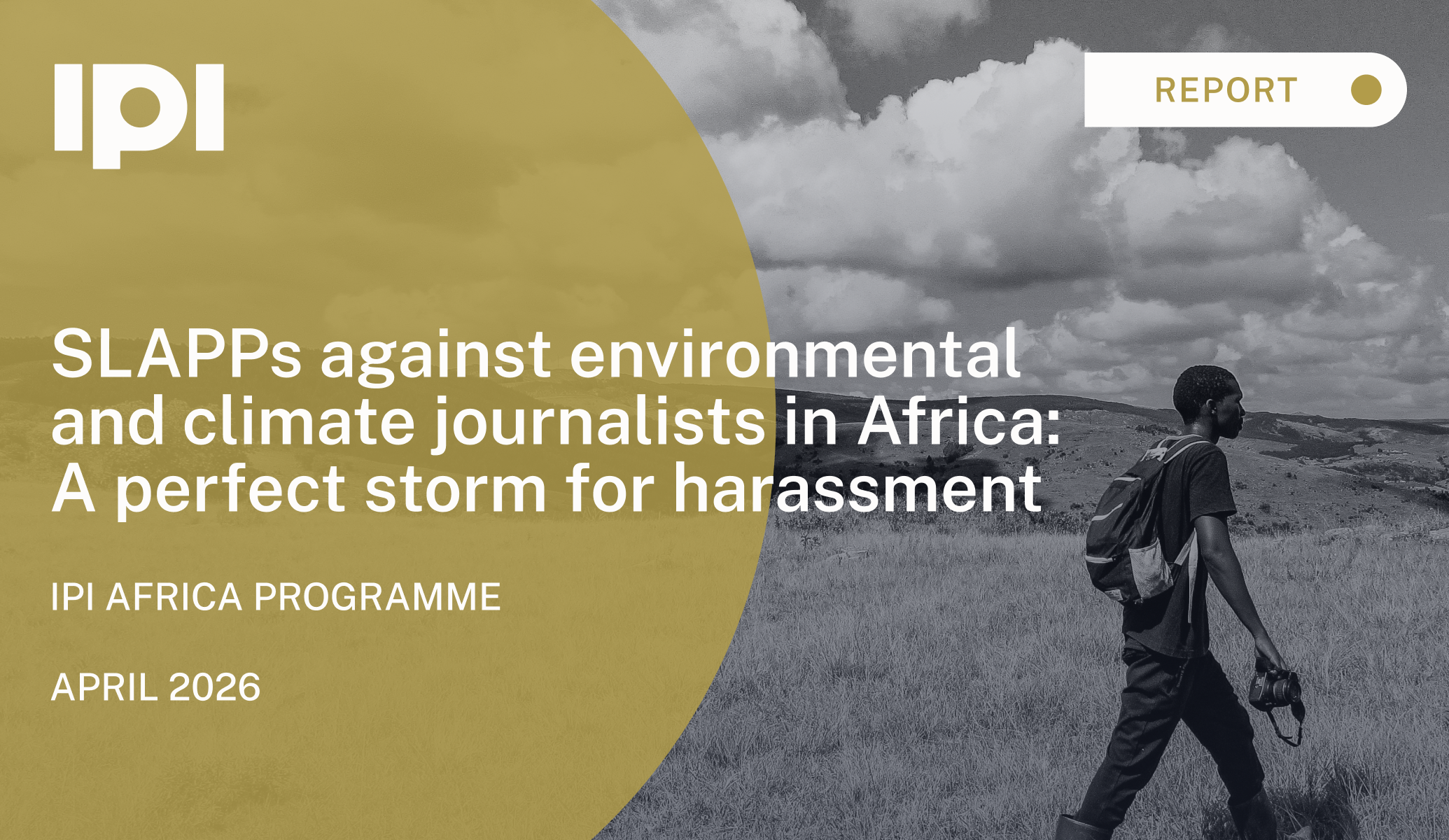
Environmental and climate journalists in Africa face a serious yet underreported risk from SLAPPs, according to a new report from the International Press Institute (IPI).
The report, “SLAPPs against environmental and climate journalists in Africa: A perfect storm for harassment” is based on interviews and research on seven countries in West, Central, and East Africa: Ghana, Nigeria, Cameroon, Kenya, Somalia, Mozambique, and South Africa. It looks at existing initiatives to defend journalists against vexatious legal cases, identifies legislation that is open to abuse by powerful actors, and traces key trends and patterns seen across the region, while also putting forward recommendations to address the threat SLAPPs pose.
Climate and environmental journalists in Africa are reporting on some of the most challenging and consequential issues facing the continent – all of which carry significant global political, security, economic, and social implications. Yet precisely because of their key role on the front lines of the climate crisis – including exposing the corruption and corporate malfeasance that fuels environmental destruction – climate and environmental journalists often find themselves in the crosshairs of powerful individuals and entities looking to silence their critical reporting.
In addition to facing physical attacks and detention, journalists in Africa also face a risk of vexatious lawsuits – SLAPPs – that seek to silence scrutiny of policies and practices that negatively impact the climate and environment.
Key findings from the report:
- SLAPPs represent a serious yet underreported threat to environmental and climate journalism in Africa.
- Despite this threat, no country in Africa has enacted specific anti-SLAPP laws, though efforts are being made at regional and national levels to develop measures to address the threat.
- The financial precarity of many media outlets in Africa – especially those covering climate issues – leaves environmental journalists highly vulnerable to SLAPPs.
- The power imbalance between claimants and environmental journalists means the latter are often forced to reach unfavourable settlements out of court.
- Foreign-owned energy and resource extraction companies pose a particularly high threat to environmental journalists. IPI’s research found multiple examples of multinationals abusing local legislation to stifle critical reporting.
- Outdated and/or vaguely worded legislation is easily abused by powerful actors in order to harass climate journalists.
- Options for legal support from NGOs or media foundations for journalists facing legal action are severely limited.
- In general, there is a serious lack of systematic data on the use of SLAPPs across the region, contributing to a general lack of awareness.
- Awareness of SLAPPs or how to deal with them from both media organisations and the judiciary is not particularly high.
The report calls on states and other stakeholders to take steps to protect journalists from SLAPPs, including the passage of anti-SLAPP legislation and repealing laws open to abuse; strengthening monitoring and training initiatives; and expanding advocacy, legal, and financial support for countering SLAPPs.
The report is published as part of IPI’s Africa programme, which seeks to protect and advance press freedom and the safety of journalists in Africa, focusing on particularly at-risk groups such as climate and environmental reporters.