Ahead of the general election in Hungary on 12 April, the International Press Institute (IPI) today outlines its top priorities for democratic reform of the country’s media landscape that are required to bolster press freedom and regenerate media pluralism after years of sustained decline. These recommendations reflect and build on years of IPI’s monitoring, advocacy and missions.
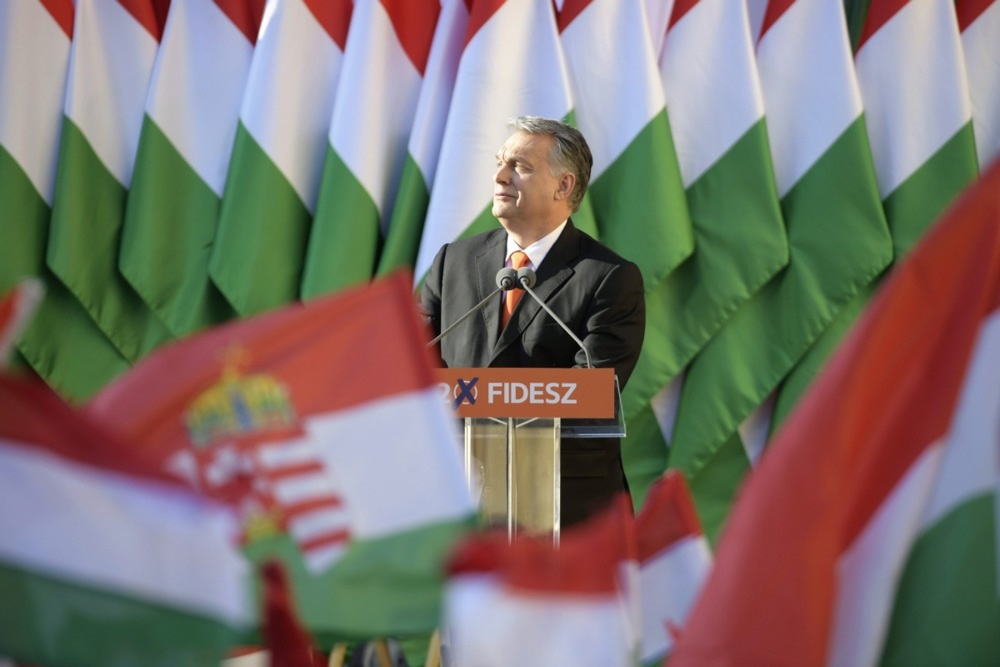
As the election approaches, media freedom in Hungary remains in sustained and long-term crisis. Over the past 16 years of rule, the Fidesz party of Prime Minister Viktor Orban has built and then maintained the most sophisticated system of media capture and control ever developed within the European Union, while at the same time also applying sustained pressure to independent and watchdog media.
As IPI has long documented, this system has been constructed through an interlocking combination of regressive media legislation, sustained dominance over public media, the concentration of private outlets under the ownership of political allies and business networks, and the distortion of the media market through control over state advertising.
Through this co-ordinated exploitation of legal, regulatory and economic powers, it is estimated that the government has direct or indirect control over 80% of the media market. This capture of media is most pronounced at the local and regional level. This has driven a dramatic erosion of media pluralism and the solidification of political control over public discourse in a way not thought possible in an EU Member State.
At the same time, independent media have faced years of smear campaigns, spyware surveillance, cyber attacks, abusive lawsuits and arbitrary investigations from the Sovereignty Protection Office (SPO). To weaken their market position, critical media have also been cut off from state advertising and subsidies.
Other independent media have faced hostile takeovers from pro-government business interests, while others have been forced off the airwaves due to discriminatory licensing decisions. Independent media has been further limited by systemic hurdles imposed by the government in gathering, accessing and verifying information, through the exclusion from government press conferences and discriminatory accreditation processes.
These policies have had disastrous effects on media freedom in Hungary, which is ranked among the lowest on the European continent. As a result, at the EU level Hungary has become the poster child for media freedom decline and authoritarian backsliding. The upcoming election therefore offers the opportunity for a major reset of media freedom and democracy in Hungary and a turning point in broader media policy of the European Union.
IPI outlines the following 10 priority areas for reform and recommendations:
- Establish an independent, high-level multistakeholder task force on media reform
After more than 15 years of the steady erosion of media freedom and pluralism in Hungary, the process for reversing this trend will be long, complex and challenging. To achieve sustainable reform in line with EU commitments regulations and laws, a comprehensive strategy for reform is essential. This strategy must be developed with full input and consensus by the media, civil society, and policy communities, with the aim of regenerating media pluralism, restoring local, regional and national media markets, and ensuring an enabling environment for independent journalism.. This process should include input from domestic media experts, media freedom groups and international organisations. The framework for elements of this reform should be the European Media Freedom Act, which provides the most complete set of requirements and standards to date within the EU.
- Regenerate media pluralism and limit media concentration
Media pluralism in Hungary has been eroded over the past decade through a combination of the strategic acquisition of previously independent media by government business allies, the consolidation and concentration of media titles under the ownership of pro-government business networks, including KESMA, and discriminatory regulatory decisions. Concentration is particularly acute across in the television, radio and print newspaper markets, and particularly at local and regional levels. These dynamics mean that while there are many news media in Hungary, including some large outlets critical of the government, the media market is overwhelmingly skewed towards pro-government editorial lines, hollowing out the space for independent journalism and weakening media pluralism. This represents a serious democratic weakness in Hungary that requires urgent measures.
- Overhaul system for media regulation to create independent authority
Hungary’s media regulatory system is the most politically captured in the European Union, and is in clear violation of EMFA. While the National Media and Infocommunications Authority (NMHH) is legally framed as an independent body, Fidesz has abused its two-thirds majority to nominate and appoint its candidates to all five seats in its decision-making body, the Media Council. Under this leadership, a majority of media tender decisions over the past decade have favoured outlets aligned with the ruling party, and the authority have often prioritised pro-government interests in media mergers and frequency allocations. In other cases, the Media Council has been found by the European Court of Justice to have taken unjustified and discriminatory licensing decisions against media critical of the government. The depoliticization or restructuring of Hungary’s media regulatory bodies, particularly the Media Council, will be central to wider efforts to improve media pluralism and bolster independent journalism.
- Conduct a systematic reform of public media
An immediate priority should be reform of Hungary’s public media, which in the past 15 years have been distorted into the most heavily captured public broadcasters in the EU. Under the politicised control of the state-run Media Service Support and Asset Management Fund (MTVA), public media have been deformed into an audiovisual propaganda tool of the ruling party and a key tool of political propaganda. Editorial independence is virtually non-existent for news programming, which uncritically amplifies government messaging. Coverage is neither fair nor balanced, especially on political issues. The legislation for the public media system requires systemic reform, combined with regulatory restructuring to depoliticise management appointments. These measures should be aimed at aligning Hungary’s public media with its public service mission, by ensuring editorial independence and programming diversity.
- Reform state advertising and end media market distortion
The system for state advertising in private media in Hungary is the most politically controlled system of its kind anywhere in the European Union. As there are no legal provisions ensuring fair and transparent distribution of state advertising, the government has, through the National Communications Office, been permitted to allocate these funds based on political allegiance rather than objective criteria, slowly warping the media market in favour of a dominant pro-government narrative. This oversized financial influence has allowed Fidesz to calibrate the market in its favour by rewarding alignment with its narrative while starving critical media of advertising funding. This advertising system requires urgent reform to address systemic flaws. Ensuring fair and transparent advertising practices in Hungary will be central to bolstering media pluralism.
- Dismantle the Sovereignty Protection Office
The Sovereignty Protection Office (SPO), established in 2023, represents one of the most serious threats to democracy, the rule of law and media freedom in Hungary. The institution, which is headed by the former speechwriter of the Prime Minister, has systematically abused its powers in a discriminatory and abusive manner to target critical and investigative media which receive foreign grants or funding and falsely portray them as the agents of foreign interests. These investigations have targeted many of the country’s independent media and contributed to the stigmatisation and discreditation of their journalism. The legality of the law under which the SPO was established under EU law has been challenged in front of the ECJ by the European Commission. The 2023 law on the Protection of National Sovereignty should be revoked and the Sovereignty Protection Office should be immediately dismantled.
- Provide accountability and safeguards for for spyware surveillance of journalists
Hungary is one of the EU countries with the highest number of documented cases of spyware surveillance against members of the press and media actors. According to IPI monitoring and case documentation, at least 10 journalists and media actors in Hungary have been confirmed via forensic analysis to have been surveilled using Pegasus spyware. These attacks were carried out between 2018-2021. Known targets include some of the country’s best known investigative journalists and an influential media owner. Although the government confirmed that the surveillance was carried out by the Hungarian intelligence services, unjustified national security exemptions were used to claim that the surveillance was legal, shielding responsible state institutions from accountability. To date, no individual or authority has been held responsible. Transparency and accountability are essential.
- Cease all political smear campaigns and demonisation of journalists
While instances of physical violence against journalists in Hungary remain relatively rare, journalists regularly face smear campaigns and verbal denigration by politicians, as well as harassment online while carrying out their professional responsibilities. Public officials and government politicians, including the Prime Minister, have long used derogatory and discrediting language against media seen as critical of the government, with tropes regarding foreign funding being a prominent theme. Journalists from across the political spectrum can face abuse, insults and harassment campaigns online and on social media in relation to their work, with women journalists facing gender-based threats. Politicians from all parties must cease derogatory and demeaning language towards journalists and end smear campaigns.
- Improve the legal climate and create protections against SLAPPs
While the use of abusive lawsuits to target public interest reporting in Hungary is not as pronounced as in other EU Member States, Strategic Lawsuits Against Public Participation (SLAPPs) do pose a threat to media freedom. Claims under the EU’s General Data Protection Regulation (GDPR) have been used to try and stifle public interest reporting on powerful individuals. Although defamation was partially decriminalised for the press under the current government, full decriminalisation in line with EU standards has not been achieved. Hungary has made no preparation ahead of the May 2026 deadline for the transposition of the EU Anti-SLAPP Directive and a new law is needed to protect journalists from domestic SLAPP cases. The recent criminal espionage charges levelled against Szabolcs Panyi, one of the country’s leading investigative journalists, should be immediately dropped and those responsible for defamatory claims about the journalists should be held accountable under the law.
- Guarantee fair access to information and cease state obstruction
Journalists in Hungary face barriers and systematic discrimination by the state in terms of accessing information. Independent and watchdog media have been barred from receiving responses to media questions or interview requests. Journalists from certain media are frequently excluded from official government events or press conferences. On some occasions, independent journalists are arbitrarily denied entry by security guards to press conferences by the Prime Minister. The government has also restricted journalists’ freedom of movement inside Parliament. At the same time, authorities deny access to publicly held information via FOI requests. These measures have limited media scrutiny and have problematised the ability of journalists in Hungary to do their job, requiring clear reform and a normalisation of the system for press conferences, accreditation, parliamentary access and interviews with elected office holders.
* * *
Ahead of the election, IPI held a webinar as part of the Media Freedom Rapid Response (MFRR) which gathered leading media experts to discuss the diverging paths ahead for media freedom in Hungary and to discuss the priorities for media reform. You can watch the online discussion here.
Hungary: IPI condemns criminal charges filed against journalist Szabolcs Panyi
This media reform statement was coordinated by IPI as part of its work under the Media Freedom Rapid Response (MFRR), a Europe-wide mechanism which tracks, monitors and responds to violations of press and media freedom in EU Member States and Candidate Countries