Originally published on Journalift.org
-
Name of the media: Deník Alarm
-
Mentor: Jernej Verbic
-
Founded in: 2013
-
Employees: 14
For Deník Alarm, an independent progressive media outlet founded in 2013, employing 14 team members and operating in a hostile, increasingly restrictive digital environment, innovation was never about growth for growth’s sake. It was about survival, resilience, and autonomy.
When Independence Becomes a Survival Strategy
Operating with a strong values-driven editorial line, Deník Alarm has long relied on its community for financial support. But by 2024, external pressures—from payment gate restrictions and platform “censorship” to the structural fragility of independent journalism—made one thing clear: true independence requires owning your tools.
That insight became the backbone of Deník Alarm’s Media Innovation Europe roadmap—and ultimately, the most significant outcome of the mentorship process.
The Core Challenge: Dependence on Third Parties
Before the project, Deník Alarm already had something many outlets struggle to build: a loyal and politically engaged community, a strong culture of crowdfunding, and a high share of reader-supported revenue. These foundations gave the outlet a rare degree of independence and resilience in a challenging media environment.
Yet even this strength came with a clear vulnerability. Most donations were processed through third-party platforms, leaving Deník Alarm exposed to sudden political changes, ideological “content moderation,” blocked or delayed transactions, and limited ownership over donor data and direct communication with supporters.
At the same time, the outlet identified another strategic opportunity: in-house video production capacity, since video is being crucial for audience growth, platform visibility, and future revenue diversification.
Two Strategic Goals, One Philosophy
The first goal was to build an independent crowdfunding platform—not just as a tool for collecting donations, but as a way to communicate more effectively with supporters, offer more flexible contribution packages, segment donors more efficiently, and eliminate dependence on external intermediaries.
The second objective focused on strengthening video production as both a content format and a business opportunity. This included building an in-house video studio, onboarding a dedicated video producer, and testing video services as a potential new revenue stream.
Both goals shared the same philosophy: Control your infrastructure, deepen your relationship with the community, and diversify income without compromising editorial values.
From Roadmap to Reality
By the final month of mentorship (January 2026), Deník Alarm had delivered on almost all major objectives. The outlet successfully launched its own donation platform, fully integrated with its editorial and communication workflows. The results were immediate:
- 90% of all donations now come via QR codes, often without using traditional payment gateways.
- Donors explicitly reported greater trust due to the outlet’s independence from third-party platforms.
- The platform proved so robust that it revealed potential beyond Deník Alarm itself—as a future non-profit tool for other independent media and NGOs facing similar restrictions.
This was not just a technical upgrade. It was a structural shift in power—from platforms back to the publisher and its community.
Even before the winter campaign finished (ending 31 January 2026), the numbers showed strong momentum: the number of regular donors increased by 27% and yearly donations in 2025 increased by 14%.
Parallel to the crowdfunding work, Deník Alarm invested in video. What changed:
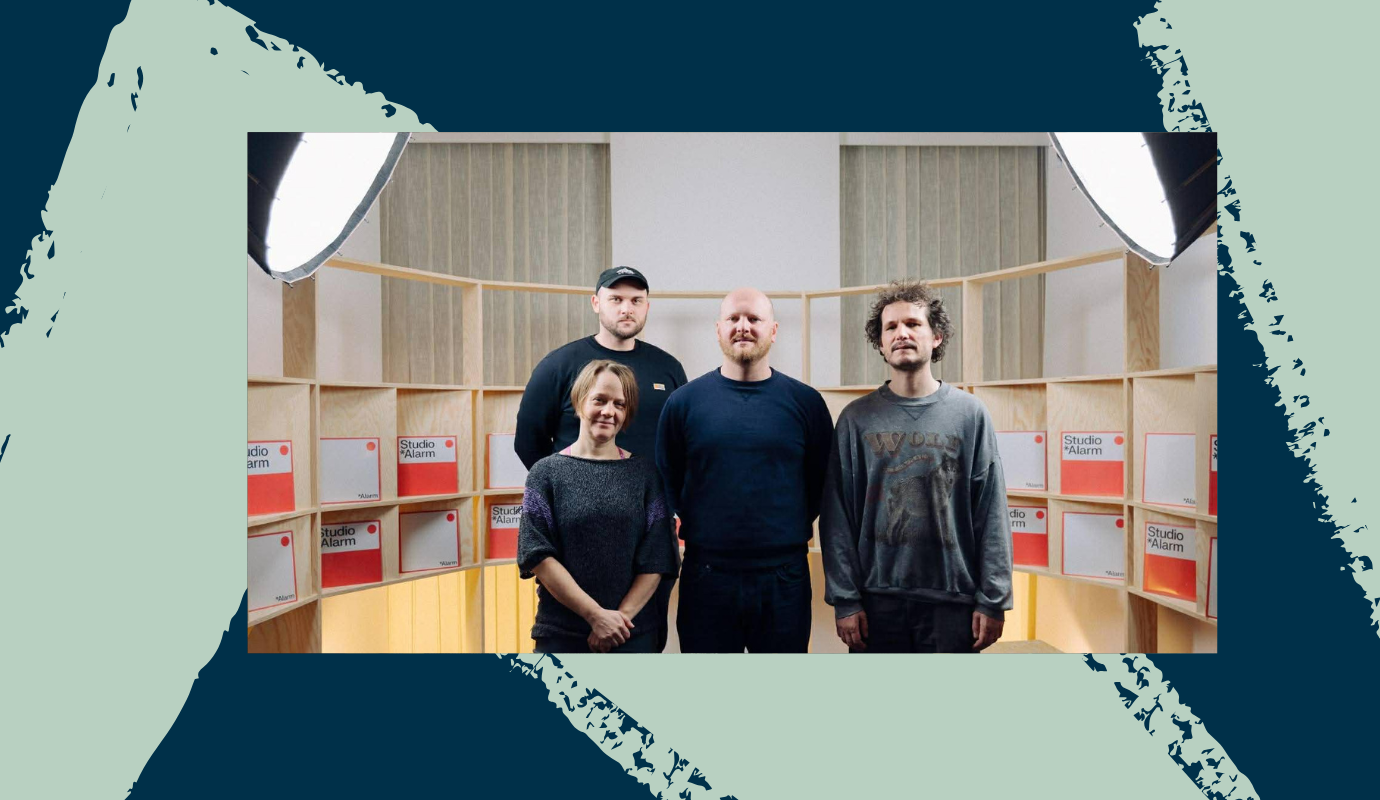
- A new in-house video studio was completed.
- A new video producer joined the team and immediately began developing new formats.
- Internal production quality improved significantly, reducing outsourcing costs.
- By early 2026, the studio had already secured four external clients.
Although video services as a revenue stream remain partially achieved, this was a strategic choice: “2025 was about building the foundation. 2026 is about scaling,” their mentor Jernej Verbič is convinced.
Still, the financial impact was tangible: 15,271 euros were made in revenue and savings in 2025 and YouTube monetisation started and continues to grow month by month.
Audience Impact: Community First, Algorithms Second
One of the most notable outcomes of the project was how video and crowdfunding reinforced each other.
- Deník Alarm gained 50% new audience on YouTube.
- Instagram grew by more than 10,000 followers, exceeding expectations.
- Google search visibility improved, with some articles reaching up to 150,000 visits.
- Live events gained traction, with donors paying to attend, strengthening the offline community bond.
Importantly, this growth did not dilute the outlet’s identity. Instead, it deepened participation—supporters are more and more active stakeholders.
But perhaps the most important outcome of the project was strategic clarity. Deník Alarm’s team learned to:
- think more systematically about new revenue streams,
- plan production workflows more rigorously,
- and recognize when an internal tool has platform-level potential.
Compared to the initial assessment, Deník Alarm emerges from this project:
- more resilient,
- more independent,
- and better equipped for future crises.
What began as a technical and operational roadmap evolved into something more profound–a shift in how the outlet relates to its audience, its revenue, and its long-term mission.
In a media landscape increasingly shaped by external control, Deník Alarm chose a different path and built the tools to walk it.
This mentorship process was conducted as a part of the Business Innovation Synergizer programme through the Media Innovation Europe project.
Business Innovation Synergizer is implemented by Thomson Media as a part of Media Innovation Europe led by the Vienna-based International Press Institute (IPI), the consortium brings together Thomson Media (TM), The Fix Foundation (TFF), and the Balkan Investigative Reporting Network (BIRN). The programme is co-funded by the European Union.