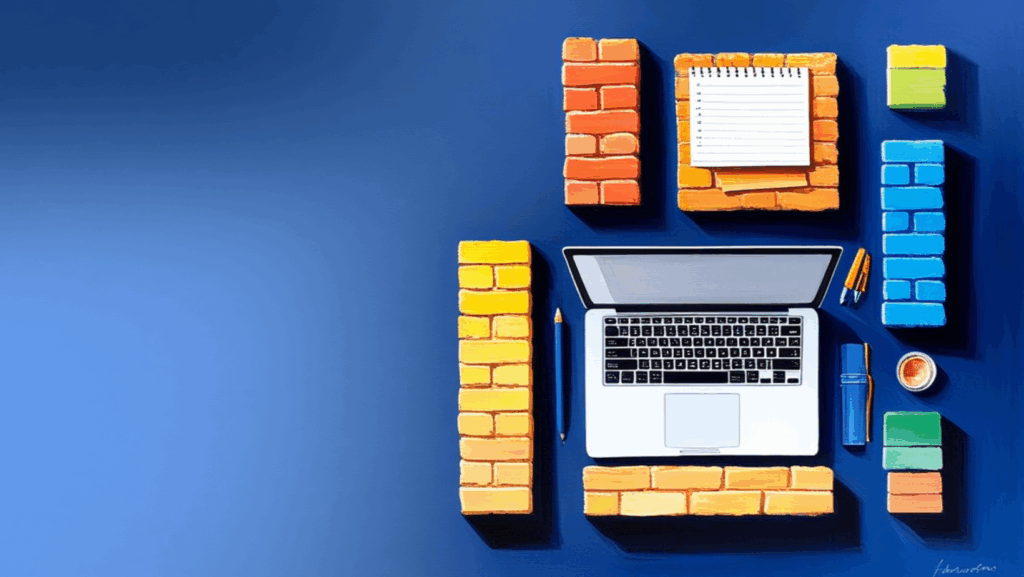
MStudio is a creative studio concept developed by Mahir Sijamija, an experienced journalist and artist, designed to produce stop-motion animation content tailored for media outlets. The studio uses LEGO bricks as a medium to create visually engaging storytelling formats for news, investigative journalism, and social commentary.
The goal is simple: to translate text-heavy content into a more visually appealing format that still transmits the strong story.
This innovative approach aims to simplify complex topics and attract a diverse audience, including younger viewers, by combining playful visuals with serious journalistic content. As a coach, I guided MStudio through the validation process to assess the viability of this novel media format and its potential impact on the local media landscape.
What was the goal of the validation process?
Validation Booster is an intensive programme aimed at testing the viability of the startup idea in targeted markets. The primary goal in the case of MStudio+ was to validate the need for a novel news presentation format, assess the market acceptance of stop-motion animation as a storytelling medium in journalism, and generally evaluate the overall feasibility of the idea in the Balkan region, with a specific focus on Bosnia and Herzegovina. Specifically, the validation aimed to:
- Test audience engagement and comprehension of news content delivered via LEGO-based stop-motion animation;
- Evaluate the demand for stop-motion animation services among media outlets, NGOs, and educational institutions;
- Assess the usability and effectiveness of MStudio’s digital platform for content delivery and client interaction;
- Identify the economic and operational challenges associated with launching and sustaining this innovative media venture.
Validating these aspects was critical to ensure that MStudio’s approach could successfully differentiate itself in a competitive media environment and contribute positively to media innovation and public engagement.
This was especially critical given the rise of numerous AI tools that can provide equally engaging visual formats at a fraction of the cost. MStudio + played on the originality card and the artistry in the presentation of the story’s characters.
How did we go about the validation process?
The proposal was ambitious and, in its initial format, focused on testing too many different formats with too many potential customers across multiple markets. The first task was to sharpen the focus of the validation effort. To achieve this, we designed the validation process as a multifaceted approach, focusing first on narrowing down the market where the testing will take place.
Here is where we placed most of our focus in terms of:
Content production and testing: We wanted the testing to be done with real content. MStudio approached a regional media outlet and offered to produce a social media-tailored piece of content based on the originally published story. This allowed the media partner to observe the target audience’s behavior about the original piece and compare it to the stop-motion piece in terms of qualitative and quantitative feedback on engagement and clarity.
Service offering trials: Customised stop-motion animation services were offered to media organizations, NGOs, and educational institutions to test client satisfaction and adaptability of the format for various purposes. This was done to determine whether there would be interest in purchasing these services and budgeting them upfront. No media outlet has this service internally; it is usually deemed too costly. However, a clear interest in offering innovative storytelling visibility formats depends on the expected effects of adopting innovation.
Market research and feedback loops: Continuous engagement with media partners and viewers helped refine storytelling techniques and service offerings based on real-world needs and preferences. Feedback was gathered from journalists who highlighted the issues that sometimes great stories get buried under the sea of content that is hyper-produced but never appreciated properly, from editors who are keen on seeing better engagement from the audience, as well as from the audience whose engagement and activity on the trial posts were monitored.
What did we learn?
The process was rather rewarding for both sides.
Mahir was curious and open, which are key traits necessary to make the validation process a success: you have to be open and ready to receive any and every kind of feedback.
We worked carefully to identify key media outlets and key internal actors who are decision-makers, as well as those directly involved in story creation.
Here are the main highlights from the process:
- Market acceptance: Media outlets initially exhibited skepticism due to the unconventional use of stop-motion in journalism. However, successful pilot projects demonstrating audience engagement helped to build trust and interest.
- Audience engagement: The LEGO-based stop-motion format proved effective in making complex topics more accessible and memorable. It attracted younger demographics and enhanced viewer retention compared to traditional formats.
- Educational and social impact: Educational institutions valued the clarity and appeal of animated explainer videos, indicating strong potential for broader educational use. NGOs appreciated the ability to communicate social issues in an engaging manner.
- Economic and operational challenges: High startup costs for equipment and production, coupled with funding constraints, posed significant hurdles. Strategic financial planning and competitive pricing models were necessary for sustainability.
But the road ahead is not completely clear…
Convincing risk-averse media outlets to adopt a novel storytelling format required building a credible portfolio and demonstrating clear value. The need for innovation is high, but budgets are limited.
Managing limited funding while scaling production capacity was a persistent challenge for MStudio + team as well. While Mahir initially operated under the assumption of renting equipment from external providers, this was seen as a risk in its own right.
Differentiating MStudio in a competitive media production market requires a focused marketing strategy and a clear value proposition that explicitly addresses the AI-dominated aspects of production. To take this idea to the next step, the technical complexities of stop-motion animation demand careful workflow management and creative problem-solving. This emerged as yet another service that can be provided to media outlets that lack a clear digital strategy.
The validation process confirmed that MStudio’s innovative use of stop-motion animation has strong potential to redefine media storytelling in Bosnia and Herzegovina and beyond. It demonstrated the format’s ability to engage diverse audiences, simplify complex issues, and provide valuable educational and social content. While challenges remain, particularly in market acceptance and funding, the insights gained offer a solid foundation for strategic growth. The validation underscored the importance of iterative testing and adaptation in launching innovative media ventures, positioning MStudio for successful scaling and impact.
Author: Samira Nuhanović
Validation Booster programme is implemented by Thomson Media as a part of Media Innovation Europe led by the Vienna-based International Press Institute (IPI), the consortium brings together Thomson Media (TM), The Fix Foundation (TFF), and the Balkan Investigative Reporting Network (BIRN). The programme is co-funded by the European Union.