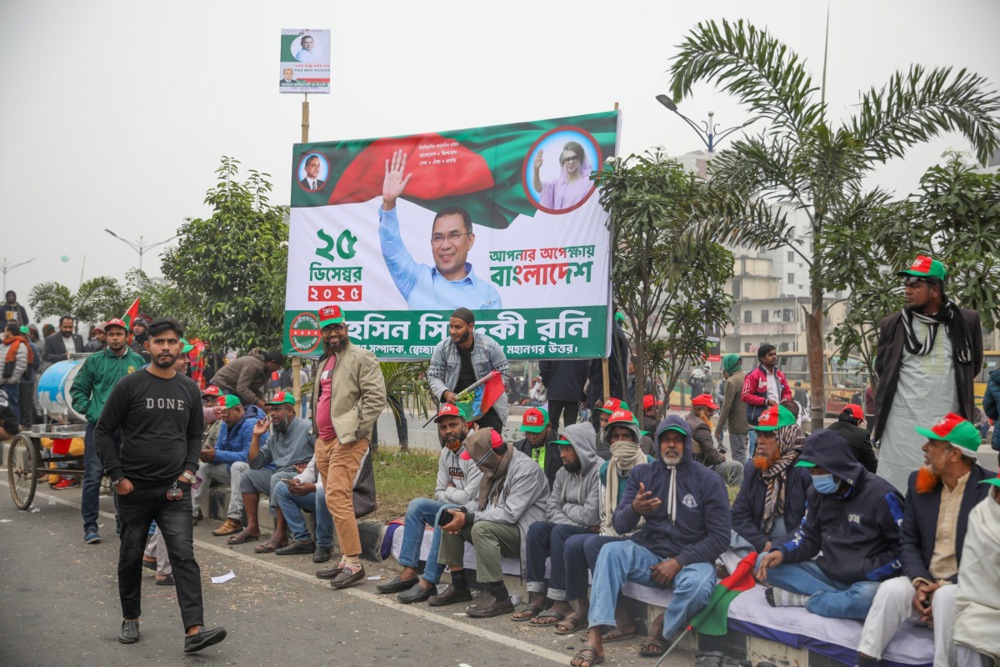
Ahead of Bangladesh’s February 12 election, the International Press Institute (IPI) urges political parties, the interim government, and election officials to demonstrate their commitment to press freedom by ensuring journalists are able to do their jobs freely and safely. We emphasize the critical role that a free media play in ensuring elections are carried out fairly and in line with democratic standards.
Next week’s parliamentary elections will be Bangladesh’s first since longtime ruler Prime Minister Sheikh Hasina fled the country in August 2024 after her government’s violent crackdown on student-led protests. Since Hasina’s departure, an interim government, headed by Nobel laureate Muhammad Yunus, has led the country. The February 12 vote will determine the makeup of the new government.
In the months leading up to the upcoming vote, political tensions have flared, and attacks on members of the media have been on the rise. In December 2025, the Dhaka offices of two of Bangladesh’s leading newspapers, the Daily Star and Prothom Alo, were vandalized and set ablaze by a violent mob of protesters. Between December and January, local rights groups documented 16 incidents of journalists being physically assaulted or otherwise obstructed from carrying out their work. Many local journalists fear they will be subjected to physical violence while reporting on the election.
“At this critical turning point for democracy in Bangladesh, IPI strongly urges all political parties to show their respect for freedom of the press – and for the rights of journalists to cover elections freely and safely,” said IPI Global Advocacy Officer Rowan Humphries. “This moment must be used to reverse years of democratic backsliding – marked by growing attacks on the media – and to show leadership in the region by safeguarding democratic processes and rights.”
Under Hasina’s 15-year rule, the space for free media in Bangladesh shrank considerably. IPI monitoring data documented widespread physical, verbal, and online threats and attacks on journalists. Many cases of assaults, and even killings, of journalists were treated with impunity. The Hasina government also abused judicial levers, including the draconian now-repealed Digital Security Act, to target and silence critical media.
The Yunus government has been criticized for failing to take meaningful action to curb press freedom violations in Bangladesh.