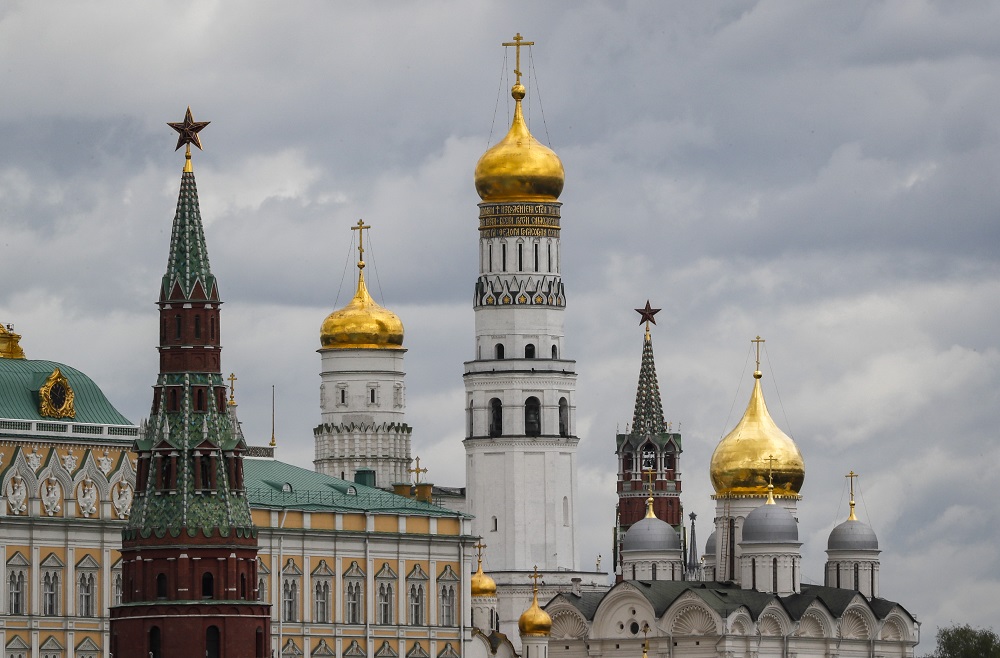
For weeks in the spring of 2026, residents of Moscow experienced major disruption as mobile internet shutdowns which had earlier affected several Russian regions finally reached the capital.
While the partial shutdowns were softened in the following weeks, internet users across Russia continued to experience serious difficulties accessing most websites, including those of independent media.
These latest internet shutdowns came in the context of the Kremlin’s intense crackdown on press freedom, which intensified dramatically following the start of Russia’s full-scale invasion of Ukraine.
For some time, independent media operating in exile – and their audience inside Russia – found ways to circumvent these numerous restrictions.
Four years later, however, authorities are closing in on what little remains of the once-free Russian internet.
Escalating crackdown
Soon after 24 February 2022, Russia adopted draconian legislation which restricted the work of media outlets in reporting on the war. These laws and regulations were quickly nicknamed ‘military censorship’.
As a first step, in March 2022, the Russian State Duma adopted amendments to the Criminal Code introducing prison sentences of up to 15 years for spreading ‘fake news’ or discrediting the Russian army. According to the law, any information on the war in Ukraine not confirmed by Russian authorities, and instead reported by Western or Ukrainian sources, is automatically considered ‘fake news’ or as ‘discrediting the Russian army’.
This legislation rendered independent reporting on the war in Ukraine close to impossible, forcing most independent media outlets to flee the country or face criminal sanctions or imprisonment. Prior to this, authorities adopted “foreign agent” legislation that further affected the media, including those outlets operating in exile.
In the scramble to control the war narrative within Russia, social media platforms and messaging services were also blocked. By 2026, the list of banned services included most western platforms. This has further disrupted the news and information ecosystem in Russia, forcing citizens to adapt and find new ways to access unrestricted information.
Circumventing censorship
In response to this media censorship, many Russians seeking impartial information about the country and the war have turned to virtual private network (VPN) services. VPNs re-route the user’s IP address outside the country and subsequently allow users to access platforms which are blocked domestically. But not even a VPN can circumvent a non-existent internet connection.
VPNs also require at least some technical knowledge and advanced online payment skills, as Russian credit cards often do not service payments to foreign companies. Many free VPN services within Russia are blocked, unreliable or unsafe.
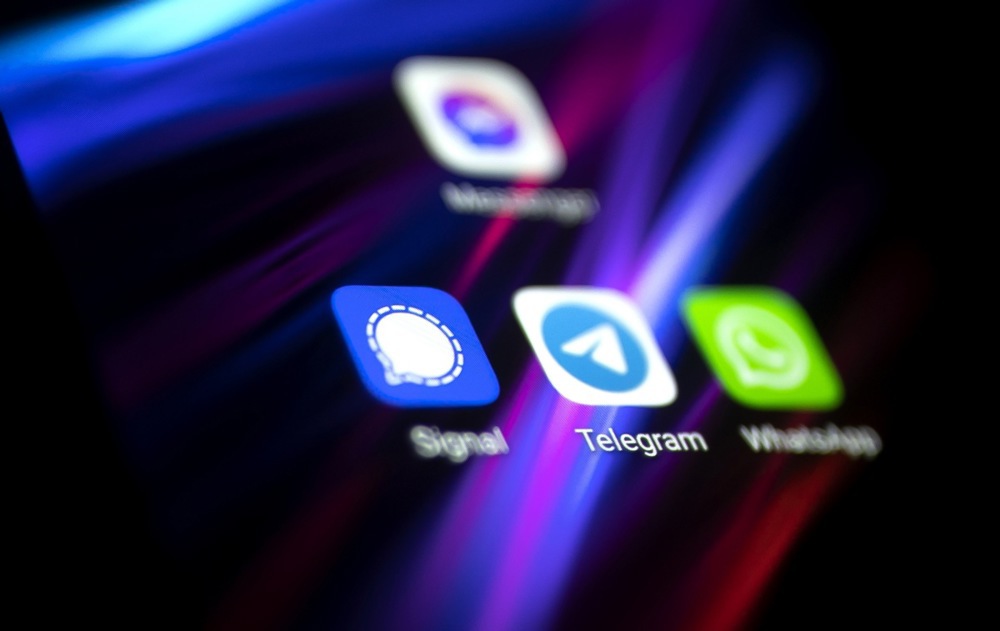
In this context, Russians and independent media outlets greatly relied on Telegram as a censorship circumvention tool, given that the app was one of the last services that remained accessible without a VPN.
However, in February 2026, Russian state internet and media regulator Rozkomnadzor announced it had begun throttling the app due to its alleged failure to adhere to Russian law by not protecting users’ personal data and not combating criminal activity on the platform.
According to independent Russian journalists who spoke to IPI, the suppression could also serve a different purpose: attempting to drive Russians onto a new Kremlin-controlled app called Max.
Launched in 2025 by state-controlled tech company VK, Max, which includes a messaging service just like Telegram, is reportedly being imposed onto citizens by authorities, for instance by requirements that certain employees of state institutions communicate on it.
The app raises a number of alarming security concerns. According to independent expert reviews, it constantly tracks users’ activity, does not use end-to-end encryption, and its privacy policy explicitly states it may share user data, including chat logs, contacts, and geolocation, with authorities. Recent research uncovered that the Android version of Max includes a surveillance component that monitors how users access blocked content, including VPN use, and may send this information back to the messenger’s servers.
Sovereign internet infrastructure
While the effects of the intensified crackdown efforts appear to vary significantly within Russia, what remains constant is that all exiled independent media rely on the internet to reach their audiences, no matter where they are. While for now a throttling of Telegram seems manageable, the loss of access to the global internet within Russia would be catastrophic for independent media abroad in their ability to reach their audience.
For years now, this situation has been a looming possibility. Russian authorities have long been working on creating a “sovereign internet” infrastructure to reduce their reliance on western technology. Since at least 2010, authorities have been filtering the internet and systematic filtering increased significantly from 2012. Since 2015 the country has been collaborating with Chinese officials to implement procedures resembling China’s Great Firewall. In 2019, the “sovereign internet” law was passed, expanding Rozkomnadzor’s authority.
In the past, authorities already tried to officially block Telegram. At the time, Rozkomnadzor lacked the technical capabilities to implement the ban and the restrictions were ultimately lifted. This time the blocking seems to be somewhat more successful, demonstrating that the technical abilities of authorities have improved.
Audience decline
Telegram has several features which have made it a convenient tool for independent media. For one, the channel feature greatly helps content distribution. Telegram is the only major app with this function, as WhatsApp refused to launch channels in Russia due to pressure by authorities.
Telegram is also one of the few of what Galina Timchenko, CEO and founder of independent media outlet Meduza, calls “direct platforms”, unmoderated by algorithms. Thanks to this approach, readers see all posts in a strictly chronological order.
So far the throttling measures against Telegram by Russian authorities have not had a major impact on the app’s usage, with data also showing that Russians are not moving to Max. Instead, some, including government officials, have resorted to buying cheap second phones, so-called “maxophones”, which they dedicate solely to the messenger.
In April 2026, a poll found that 49% of Russians continue to read news at least once a week on Telegram, despite its blocking. This figure has dropped by only 4% from March 2025. 20% continue to access news on Telegram multiple times a day, compared to 25% in 2025.
Timchenko told IPI that regardless of these figures, Meduza’s audience is slowly declining. Even Russians who are experienced VPN users are growing tired of them, because they require constant awareness. Government services do not work with VPNs, so Russians must turn off their VPN to pay rent, turn it on again to read outlets such as Meduza, and then turn off the VPNs again to buy a bus ticket.
Novaya Gazeta Europe, another major independent exiled outlet, has so far not seen a major decline in subscribers, but notes a concerning trend.
“People are less and less interested in hard news about war and injustice”, Ksenia Razumova, head of SMM and partnership department at the outlet, told IPI. “Moreover, reading such news requires special moves because of blockages and shutdowns.”4
Communication and monitoring
The attempted throttling of Telegram does not only lower the ability of exiled outlets to reach their audiences, but also their audiences’ ability to reach them. For Novaya Gazeta Europe readers, Telegram has been a central tool in sending in exclusive material. During throttling and shutdowns, this became almost impossible.
“People in Russia could not send us photos from protest rallies, on military (issues) or police stations,” Razumova explained.
On the other side of the political spectrum, among the regime’s supporters Telegram has also been a popular tool. Pro-war bloggers and Russian officials all have their own channels. For independent media outlets in exile, the block might therefore make monitoring propaganda and getting information from the ground harder.
“I am afraid that officials will close their accounts on Telegram and we will lose our sources. For example, we know about the situation in the Kursk region from local officials’ channels,” Oleg Grigorenko, editor-in-chief at 7×7, an outlet focusing on civil society in small Russian regions, told IPI.
Grigorenko said that the outlet is re-establishing their monitoring system to find new sources on state-backed platforms.
While 7×7 does not expect to lose more than 10% of its audience due to the Telegram block, Grigorenko said they expected to lose some ability to expand their audience, because those who do not already use VPNs will likely just stop using Telegram.
At the same time, not everybody in Russia is feeling the effects of the bans and shutdowns.
An editor at From the Republics, an exiled, indigenous-led media outlet covering Russia’s 21 ethnic republics and minority communities, told IPI that their reporting on regions from the Caucasus to the Arctic has not been affected by the consistent blocking of any platforms.
“In the Republic of Sakha (Yakutia), which is the same size as India, people would write to me that they did not feel any of that jamming” they told IPI. “Half of this region is located in the Arctic, and Russia does not even have the capacity to build stable air- and landline (internet) connections there.”
From the Republics was established last year and never relied on Telegram, the editor said, focusing instead on Instagram, which has been blocked since 2022. There in the midst of all the existing restrictions they have been able to build a strong audience and see a lot of engagement.
Growing unrest
According to Russian independent journalists who spoke to IPI, authorities have historically introduced tighter restrictions when they feared protests, and current restrictions could fit this pattern too.
“It has been four years of war. The economic situation is not so good. We see some regional protests … people are not satisfied,” Timchenko explained.
Paradoxically, curbing unrest with internet shutdowns and blockings is not helping this situation, with new restrictions frustrating Russians across the political spectrum.
“First they [Russian authorities] took over television, then newspapers, and then cultural organisations. At the same time the internet was the last island of freedom. Now it’s next in line,” Timchenko said, adding that the Kremlin could be seeing this as a ‘final battle’ against internal opposition.
The consequences of the worst-case scenario, in which Russia is successful in implementing a completely sovereign and isolated internet, would not only be felt by exiled Russian independent media.
For the rest of the world, losing access to the Russian internet – and to news from Russia – would mean extremely limited reporting by Russian independent media, who remain the world’s eyes and ears inside the country.