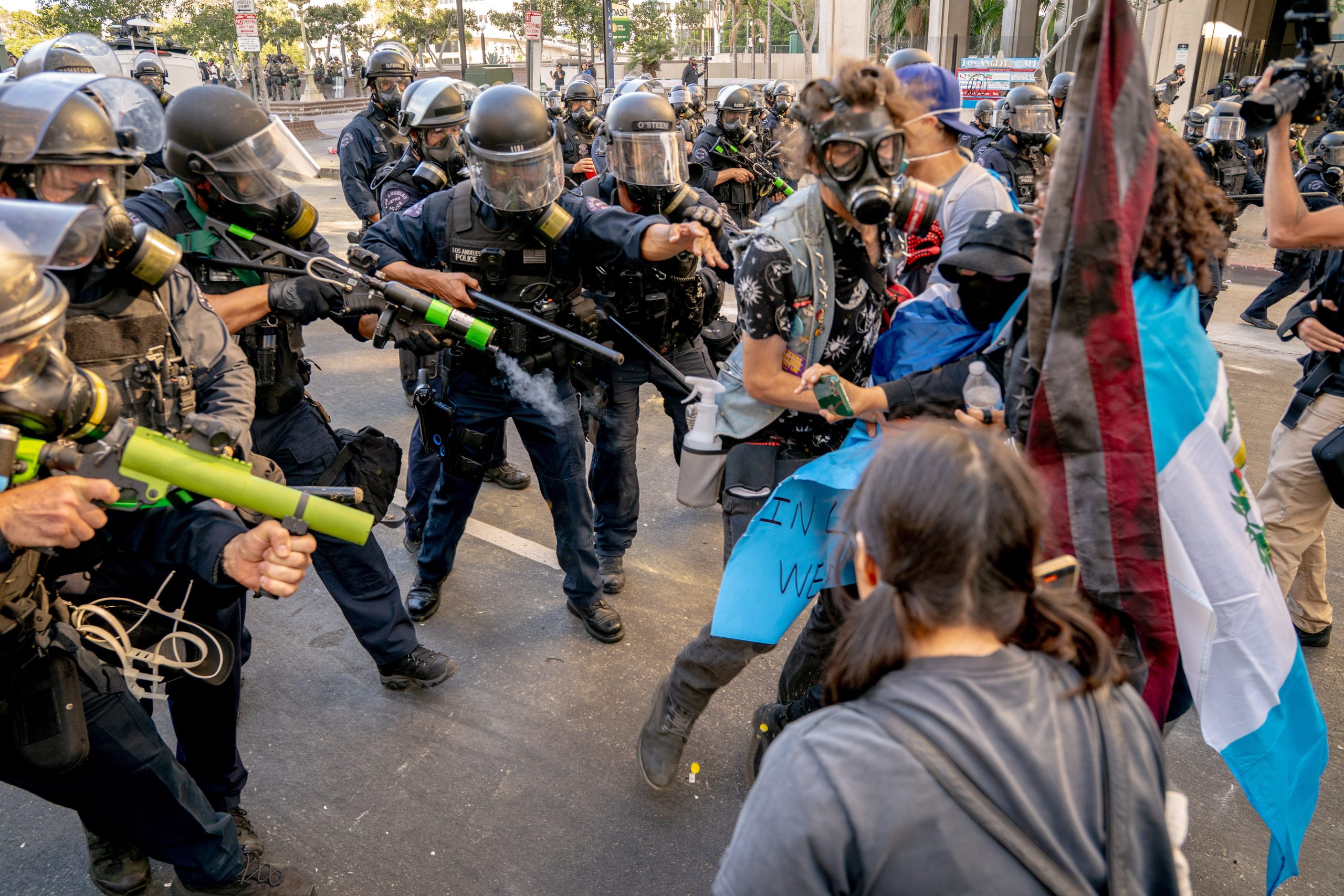
The IPI global network today welcomes the temporary restraining order issued by a U.S. court barring the Los Angeles Police Department (LAPD) from undertaking a range of actions limiting the press’s right to report, including detention, access restrictions, and the use of projectiles against reporters. We call on law enforcement authorities in Los Angeles to fully respect the media’s right to freely and safely cover public-interest news.
Amid widespread anti-ICE and ‘No Kings’ protests in Los Angeles throughout June and July, dozens of journalists faced violence or detention by local and federal law enforcement, as IPI previously reported. The LA Press Club documented more than 80 such incidents in just one month (from June 6 to July 10). Among these was the apparently intentional targeting of 9News Australia journalist Lauren Tomasi with a rubber bullet during a live broadcast and the detention of a CNN crew while also live on air.
On June 16, the LA Press Club and Status Coup, an investigative reporting site, sued the LAPD for violating journalists’ rights under the U.S. Constitution and California state law. In a ruling made public on July 11, U.S. District Judge Hernán D. Vera issued a temporary 14-day restraining order, arguing that a court injunction was necessary to protect journalists’ First Amendment rights. This order calls for a number of important protections for journalists, barring the LAPD from prohibiting their right to enter closed areas, from intentionally assaulting, detaining or arresting them, and using less-lethal munitions (LLMs) and other crowd control weapons against them.
Vera’s order cited that LAPD officers had purportedly targeted clearly identified members of the press. He set a hearing for later this month to consider issuing a preliminary injunction which would extend the restraining order.
This move marks a pivotal success for press freedom organizations. “The court’s ruling demonstrates that Los Angeles police had failed to meet state and federal regulations that require authorities to protect members of the press,” said IPI Director of Advocacy Amy Brouillette. “It represents an essential step towards allowing the media to cover important matters of public interest without fear of retaliation from law enforcement.”