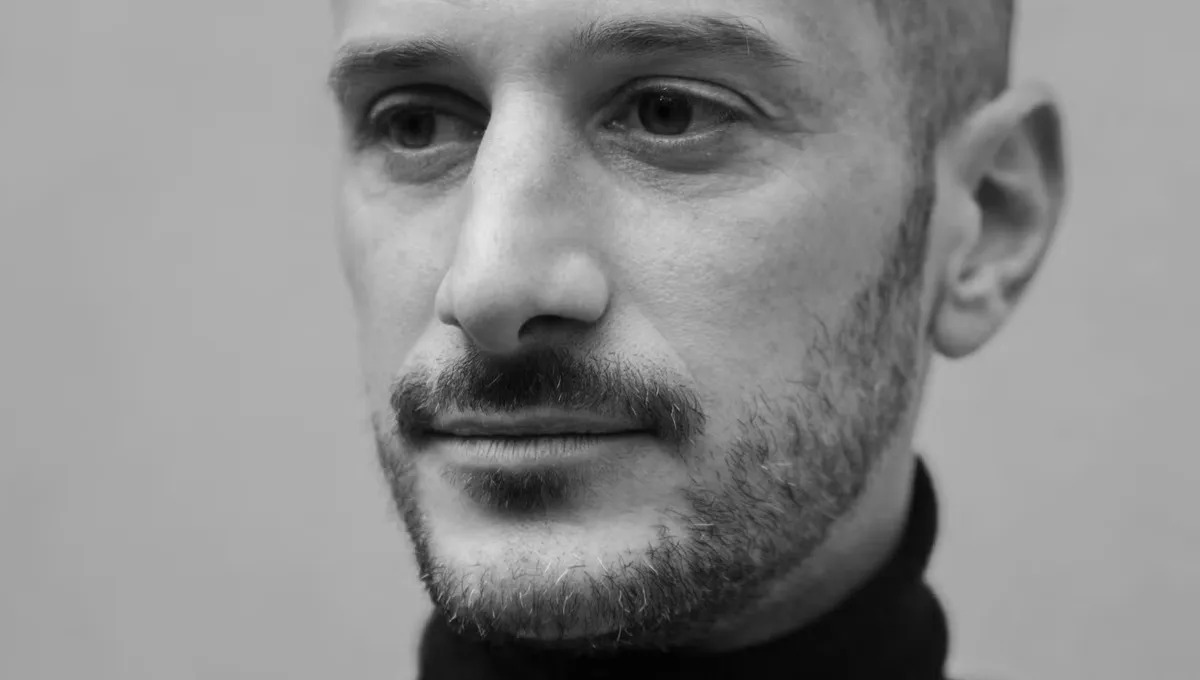
One year after a targeted Russian drone strike killed French freelance photojournalist Antoni Lallican in Ukraine, IPI and Media Freedom Rapid Response (MFRR) partners mark the anniversary by renewing their call for effective cooperation between French and Ukrainian investigations to ensure that justice is secured. The MFRR also extends its condolences to Lallican’s family and stands in solidarity with all journalists working under extraordinary risk in Ukraine.
A Russian first-person view (FPV) drone killed Lallican on October 3, 2025, in a direct strike near the town of Druzhkivka in Ukraine’s eastern Donetsk Oblast, around 15km from the front line. He was on a reporting trip with Ukrainian photojournalist George (Heorhii) Ivanchenko. Both were accompanying Ukrainian soldiers on a reporting assignment.
Lallican was killed immediately. Ivanchenko suffered serious injuries and surgeons amputated his leg soon after. One year on, the Ukrainian photojournalist is still recovering and has undergone complex surgery to fit a prosthetic leg.
At the time of the strike, both Lallican and Ivanchenko were wearing protective equipment bearing visible PRESS markings. The targeted use of a drone against a reporting team clearly identifiable as press makes this one of the most shocking examples of a deliberate Russian attack on journalists in Ukraine since the full-scale invasion began in 2022.
Intentionally directing an attack against civilians is a war crime. The killing of Lallican and serious injury of Ivanchenko must be thoroughly investigated as a suspected war crime, including the evidence that the journalists were deliberately targeted.
The killing highlights Russia’s repeated violations of international human rights and humanitarian law. It is also a tragic reminder of the growing danger facing journalists and reporting teams on the front lines as drone technology spreads.
The rapid spread of FPV and fibre optic drones, the second of which cannot be jammed, has significantly reshaped the security risks for media working on the front lines by extending the so-called “kill zone.”
We call on French and Ukrainian prosecutors to provide meaningful updates on the investigations, consistent with their integrity and the protection of witnesses, and to intensify efforts to identify and bring to justice those responsible. French and Ukrainian authorities should strengthen cooperation, preserve and share evidence, and pursue the responsibility of those who carried out or ordered the attack, as well as any commanders whose criminal responsibility is established. Relevant evidence should also be shared with the Office of the Prosecutor of the International Criminal Court, as appropriate.
IPI and MFRR partners commend the work done so far by the Temporary Investigative Commission of the Ukrainian Parliament on the Investigation of Crimes Committed by the Russian Federation Against Journalists and Media Workers, which is examining this and other killings of journalists in Ukraine.
Since the start of Russia’s full-scale invasion of Ukraine, MFRR partners have documented 16 journalists killed while reporting in Ukraine on the Mapping Media Freedom database.
The MFRR will continue to document all attacks on journalists by Russian forces and partner organisations will continue to contribute to the Ukrainian Parliament’s Investigative Commission on major cases of impunity. Russia must be held accountable for the killing of Antoni Lallican and for all crimes committed against journalists since the start of its full-scale invasion.
Signed:
International Press Institute (IPI)
European Centre for Press and Media Freedom (ECPMF)
European Federation of Journalists (EFJ)
Free Press Unlimited (FPU)
ARTICLE 19 Europe
Osservatorio Balcani Caucaso Transeuropa (OBCT)
This statement was coordinated by IPI as part of the Media Freedom Rapid Response (MFRR), a Europe-wide mechanism which tracks, monitors and responds to violations of press and media freedom in EU Member States and Candidate Countries