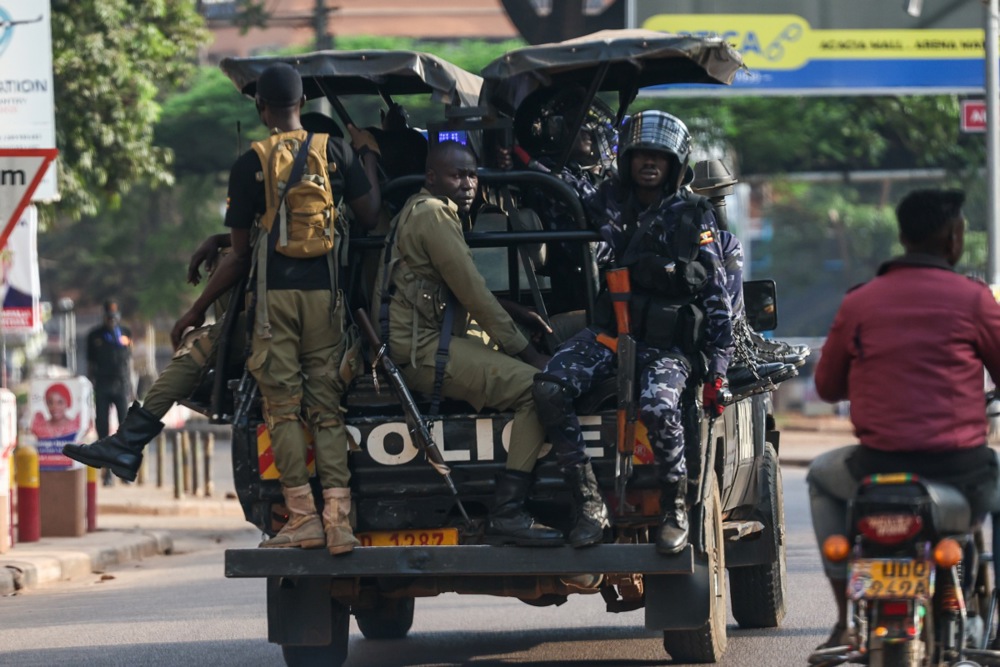
The International Press Institute (IPI) condemns the deportations of three French journalists by Ugandan authorities after they arrived to report on the aftermath of Uganda’s elections. IPI calls on authorities to refrain from undermining independent reporting during critical periods and uphold media freedom in line with Uganda’s regional and international obligations.
Radio France International (RFI) correspondents Florence Morice and Lucie Mouillaud, as well as France 24 East Africa correspondent Bastien Renouil, were recently deported from Uganda despite possessing all the necessary accreditations to cover the presidential election.
Renouil and one of the RFI correspondents were refused entry upon arrival in Uganda while the other RFI correspondent was initially allowed into the country before being escorted to a return flight. Dr. Chris Baryomunsi, Uganda’s minister of Information and Communications Technology and National Guidance, is reported to have claimed that the deportations were administrative in nature and that there is press freedom in Uganda.
In the build-up to the election, Ugandan authorities shut down the internet, suspended several civil society organisations, and also barred some journalists from covering state-related events.
Both RFI and France 24 expressed their full support for their correspondents, strongly condemning these incidents and highlighting that the deportations of their reporters deprived the public of balanced coverage of a major electoral event in Uganda.
“IPI calls on the Ugandan authorities to refrain from arbitrary measures that undermine media freedom, especially during critical periods like elections. Legal and policy frameworks in Uganda should create a conducive environment for both local and foreign journalists to seek, receive, and impart information,” said Nompilo Simanje, the Africa Advocacy and Engagement Lead at IPI.
“It is concerning that Ugandan authorities are relying on tactics like immigration laws and ‘administrative measures’ to silence independent journalism. Any accreditation rules and visa procedures that are put in place should be transparent and fair, and not used to restrict media freedom and access to information,” Simanje added.
As the Ugandan government takes on a new term under President Yoweri Museveni, IPI urges authorities to guarantee press freedom and demonstrate their commitment to it by aligning with regional and international press freedom standards.