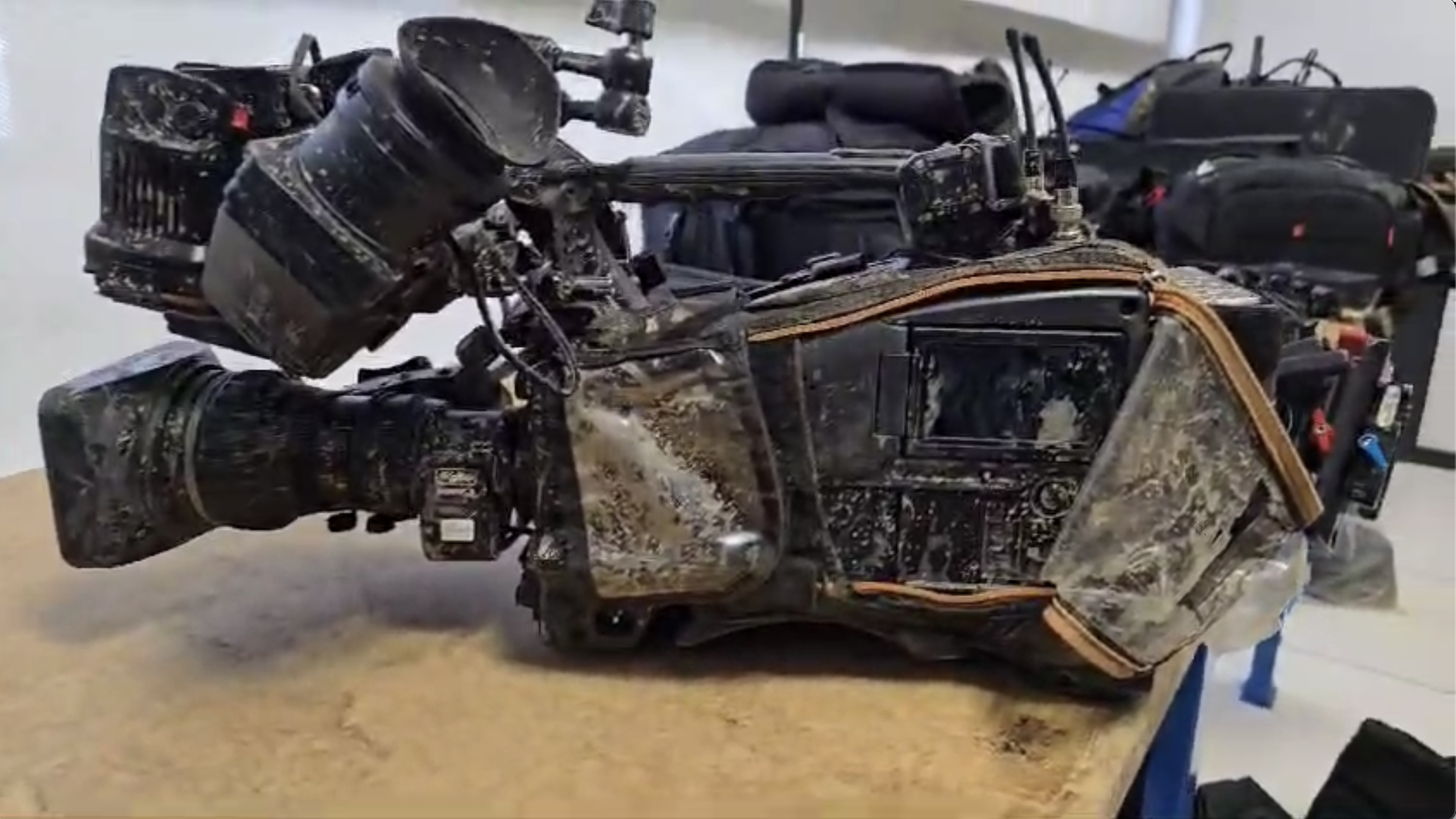
IPI has published a new investigative report titled “Toxic Networks: The digital ecosystem that targeted Spain’s public broadcaster during the deadly Valencia flooding,” which exposes the online disinformation campaigns and real-world harassment faced by Spanish journalists during one of the country’s deadliest natural disasters.
The report uncovers how Spanish public broadcaster RTVE became a central target of both physical assaults and coordinated digital attacks amid its coverage of the devastating October 2024 floods in the Valencian Community, which claimed over 230 lives. It identifies how ultranationalist influencers, conspiracy theorists, and opportunistic actors exploited public grief and institutional miscoordination to spread manipulated narratives against the media.
Key findings identify:
- 369 disinformation messages analyzed across platforms such as Telegram and X (formerly Twitter), reaching over 14 million views;
- The emergence of pseudo-journalistic influencers and conspiracy networks framing Spain’s public broadcaster as manipulative or politically biased;
- Evidence of amplification through ideological networks, not coordinated but highly aligned in messaging and audience targeting;
This case study is part of the IPI-led “Decoding Disinformation Playbook”, a joint project with Faktogaf and Taz, which investigates the evolving tactics of disinformation actors targeting the press. The project aims to support newsrooms and democratic institutions in identifying, resisting, and responding to attacks on media credibility. More about the project can be found at:
🔗 https://ipi.media/decoding-disinformation-playbook/
The report is also featured in the Observatory of Disinformation Narratives Against the Media, an IPI led initiative that documents cross-border patterns of disinformation targeting journalists and media institutions. Explore the Observatory here:
🔗 https://observatory.ipi.media/
“The Valencia case illustrates how quickly legitimate journalism can be weaponized and reframed as manipulation,” said IPI Head of Digital Media and Online Safety Javier Luque. “We urgently need stronger protections for journalists and enforcement of platform accountability—especially during times of crisis and natural disasters when access to accurate information is critical.”
Read the case study in the Observatory