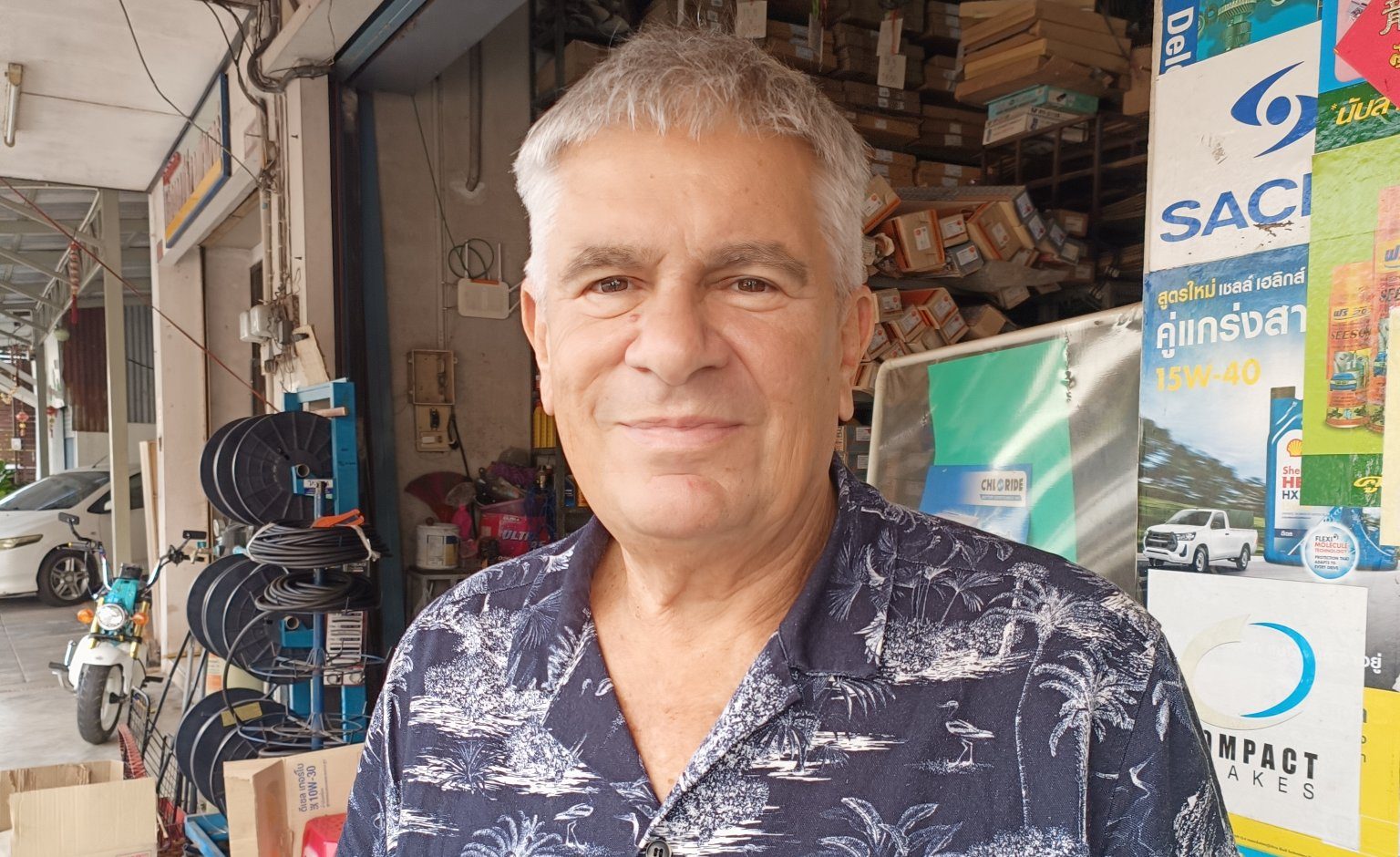
The IPI global network is deeply concerned by the Thai government’s decision to pursue criminal defamation charges against journalist Murray Hunter on behalf of the Malaysian government. IPI urges Thai authorities to drop all charges immediately, and calls for an end to the alarming rise of transnational repression in Southeast Asia.
Australian journalist Murray Hunter was arrested by Thai police on September 29 while waiting to board a flight at Bangkok’s Suvarnabhumi Airport. Hunter, who lives in Thailand, was later indicted on charges of defaming the Malaysian government under Section 328 of the Thai Criminal Code. He was released on bail, however authorities seized his passport, forcing Hunter to remain in Thailand until his trial begins on December 22.
If convicted, he could face up to two years in prison and a fine of 200,000 Thai baht ($6,180 USD).
The case against Hunter originated from a complaint brought to Thai authorities by the Malaysian Communications and Multimedia Commission (MCMC) over four articles Hunter wrote in 2024 on his Substack blog which described alleged abuses of power by the MCMC. Hunter is known for his critical reporting on the Malaysian government, frequently covering corruption and political issues on his Substack.
Hunter has repeatedly stated his belief that his arrest was improper, and that the charges against him are politically motivated.
The highly unusual case against Hunter is a rare example of a cross-border prosecution of a journalist for defamation, a form of transnational repression. It is also believed to be the first instance of Thai law being used in this manner against a journalist. Thai Lawyers for Human Rights characterized the legal action against Hunter as a “transnational SLAPP,” using the acronym for Strategic Lawsuit against Public Participation – lawsuits designed to intimidate critical voices into silence.
The use of criminal defamation laws to prosecute critical voices has increased worldwide in recent years, despite an international campaign to decriminalize them. According to UNESCO, 80% of the world still criminalizes defamation.
Instances of transnational repression are also on the rise worldwide. In a July report, the United Nations documented an alarming increase in cross-border repression and human rights abuses in Southeast Asia, including cases of extrajudicial executions, enforced disappearances, and legal harassment of opposition politicians, journalists, and activists. Thailand regularly cooperates with other countries in the region pursuing cases against dissidents.