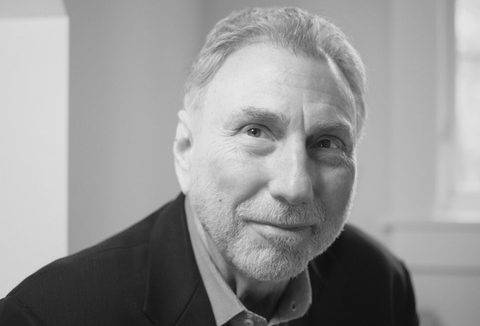
In an era of unprecedented attacks on the press, Martin “Marty” Baron’s career is a powerful reminder of why the free press matters in the first place. Over the span of his 45 years as a journalist, Baron, an institution in U.S. media, has been governed by the same core values the journalism industry holds most dear: to be “honest, honorable, fair, ambitious, unflinching, and independent.”
Undeterred by institutional resistance, Baron embodies the power and purpose of journalism at a time when press freedom comes increasingly under threat around the globe, and now, in the United States. Even as the media comes under direct attack from the United States’ highest office, Baron has been a steadfast defender of professional, unbiased journalism that views no person, nor institution, as above scrutiny.
From the Boston Globe to the Washington Post, Baron has led award-winning newsrooms to break major stories that have driven national, and even international conversations, and reshaped American politics. In recognition of his commitment to tough, objective, public service journalism that holds the powerful to account, IPI is proud to announce Marty Baron as one of the distinguished recipients of the 2025 World Press Freedom Hero award, in partnership with International Media Support (IMS). Baron’s significant contributions to journalism, and how to safeguard it, carry even greater relevance at a time when press freedom is under assault in the United States.
The World Press Freedom Hero award is given annually to journalists who have shown an unwavering commitment to media freedom.
“Receiving this recognition at a time when journalists are under escalating attack is deeply gratifying,” said Baron, in response to receiving this award. “Never in my lifetime has there been greater need for an independent press, one that reports vigorously on society’s most powerful and that also holds itself to high standards. I am inspired every day by courageous journalists who endure pressures far beyond what I myself have faced. Their work is a gift to all who cherish human freedom.”
A relentless pursuit of truth
Baron began his journalism career at the Miami Herald, as a state and later business reporter. He quickly climbed the ranks at several large national outlets, including The Los Angeles Times and The New York Times, before returning to the Herald as executive editor in 2000.
Under Baron’s leadership, the Miami Herald won the 2001 Pulitzer Prize for its breaking news coverage of the controversial federal raid to seize Elián González, the six-year-old Cuban boy at the center of an international custody battle that involved both the U.S. and Cuban governments. This was just the beginning of a long track record of award-winning reporting: over the course of his career, Baron-led newsrooms would go on to earn 17 more Pulitzers.
In 2001, Baron joined the Boston Globe as executive editor, where, only a few months into his tenure, he took on a major investigation into how the Catholic Church covered up a pattern of clergy sexual abuse of minors. Despite pushback from powerful figures within the Archdiocese of Boston, and even members of his own newsroom, Baron doggedly pushed on, earning the Globe a Pulitzer Prize for public service. The story of how the Globe team investigated the story was later chronicled in the Academy Award-winning movie, “Spotlight.”
The enormous depth and breadth of the scandal, revealed by the Globe’s Spotlight Team, led to the criminal prosecutions of five priests in the Boston area, numerous lawsuits, and more than 900 Globe articles. As more victims came forward, the story took on a national, then international angle, as similar patterns of abuse were discovered in other dioceses, prompting conversations about reform within the Catholic Church that went all the way up to the Vatican.
In 2013, after more than eleven years with the Globe, Baron joined the Washington Post as executive editor, where reporting teams he managed went on to earn eleven more Pulitzer Prizes. Much of the award-winning investigations focused on the campaigns and presidencies of U.S. President Donald Trump. While Baron served as the Post’s executive editor, the paper broke several major national stories that shaped Americans’ views of the first Trump campaign, including the Access Hollywood tape revelations and exposures of Trump’s charitable practices.
The Post also won awards for their coverage of stories that drove national conversations and debate about public policy, including revelations of secret surveillance by the National Security Agency, coverage of Russian interference in the 2016 election, and the January 6, 2021 assault on the U.S. Capitol building.
“We are not at war. We are at work.”
Under the leadership of President Trump, press freedom in the United States has eroded as the president has undertaken a multifaceted campaign aimed at restricting the editorial independence and operations of American news outlets and damaging public trust in the media.
One of the defining features of the president’s campaign against journalism has been his inflammatory rhetoric, which regularly demonizes individual journalists who publish critical stories about him and his administration, as well as entire outlets. Often, Trump has taken his attacks further than rhetoric, launching a barrage of retaliatory lawsuits against media outlets, placing restrictions on access to presidential events and coverage of the U.S. military, and rescinding funding for public broadcasters.
Despite being repeatedly labeled the “enemies of the people” by the U.S. president, many American journalists are standing up to defend the critical importance of their work. Baron himself is one such champion of the free press. In the face of near-constant attacks on his colleagues and the journalism industry as a whole, Baron has stuck to the principles of his profession, calmly repeating his now-famous 2017 line: “We’re not at war with the administration. We’re at work.”
Baron’s reporting career is a testament to the necessary check the free press serves on powerful institutions. From taking on the Archdiocese of Boston to the nation’s president, Baron has never shied away from doing what journalism does best: uncovering the truth, and holding power to account. Defending the public’s right to know has always been the driving force behind much of Baron’s work. The powerful impact of many of the investigations he drove – on both a human and institutional level – have only proven the necessary role a free press plays in any vibrant and healthy democracy.
Even in retirement, Baron has been an outspoken defender of free expression. In recent interviews, Baron raised the alarm about the president’s use of federal power to control the press. He’s also expressed concern about the potential conflicts of interests that arise from corporate ownership of legacy media, and how this affects public trust in the news.
For Baron, these issues are existential to the future of American democracy: “…the press was the canary in the coal mine. The threat to the free press, it was really an omen of a threat to free speech by everybody – by ordinary individuals, by lawyers, by scientists, scholars, students…The press is often the first target of leaders who aspire to authoritarian powers, and I think that’s been the case with Trump.”
The World Press Freedom Hero awards
IPI will present the World Press Freedom Hero awards at a special ceremony on October 24 at the University of Vienna as part of the 2025 IPI World Congress, which annually brings together leading editors and journalists from around the world.
As IPI marks its 75th anniversary this year, we have chosen to recognize seven individuals who have displayed tremendous courage and resilience in fighting for media freedom. In addition to Baron, the World Press Freedom Hero award will also be given to Mzia Amaglobeli (Georgia), Mariam Abu Dagga (Palestine), Gustavo Gorriti (Peru), Jimmy Lai (Hong Kong), and Victoria Roshchyna (Ukraine), and Tesfalem Waldyes (Ethiopia).
“This year’s awardees are exemplary of the current threats facing journalists worldwide as authoritarianism gains ground, impunity prevails, and new challenges to freedom of expression emerge,” IPI Executive Director Scott Griffen said. “With this award, we honour their courage, commitment, and legacy – while renewing our urgent call to protect and defend media freedom as a pillar of free society.”
“Each of the recipients of this year’s World Press Freedom Hero award have faced acute dangers and threats merely for doing their job,” IMS Executive Director Jesper Højberg said. “Two of them – Victoria Roshchyna and Mariam Abu Dagga – paid with their lives. With immense courage and persistence, the awardees have uncovered corruption, war crimes, persecution of vulnerable groups and multiple other transgressions. We all owe them our deep gratitude for their fearless commitment to exposing what those in power seek to hide.”
Since 2000, IPI has recognized more than 75 journalists who have displayed tremendous courage and resilience in fighting for media freedom and the free flow of news with the World Press Freedom Hero award. Notable past awardees include imprisoned Guatemalan journalist José Rubén Zamora, slain Palestinian-American journalist Shireen Abu Akleh, and Mexican investigative journalist Carmen Aristegui. Since 2015, IPI has been proud to present the award in partnership with IMS.