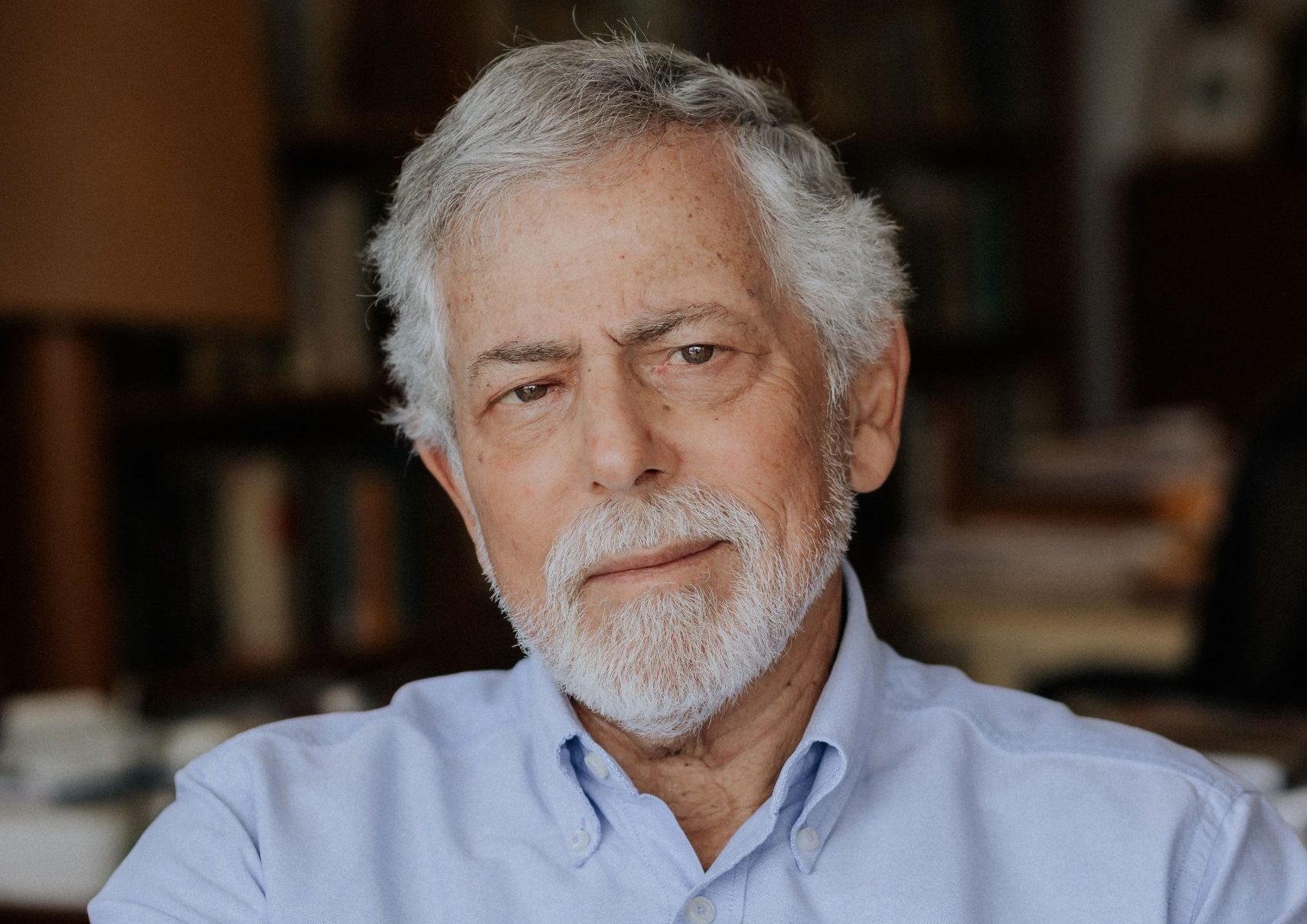
Peruvian journalist Gustavo Gorriti has built a career out of investigating and exposing corruption and holding the powerful to account. His work has brought down presidents and exposed some of Peru and Latin America’s biggest corruption scandals. Now he faces a fresh legal battle against those unhappy with his uncanny ability to shine a light into the halls of power, and to tell stories that the powerful would prefer remain untold.
A legendary figure in Latin American journalism, Gorriti is known for his decades of watchdog reporting on government corruption, rebel groups, and drug trafficking. From his very first investigation, which he wrote on a typewriter, to his current position as founder and editor-in-chief of the Peruvian investigative outlet IDL-Reporteros, Gorriti has led countless groundbreaking investigations that have reshaped power dynamics not just in Peru but in all of Latin America.
From the start, Gorriti’s work has come with great personal risk. Over the years, the journalist has been kidnapped, forced into exile, and threatened with death. He now faces imprisonment, as the very subjects of his past investigations seek to punish him for his anti-corruption reporting.
In recognition of his groundbreaking work, often in the face of repression, IPI is proud to announce Gustavo Gorriti as one of the distinguished recipients of the 2025 World Press Freedom Hero award, in partnership with International Media Support (IMS).
The World Press Freedom Hero award is given annually to journalists who have made significant contributions to promoting press freedom in the face of great risks. In recognizing Gorriti as one of this year’s Press Freedom Heroes, the selection committee honours Gustavo’s courageous and steadfast commitment to independent, investigative journalism and decades of watchdog reporting into power, crime, and terrorism in Peru in the interests of Peruvian democracy and the public’s right to know.
“These are not normal times regarding press freedom and democracy around the world and we journalists, especially investigative journalists, face strong headwinds and an overall deteriorating situation in all too many places at the same time,” Gorriti said, in response to receiving this award. “These crises challenge us through both known and new perils as they demand from us not to get into a defensive crouch but to intensify our efforts to reveal, to expose, and to confront massive disinformation with potent truths.”
“Fake news is nothing new”
A pioneer of investigative journalism in Latin America, Gorriti has been instrumental in developing and setting rigorous standards for quality investigative reporting in the region. Gorriti’s dedication to mentoring countless journalists over the years has given rise to a robust and collaborative network of investigative reporters across Latin America committed to holding the powerful to account.
From the beginning of his journalistic career, Gorriti’s work has been driven by the belief that fact-based journalism can serve as a powerful antidote to the propaganda and disinformation that plagues and pervades today’s information environment. As Gorriti wrote in a 2018 column in El País, “Fake news is nothing new. What is rather exceptional is good journalism.”
Gorriti first made his mark documenting the rise of the Peruvian insurgent guerrilla group known as the Shining Path. His tenacious desire to show the Peruvian public the truth about their government led him to dig deeper and deeper – until he had exposed the drug ties of Peruvian President Alberto Fujimori’s top intelligence officer. In retaliation for this revelation, Gorriti was “disappeared” for two days during a wave of abductions that came in the wake of Fujimori’s “self-coup” in April 1992. Gorriti believes the immediate international outcry that followed his kidnapping and rapid-response advocacy from the press freedom community likely saved his life.
After his release, Gorriti left Peru for the United States before settling in Panama in 1996, where he resumed his investigative work for La Prensa, Panama’s leading news outlet. Yet it was not long before his reporting on links between Panamanian officials and narcotics traffickers again earned him the ire of the government, which attempted – and failed – to first deport Gorriti, then jail him under Panama’s now-repealed gag law known as “ley mordaza.” Gorriti’s freedom was once again credited to an international pressure campaign.
Gorriti returned to Peru in 2001, where he founded his own outlet, IDL-Reporteros, in 2009. What began as an experimental nonprofit publication aimed at filling the gap of dedicated corruption reporting in Peru quickly grew to become one of Latin America’s leading investigative outlets. IDL-Reporteros has led investigations into political corruption, human rights violations, and organized crime, earning numerous awards.
Gorriti and IDL-Reporteros are perhaps most known for their investigation of the Lava Jato (or, “Operation Carwash”) case, considered one of, if not the, biggest corruption scandal in Latin American history. In 2011, Gorriti was among the first journalists to look into contracts Brazilian construction giant Odebrecht had with the Peruvian government. As new layers emerged, Gorriti put together a transnational team of Latin America’s top investigative journalists, who spent years uncovering the depth and breadth of the bribery scheme, implicating leaders across the region, including four of Peru’s most recent presidents.
Yet Gorriti did not stop there. Further cementing his reputation as a leading advocate for transparency and independent journalism in Peru, Gorriti and IDL-Reporteros also launched a related probe in 2018, known as Lava Juez, into corruption in the Peruvian judicial system, which resulted in sweeping reforms across the country’s government.
Investigating the investigators
Unfortunately, Peru’s struggle to preserve the democratic progress that came in the wake of Fujimori’s 2000 flight from the country, and Gorriti’s own career-long battle against disinformation and state-backed attempts to silence him, continues to this day.
During and after the Lava Jato investigation, Peruvian politicians and far-right extremists engaged in direct targeting and harassment of Gorriti and IDL-Reporteros in an attempt to cow the journalist and his outlet into silence. The offensive against Gorriti took a new turn in March 2024 when Peruvian authorities announced a preliminary investigation in Gorriti’s own investigation of the Lava Jato case. The very government figures that Gorriti had once probed now accuse Gorriti of bribery, according to a convoluted, 15-page memo notifying Gorriti of the charges.
Prosecutors are seeking access to the private communications Gorriti had with sources between 2016 and 2021, which international watchdogs warn jeopardizes the very foundations of investigative journalism in Peru and Latin America that Gorriti helped build. Authorities’ attempts to criminalize critical, investigative journalism has been spurred on by a disinformation and smear campaign waged by the same right-wing activists that had previously accused the journalist of propagating “fake news” during the Lava Jato investigation. Several Peruvian media outlets close to the government have echoed and amplified these claims, trapping Gorriti and IDL-Reporteros in a vicious cycle of defamation.
The case against Gorriti is symptomatic of a larger backlash against investigative reporting in the region. In 2022, El Salvador’s Carlos Dada, the director of El Faro, was named a Press Freedom Hero for his outlet’s fearless coverage of violence, corruption, and inequality despite near-constant government attacks. In Guatemala, José Ruben Zamora, the founder of Guatemalan daily elPeriódico, was arrested in July 2022 after the outlet published an investigation that exposed corruption within Guatemala’s government. Zamora remains behind bars on spurious money laundering charges, which are widely considered to be politically motivated. Similar stories abound in other countries across the region.
Rather than holding those in power accountable, political and business elites in Peru and across Central and South America are instead attacking the messengers: the investigative journalists dedicated to promoting transparency in government. As democratic backsliding within Peru, Guatemala, and other countries in the region escalates, so too do the risks faced by journalists who dare to expose government malfeasance.
In September 2025, the mayor of Peru’s capital, Lima, suggested that Gorriti be “taken,” in remarks many interpreted as a threat. Yet Gorriti remains unfazed, and as committed as ever to public interest journalism: “So much is at stake before and beyond us that we should give nothing less than our best to help navigate this difficult period to better times of strengthened freedoms and democracies,” he said.
The World Press Freedom Hero awards
IPI will present the World Press Freedom Hero awards at a special ceremony on October 24 at the University of Vienna as part of the 2025 IPI World Congress, which annually brings together leading editors and journalists from around the world.
As IPI marks its 75th anniversary this year, we have chosen to recognize seven individuals who have displayed tremendous courage and resilience in fighting for media freedom. In addition to Gorriti, the World Press Freedom Hero award will also be given to Mzia Amaglobeli (Georgia), Martin Baron (United States), Mariam Abu Dagga (Palestine), Jimmy Lai (Hong Kong), Victoria Roshchyna (Ukraine), and Tesfalem Waldyes (Ethiopia).
“This year’s awardees are exemplary of the current threats facing journalists worldwide as authoritarianism gains ground, impunity prevails, and new challenges to freedom of expression emerge,” IPI Executive Director Scott Griffen said. “With this award, we honour their courage, commitment, and legacy – while renewing our urgent call to protect and defend media freedom as a pillar of free society.”
“Each of the recipients of this year’s World Press Freedom Hero award have faced acute dangers and threats merely for doing their job,” IMS Executive Director Jesper Højberg said. “Two of them – Victoria Roshchyna and Mariam Abu Dagga – paid with their lives. With immense courage and persistence, the awardees have uncovered corruption, war crimes, persecution of vulnerable groups and multiple other transgressions. We all owe them our deep gratitude for their fearless commitment to exposing what those in power seek to hide.”
Since 2000, IPI has recognized more than 75 journalists who have displayed tremendous courage and resilience in fighting for media freedom and the free flow of news with the World Press Freedom Hero award. Notable past awardees include imprisoned Guatemalan journalist José Rubén Zamora, slain Palestinian-American journalist Shireen Abu Akleh, and Mexican investigative journalist Carmen Aristegui. Since 2015, IPI has been proud to present the award in partnership with IMS.