This story is part of the Transition Accelerator 2024 cohort series.
Today, we spotlight Siena, Lithuania’s only media organization devoted exclusively to investigative journalism. Founded in 2019 with a mission to produce in-depth stories that advance democratic values, Siena publishes one major investigation each month, uncovering corruption across Europe.
Though small in size, the team has built a reputation: they are active members of the OCCRP network, Lithuania’s sole partner of the International Consortium of Investigative Journalists, and a member of the Global Investigative Journalism Network. Since the full-scale war in Ukraine, the sanction-evasion schemes they have uncovered have resulted in over €12 million in fines and asset freezes, as well as the dismantling of smuggling networks.
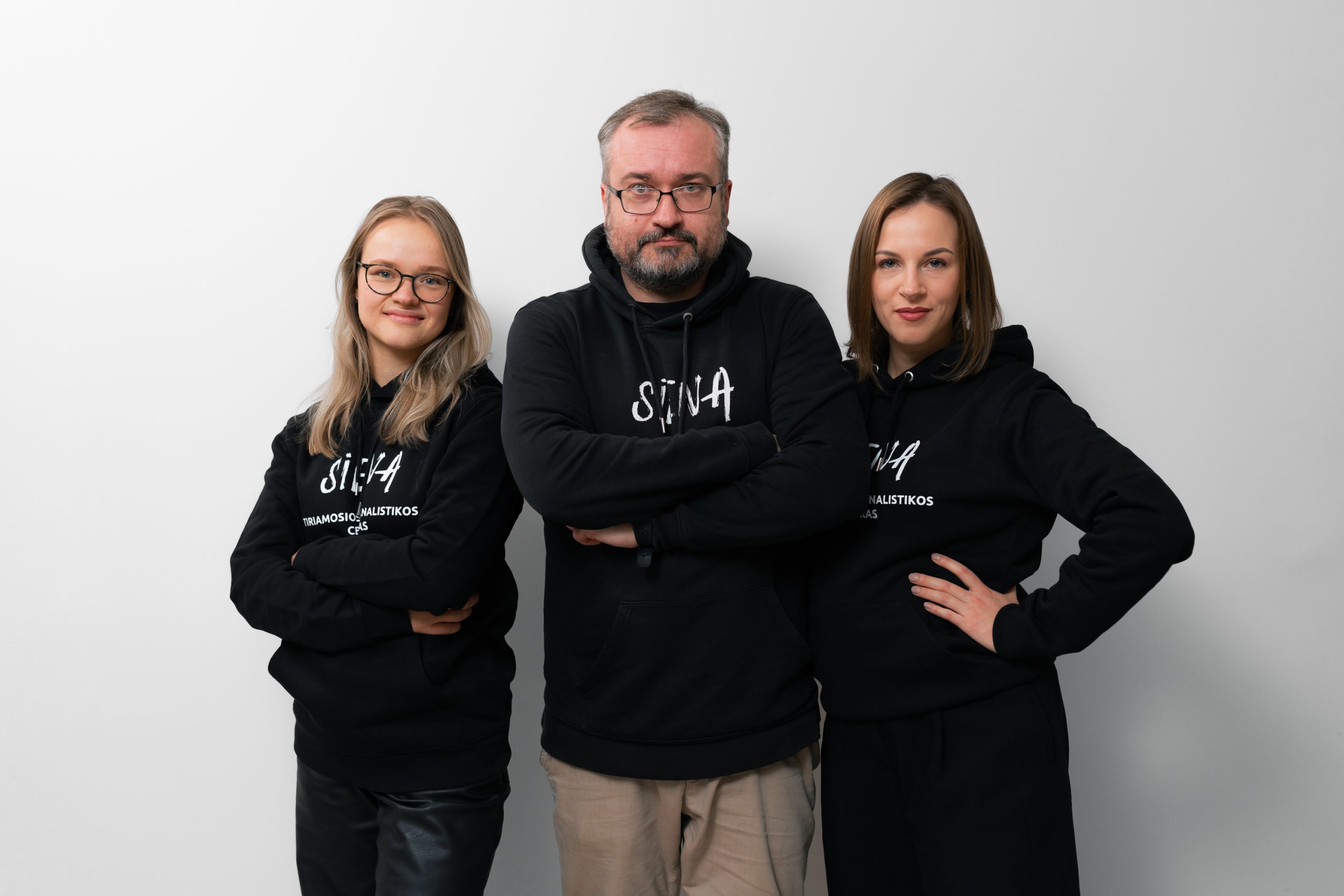
Despite this track record, Siena’s supporter base had begun to plateau by the time they joined the Accelerator. So the team set about fixing it, with a combination of increased audience engagement and revenue diversification. IPI’s innovation team spoke with Šarūnas Černiauskas (Director and investigative reporter), Migle Krancevičiūtė (investigative reporter and producer), and Gabija Kučinskaitė (researcher and social media manager) to learn more about their strategy.
Building community and promoting collaboration through a newsletter
“Our main problem was diversifying the funding and increasing our supporter base”, says Šarūnas Černiauskas, thinking back on the time Siena joined the Transition Accelerator. A survey of their readers had already confirmed appetite for exclusive content, so, with guidance from the trainers, the team launched a premium newsletter.
The newsletter combines three sections: Siena’s latest investigation, updates on the impact of past reporting, and investigations from international partners whose work rarely reaches Lithuania. The format allows Siena not only to showcase its own work, but also to highlight the value of collaboration and cross-promotion in an otherwise fragmented media landscape.
The response shows that such an approach resonates. Within the first three days, more than 100 readers signed up for Siena’s newsletter. Within six months, the number had grown to 250, with minimal churn. “We actually saw that people want to pay more for our content than we initially thought”, says social media manager Gabija Kučinskaitė.
Just as importantly, the newsletter became a tool for community building.
“At first, we thought of it just in terms of content”, explains Kučinskaitė. “But training with Daily Maverick broadened our perspective and showed us that it can be a way to create bonds with our audience.”
Rethinking revenue streams
The newsletter is part of a broader reimagining of Siena’s sustainability. Before the Transition Accelerator, the organization had relied on subscription crowdfunding, grants, and tax donations from Lithuanian readers. “Patreon is still our main source of income, but we saw its limitations. We couldn’t grow our supporter base indefinitely”, says Černiauskas, pointing out that Lithuania has no strong tradition of reader-supported media.
The team has now decided to take a step they once rejected: pursuing partnerships with local businesses.
“At the start, we thought: no, we don’t want businesses supporting us, because we wanted to be 100% independent,” says Černiauskas. “But now we see it differently. For a small organization like us, you have to make some money in order to make some impact.”
The key to maintaining that independence, he adds, is to remain transparent about revenue sources, choose partnerships wisely, and treat these as long-term opportunities rather than one-off commercial deals.
From journalists to media managers
The Accelerator also gave Siena tools and time to see their newsroom as a business that must be nourished. “Before the programme, I was such a journalist”, says Migle Krancevičiūtė with a laugh. “Now I am a journalist slash producer slash business manager. I think not just about content, but about how to present it so that it’s clear and attractive for our readers, about how to grow.”
Practical interventions, such as redesigning Siena’s website, adopting clearer calls-to-action for donations, and clarifying role titles, are relevant examples. “For the first time in five years, we actually have a slogan: journalism that makes an impact”, says Černiauskas. It is steps like these that give clarity and ensure readers immediately understand what Siena stands for.
With only three team members, capacity remains Siena’s greatest challenge. But their recent progress demonstrates how small, incremental changes, when guided by strategy, can deliver on the promise of their slogan: journalism that makes an impact.
The Transition Accelerator is part of the Media Innovation Europe programme (MIE), made possible with the support of the European Union.