This text comes from IPI’s newsletter The Outlook. Sign up to receive future editions directly to your inbox.
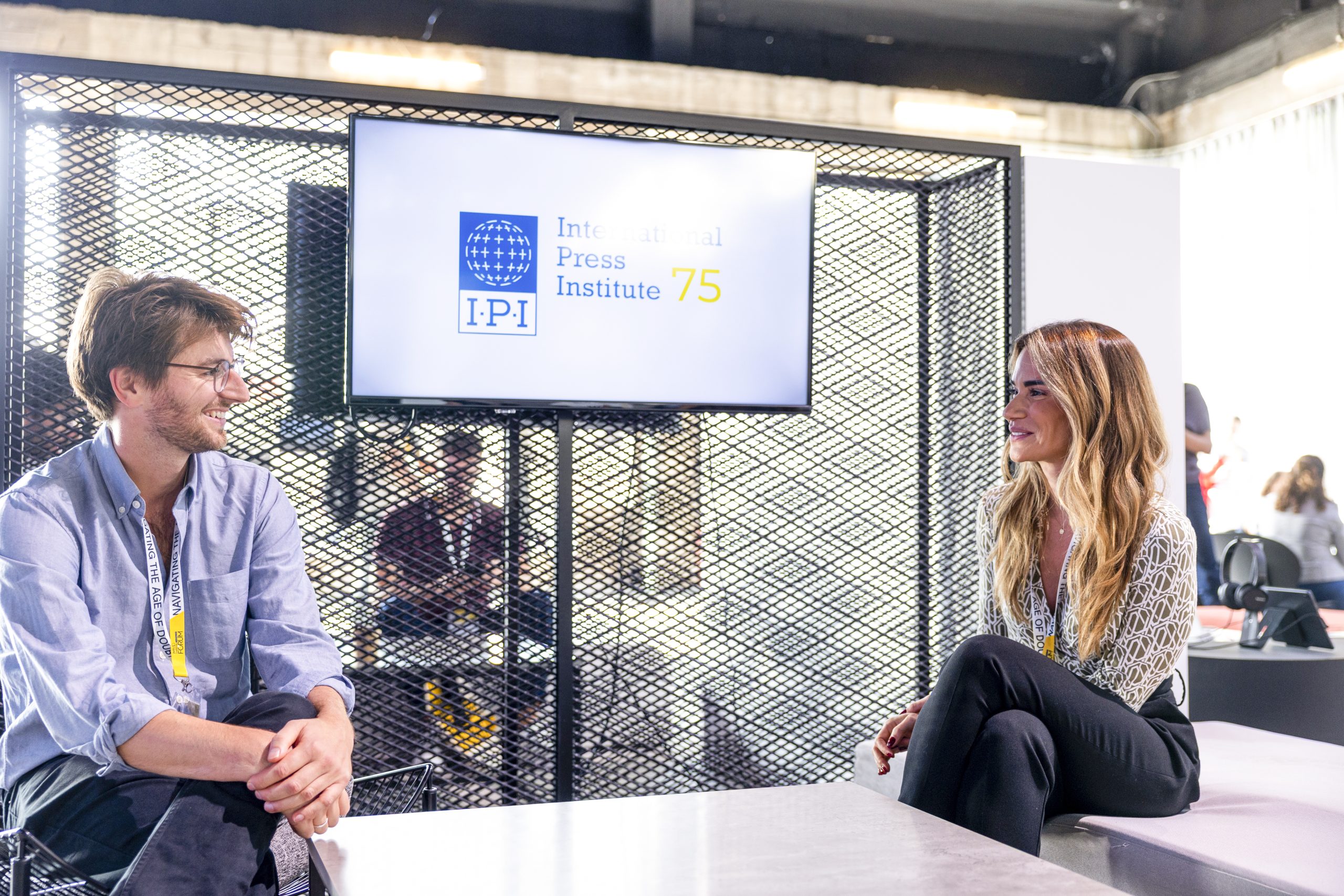
In today’s special issue, we bring you a conversation between IPI’s head of innovation and media business, Ryan Powell and Anna Kynthia Bousdoukou, co-founder and managing director of the incubator for Media Education and Development’s (iMEdD).
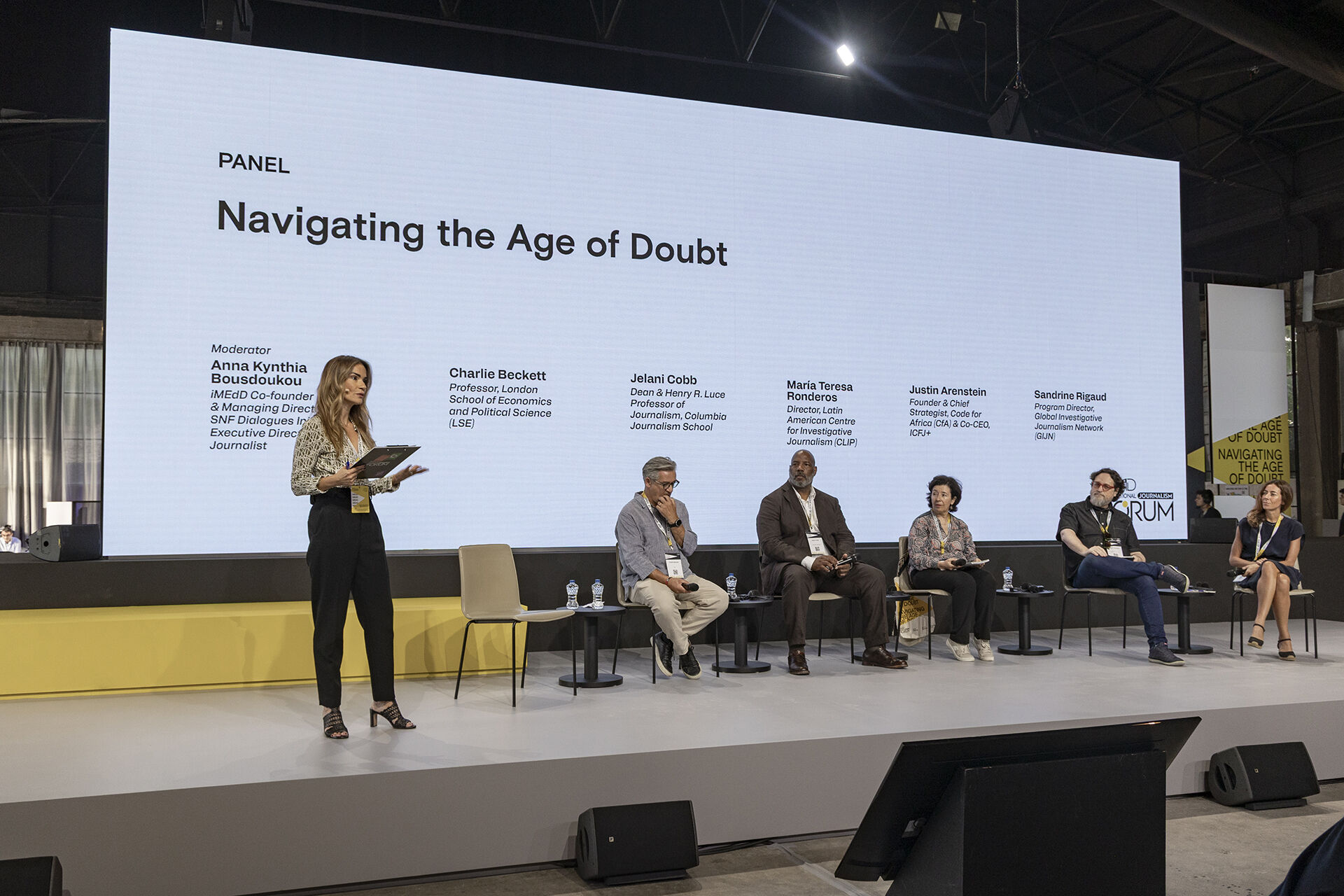
In conversation with co-founder of the event Bousdoukou, it was clear that this year’s event organized around doubt facing the industry: who and what is journalism for today.
We set out to discuss the state of journalism today, why Athens, and why iMEdD?
Unsurprisingly, the event’s strength is rooted in the founding principles emphasized by Bousdoukou: asking big questions about the purpose and principles of journalism in society, looking inwardly at the state of media in Greece, and outward at trends and models of collaboration.
For Anna Bousdoukou, the role of journalism cuts through the state of our democracies and social cohesion: when journalism stops being relevant for our lives, it’s no longer a matter of trust or distrust. They avoid us.
Go no further than the coffee bar and you’ll understand what hooks the journalism crowd on the iMEdD International Journalism Forum: spontaneous conversations that spark collaboration and debate.
The News Industry in Greece
iMEdD is a platform and environment connecting Greece with the world, building a community with shared values: “transparency, independence, the ethical code, so that we can reintroduce it to the public through our storytelling,” according to co-founder Bousdoukou.
In Greece, phenomena like news avoidance can be explained by Greece’s financial crisis and how it was covered by the news media. For over a decade, Greece’s media ecosystem has been characterized by ownership concentration, a scarce supply of resources for independent publishers, press freedom violations and use of spyware targeting journalists, and general unreadiness of the public to pay for news subscriptions. However, the economy is not enough to explain why people disengage with the news.
“When you’re in the middle of a crisis and you cannot trust the fourth estate – [who are] meant to ask the questions. Either they have already stopped listening to you or they don’t care about your questions,” Bousdoukou stated.
During Greece’s sovereign debt crisis beginning in 2009, widespread anti-austerity protests emerged for a decade, driven by concerns over unemployment and political participation. In this climate, Alexis Tsipras and the SYRIZA party – a “Coalition of the Radical Left” – came to power. However, according to Bousdoukou, mainstream media coverage of Greeks’ lived experiences during the crisis failed to serve the public interest or resonate with audiences.
“Citizens lost their lives, jobs, hope, and their belief. The only way citizens could connect with reality would be the media, and the media didn’t serve the public back then.”
iMEdD serves as an opportunity to bridge these conversations in a way that starts by admitting we don’t have the answers, and creating the space to interrogate ways forward as a collective and at the margins.
Building back trust
This year’s iMEdD International Journalism Forum centered on a question of doubt. “Is anyone out there listening, or are we talking to ourselves?” Bousdoukou asked during the opening remarks.
The iMEdD Forum does not claim to have answers. Instead, the forum focuses on the long-term work of rebuilding trust and relevance in independent journalism through collaboration. This requires asking difficult questions, such as is it time for Greece’s news industry to fully assume its role as the Fourth Estate?
This inquiry begins by looking outward to the public: how can journalism build understanding and become genuinely useful to its audiences? As Justin Arenstein, Founder and Chief Strategist of Code for Africa (CfA) and Co-CEO of ICFJ+, suggested, journalism’s role in an information-saturated era should shift from “storytelling to sensemaking.” Part of this means listening to audiences, recognizing that they often possess deep knowledge about certain subjects, and embracing that expertise rather than resisting it.
Trust-building depends heavily on community. Today’s news consumers typically discover media through platforms and trusted individuals rather than directly from outlets. This means news organizations must both engage existing communities and maintain authentic presences across diverse platforms.
As platforms decentralize, authentic content distribution becomes critical. According to Jason Koebler from 404 Media, news organizations must maintain genuine presences across Reddit, Instagram, Bluesky, LinkedIn, and other platforms, all while competing against a flood of AI-generated content. Koebler offered solutions, suggesting that nurturing that authentic community leads to the subscribers who can “evangelise” on your media’s behalf.
Storytelling itself builds trust. Newsrooms and reporters would benefit from not removing themselves from their stories, one panelist suggested. Instead, they should stand out, explain what makes them different, and articulate why they deserve trust. Yet as documentary filmmaker Vania Turner observed a day later, not every journalist can or should become the face of their stories.
Ways forward
iMEdD’s approach to both community building and response to the most pressing hurdles facing journalism stands out:
The iMEdD team does more than host the annual forum to address these questions. They build tools like Crowd Counter (which tracks public demonstrations), publish explainers, and provide access to a professional network.
This year, they launched a call for YOJO (Young Journalists), a response to younger generations’ growing skepticism toward journalism. This digital-first newsroom offers young journalists paid placements to develop video-first news and immersive storytelling experiences.
As Aggelos Petropoulos, YOJO’s executive editor, put it: in an age of information overload, audiences should be as skeptical of their other information sources as they are of journalism.