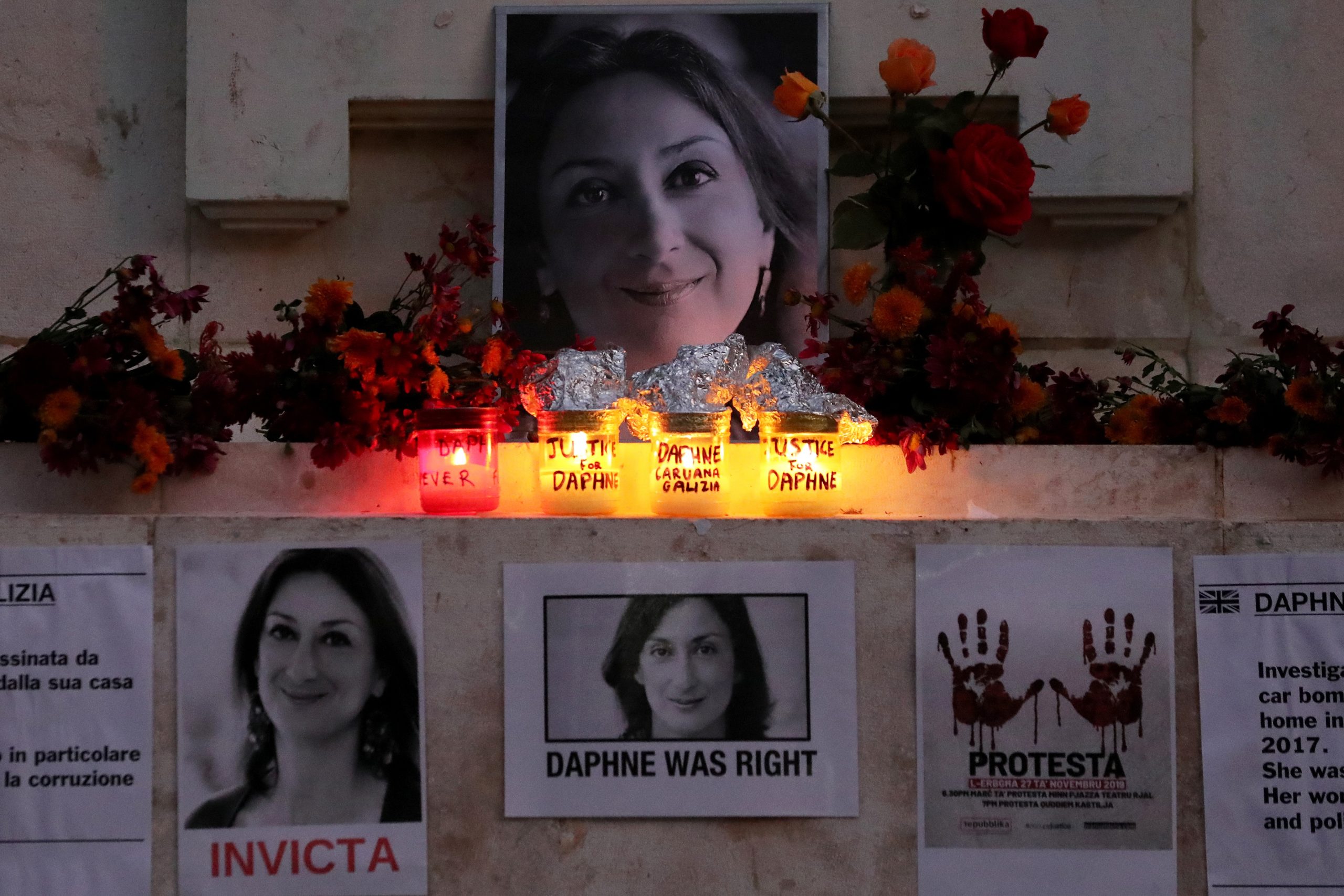
This op-ed by IPI was originally published in the Times of Malta on November 2 to mark the UN’s International Day to End Impunity for Crimes against Journalists. Read the original piece here.
November 2, which marks the UN’s International Day to End Impunity for Crimes against Journalists, could have been a date for Malta to complete the nine-year long fight for justice for the killing of investigative reporter Daphne Caruana Galizia and bring about a historic conviction unparalleled in the modern history of press freedom in Europe.
Instead, three months after powerful Maltese businessman Yorgen Fenech was acquitted of masterminding her assassination, nobody has been held responsible for ordering her murder.
Yet the eight-to-one verdict, delivered after a 55-day trial, ended nine years of expectations that Malta would finish what it started and sent a devastating message that killing journalists can go unpunished.
This matters not only because it leaves her family — and Maltese society more widely — with so many unanswered questions, suspicions, and frustrations over how a journalist could be murdered with a car bomb in broad daylight.
But because it also leaves Malta as yet another example of a worrying pattern of impunity documented by the International Press Institute (IPI) across the world where even when those who pull the trigger or detonate the bomb are prosecuted and the middlemen are jailed, the powerful individuals who ultimately order, pay, and orchestrate the hits all too often escape justice.
Since she was killed on October 16, 2017, Daphne’s case has become symbolic of the fight for press freedom, resistance against curbs on abusive litigation against journalists, and the battle against impunity for the killing of journalists in Europe and around the world.
Over the years, the international media freedom community has followed every twist and turn of Daphne’s case, flown to Valletta to watch as convictions were secured, and marked every legal milestone along the way, citing Malta as a painfully slow but ultimately successful example in the global fight against impunity for the killing of journalists.
While five men have been convicted of carrying out Daphne’s murder or supplying the bomb that killed her, the failure to convict a mastermind leaves the crime partially unpunished and bursts any image of Malta as a positive case study.
If even Malta — a small EU member state facing intense international scrutiny — can fail to secure justice for the murder of one of the country’s best-known journalists, it sends a grim signal to every country where press freedom is under pressure and journalists are under threat.
Hope is not yet lost for Malta’s legal system or in the fight for Daphne. Two weeks after Fenech was acquitted, police opened a criminal investigation into alleged juror misconduct. On September 22, the Office of the Attorney General filed an 80-page appeal against the verdict, which will now be reviewed by a three-judge panel at the Court of Criminal Appeal. If the appeal is accepted and the case returns to court, it offers a fresh chance for justice.
For now, the wait for full justice goes on and IPI’s thoughts remain with Daphne’s sons, husband, and sister, as well as friends and colleagues. We also salute all those who continue to fight for justice in Malta, from the civil society activists who relentlessly keep the case in the public eye to the journalists that continue her reporting and the politicians who seek to honour her legacy by building a better Malta.
Today, at the Hofburg palace in Vienna, IPI will address a room full of diplomats representing participating states of the Organization for Security and Co-operation in Europe (OSCE), the world’s largest regional security organisation, who have gathered to mark the International Day to End Impunity for Crimes against Journalists. We hope Malta’s representatives will be there.
Together with partners of the Council of Europe’s Platform for the Safety of Journalists, IPI will speak about Daphne’s murder. Our message will be that accountability in Malta cannot stop with the hands that detonated the device. That the search for truth will not end here. That those who ultimately ordered Daphne’s murder cannot go unpunished. That nine years after her brutal assassination, the wider institutional failures that enabled her murder remain unaddressed, and that tackling them can still make Malta a positive example for the world.
That would be the most fitting tribute to Daphne — and the strongest possible message to journalists everywhere inspired by what she stood for.
Malta: Nine years on, IPI and press freedom groups demand full justice for Daphne Caruana Galizia