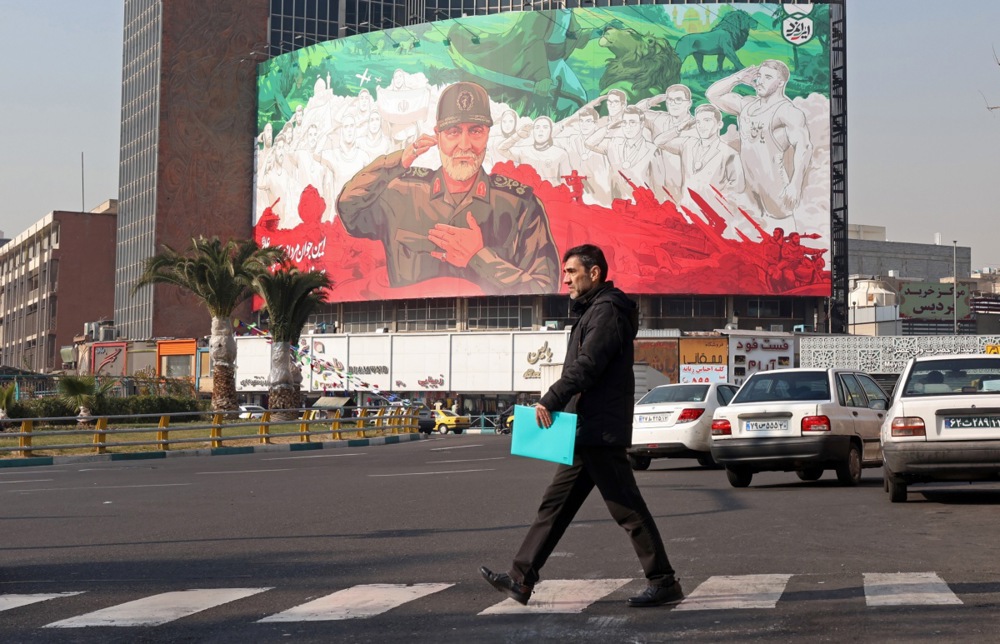
One week since the Iranian regime cut off the internet and mobile services for its 90 million citizens, Iran remains in a near-total information blackout amid the largest anti-regime protests in years, and an increasingly violent regime crackdown against protesters. IPI strongly condemns all attempts by the Iranian regime to stifle the free flow of news and information, and calls on authorities to immediately restore internet access across the country.
Beginning on the evening of January 8, more than a week after the most recent eruption of mass demonstrations in protest of Iran’s dire economic situation, the regime shut down all internet and mobile services nationwide. Iran’s communications infrastructure is controlled or owned by the state, which gives Iranian authorities the power to directly shut down internet and telecommunications services across the country.
The resulting communications blackout has ground the flow of information into and out of Iran to a near-halt. Since the shutdown, internet connectivity has fallen to around 1% of normal levels, and mobile networks remain largely blocked.
In parallel to the information blackout, Iranian authorities have accelerated a violent crackdown on protesters, with death toll estimates ranging from the thousands to the tens of thousands. The Human Rights Activists News Agency estimates that more than 18,000 have been arrested. Even the lowest estimates puts the number of dead and detained well above any previous crackdown on unrest since Iran’s 1979 revolution.
In cutting off communications, the regime has effectively prevented journalists and citizens from sharing news and information, in what many observers view as an effort to cover up the mass atrocities Iranian security forces are committing against the Iranian people to quell the demonstrations.
Journalists outside the country have struggled to connect with sources and verify accounts of protests and killings of civilians, while several journalists on the ground in Iran were reportedly summoned by members of the Islamic Revolutionary Guard Corps in the days leading up to the telecommunications blackout. Newspapers not affiliated with the state have gone silent as their connections are cut, while state-linked media outlets remain online.
Since the beginning of the network shutdown, some Iranians have been able to send eyewitness accounts and videos of protests outside the country using Starlink satellite terminals, which allow users to connect to the internet via low-Earth orbit satellites. News and information from the outside world is also getting in via shortwave radio broadcasts.
Yet many journalists and media workers fear these methods of getting information into and out of Iran are unsustainable, as reports emerge of authorities hunting down Starlink terminals – which were banned following a 2025 law – and jamming their signals using military-grade weapons.
“The Iranian regime is doing everything in its power to suppress information and prevent journalists inside Iran from showing the world the extraordinary courage of Iranians in the face of a brutal and draconian crackdown,” said IPI Director of Advocacy Amy Brouillette. “IPI calls for an immediate end to this news and information blackout – and we continue to defend the right of all journalists to report freely and safely.”