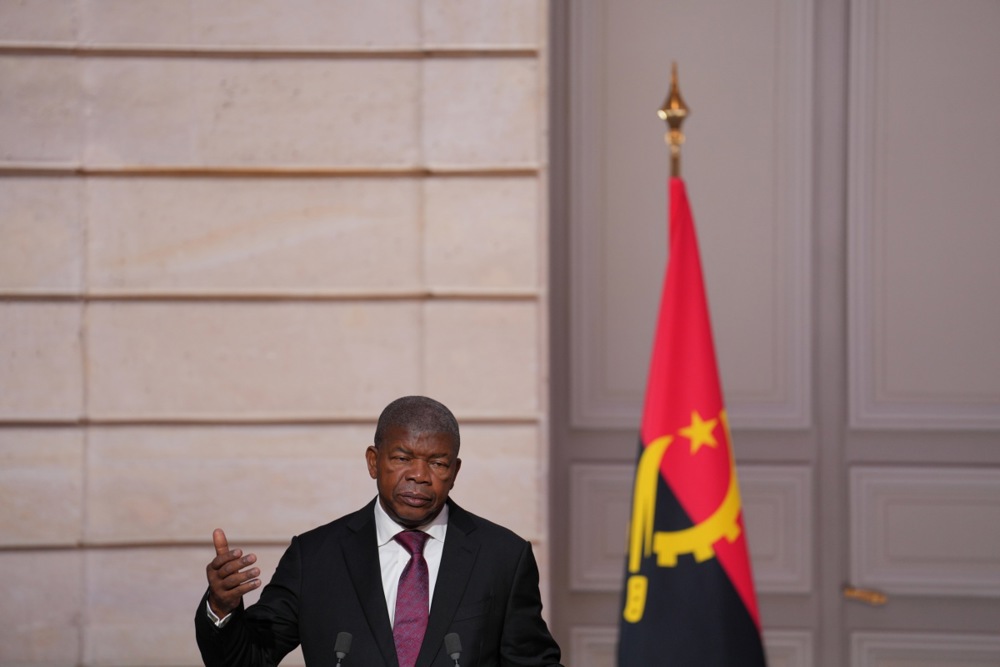
IPI joined 37 other partners from across the globe to raise concerns about the proposed legislation prohibiting “false information” in Angola. If passed in its current form, the legislation can be weaponized to target journalists and will undermine freedom of the press.
READ THE LETTER BELOW
Honorable Minister Mário Augusto da Silva Oliveira
Ministry of Telecommunications, Information Technologies, and Media
Luanda, Angola
Dear Minister Augusto da Silva Oliveira,
We, the undersigned press freedom and human rights organizations, write to urge you to amend the draft law on the Dissemination of False Information on the Internet and to ensure that any future proposed legislation is compatible with Angola’s constitutional protections for freedom of expression, as well as with international and regional human rights instruments to which Angola is a party.
We commend the draft law’s recognition of the need to promote inclusion in internet access, particularly by addressing gender and regional inequality as well as eliminating barriers faced by individuals with special physical and cognitive needs. However, we share the concerns outlined in legal analyses by human rights advocacy organizations Pro Bono Angola and Friends of Angola, which find that the draft law is unconstitutional and, if enacted in its current form, could “easily be used to censor criticism of the government under the pretext of combating disinformation.”
The draft law fails to precisely and narrowly define key concepts, including “false information,” a term that is unclear and appears to be used interchangeably with “disinformation” and “fake news.” This lack of clarity gives the draft law an overbroad scope and creates the potential for it to be used as a tool for censorship.
If enacted, the bill could subject individuals to prison sentences of up to 10 years for disseminating false information, while companies could face closure for up to 130,000 days, effectively a permanent ban. This would exacerbate regressive provisions already present in Angola’s legal framework. Stipulating prison time for the dissemination of false information that injures the “honor and good name” of others amounts to the criminalization of defamation. Angolan journalists already face the constant fear of being deprived of their liberty or disruption of their work through criminal defamation suits, as reported by the Committee to Protect Journalists.
Angola’s Penal Code also outlines criminal penalties of up to six months for “continuous dissemination of false information” and “the intentional publication of false news,” and up to six years for sharing “false statements” or “distort[ing] true facts” that disrupt or are intended to hinder military actions. Rather than expanding such laws, Angola should be repealing them, in line with international standards on freedom of expression, including those established by the African Commission on Human and Peoples’ Rights. The commission has called on states to repeal laws that criminalize insult, defamation, and the publication of false news, describing them as “serious interference with freedom of expression” that foster fear and self-censorship. The United Nations Human Rights Committee has also urged states to “avoid excessively punitive measures and penalties” for defamation, while international experts on freedom of expression have stated that “all criminal defamation laws should be abolished and replaced, where necessary, with appropriate civil defamation laws.”
We acknowledge the importance of transparency, rigor, and accountability in content moderation by social media platforms. However, the bill’s provisions requiring companies to establish “structures dedicated to combating disinformation in Angola” raise concerns. Broad and vague definitions — such as “application provider” and “social networks” — make it unclear which types or sizes of media companies or platforms would be subject to these requirements. We are concerned that the draft law would effectively outsource censorship to social media platforms, without providing clear legal recourse for those affected. For instance, while the bill authorizes the statutory communications regulator (ERCA) to receive complaints from the public about online content, it provides no details on the procedures the ERCA would follow to review and adjudicate those complaints.
The draft law’s extraterritorial scope that applies to individuals deemed to have shared “information that has an impact on Angola” adds to our concerns by potentially restricting access to international sources of information and criminalizing the work of foreign-based journalists.
Given the serious threat this draft law poses to freedom of expression and democratic values in Angola, we strongly urge your office to reconsider it. We remain available for further discussions on this draft and broader matters concerning freedom of expression.
Sincerely,
- Access Now
- Article 19 Eastern Africa
- Associação Pro Bono Angola
- Association for Media Development In South Sudan (AMDISS)
- Association of Freelance Journalists
- Bloggers Association of Kenya (BAKE)
- Bloggers of Zambia- BloggersZM
- Cartoonists Rights Network International
- Centro de Estudos Ufolo para a Boa Governação
- Centro PEN Guiné-Bissau
- Collaboration on International ICT Policy for East & Southern Africa (CIPESA)
- Committee to Protect Journalists (CPJ)
- Congress of African Journalists (CAJ)
- Eastern Africa Editors Forum
- Friends of Angola (FOA)
- Human Rights Foundation
- Human Rights Network for Journalists-Uganda (HRNJ-U)
- International Press Institute
- JamiiAfrica
- Karapatan Alliance Philippines
- Kenya Correspondents Association (KCA)
- KICTANet
- Media Institute of Southern Africa – MISA Angola
- Media Institute of Southern Africa – MISA Mozambique
- Mosaiko Instituto para a Cidadania
- NMT Media Foundation
- Organisation Tchadienne Anti-Corruption (OTAC)
- Pan African Lawyers Union (PALU)
- PEN International
- Robert F Kennedy Human Rights
- Sindicato dos Jornalistas (SJ – Portugal)
- Sindicato dos Jornalistas Angolanos
- Sindicato dos Jornalistas e Técnicos de Comunicação Social da Guiné-Bissau – SINJOTECS
- Somali Journalists Syndicate (SJS)
- Somaliland Journalists Association (SOLJA)
- The Africa Editors Forum
- Union Burundaise des Journalists (UBJ)
- Vuka Coalition for Civic Action