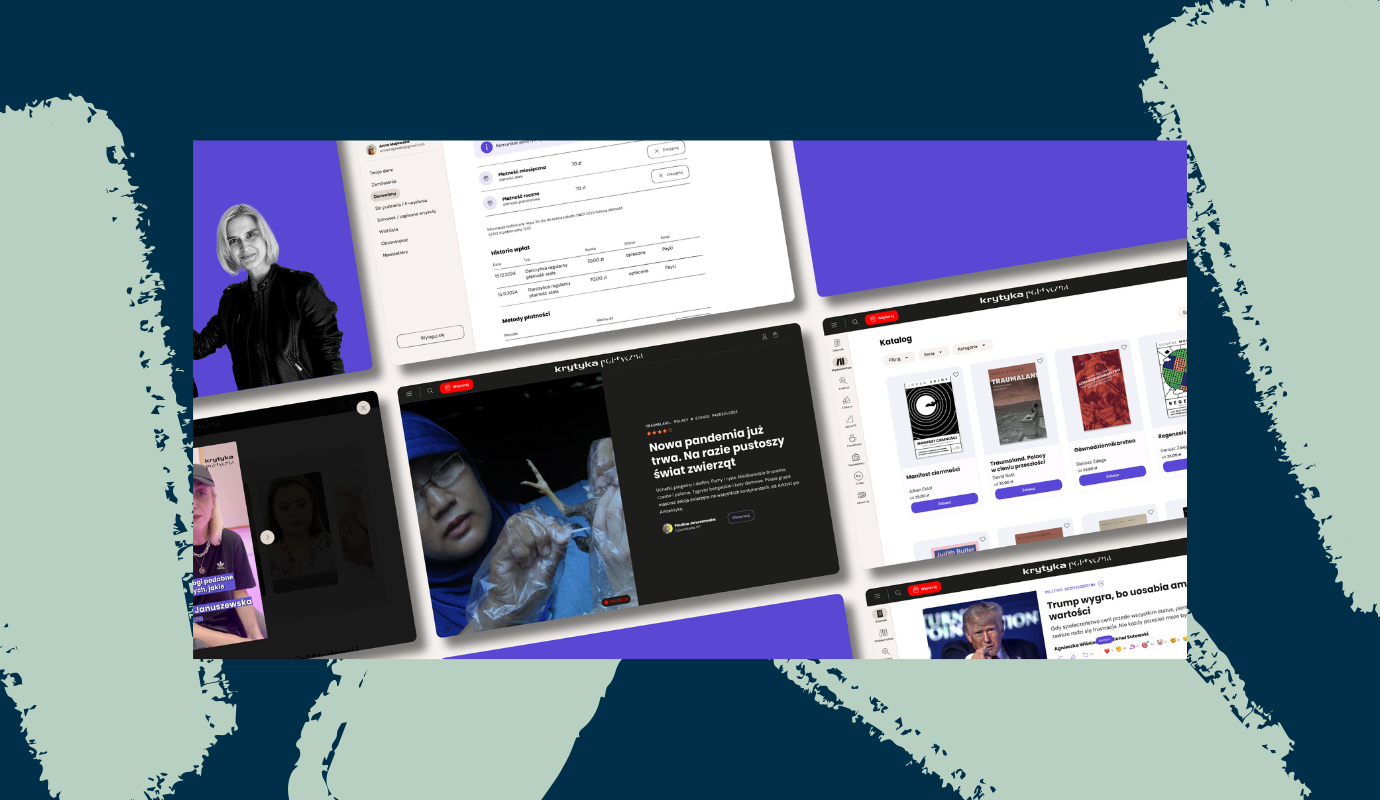
Krytyka Polityczna has been around for over 20 years. They run an online magazine, a book publishing house, a research institute, some cultural centers, and even a coffee shop. For a long time, these activities developed in parallel, with insufficient coordination across different parts of the organisation. In practice, this made it harder to build deeper relationships with a community that was often engaged through separate channels.
In early 2025, as we began our collaboration, a sudden freeze in international funding shifted the project’s stakes. What started as an effort to bring more coherence to KP’s digital setup quickly had to be reconsidered under much tighter constraints. Sustainability moved from a longer-term concern to an immediate consideration shaping priorities and pace.
What KP set out to do (and what got in the way)
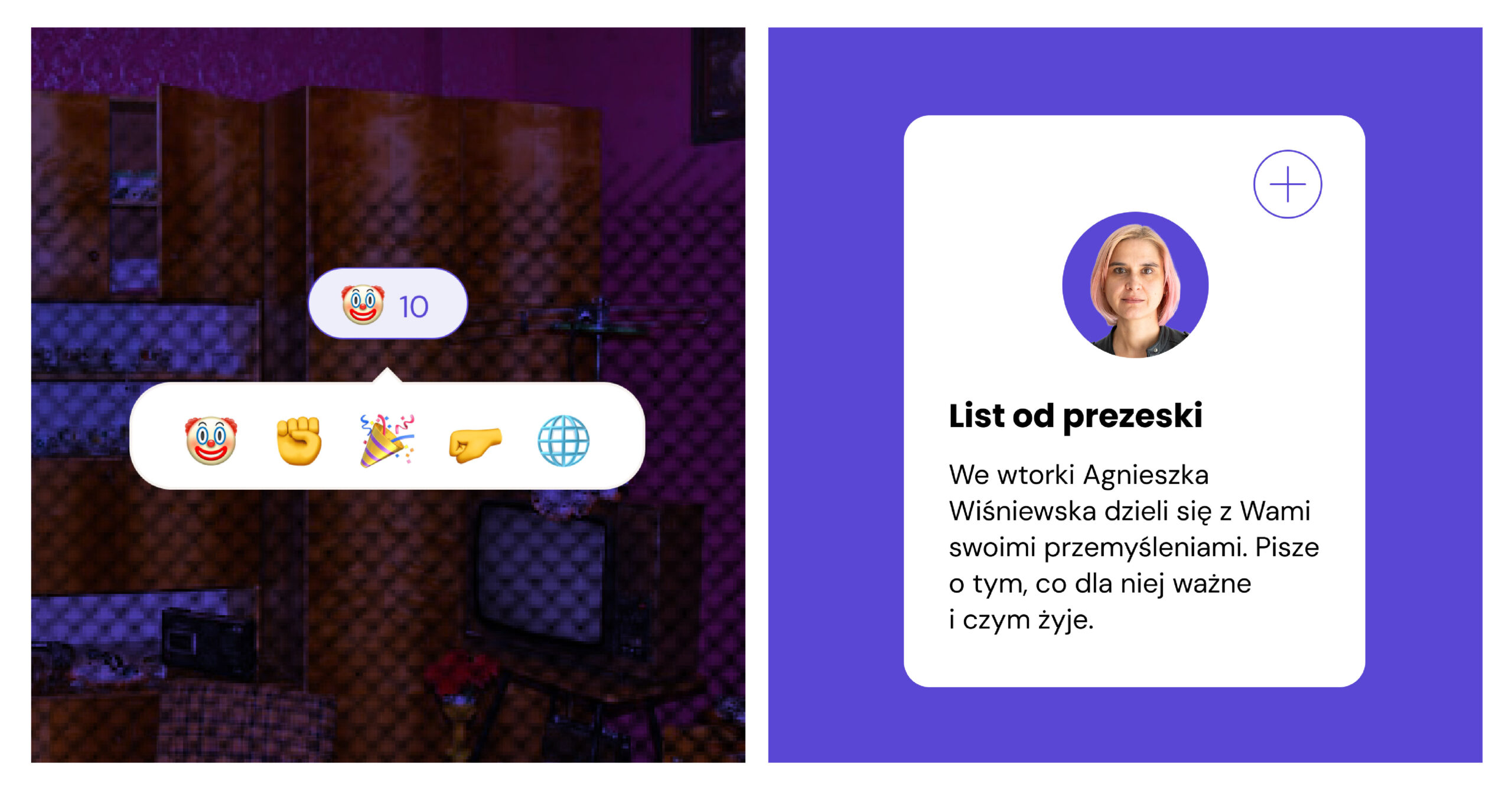
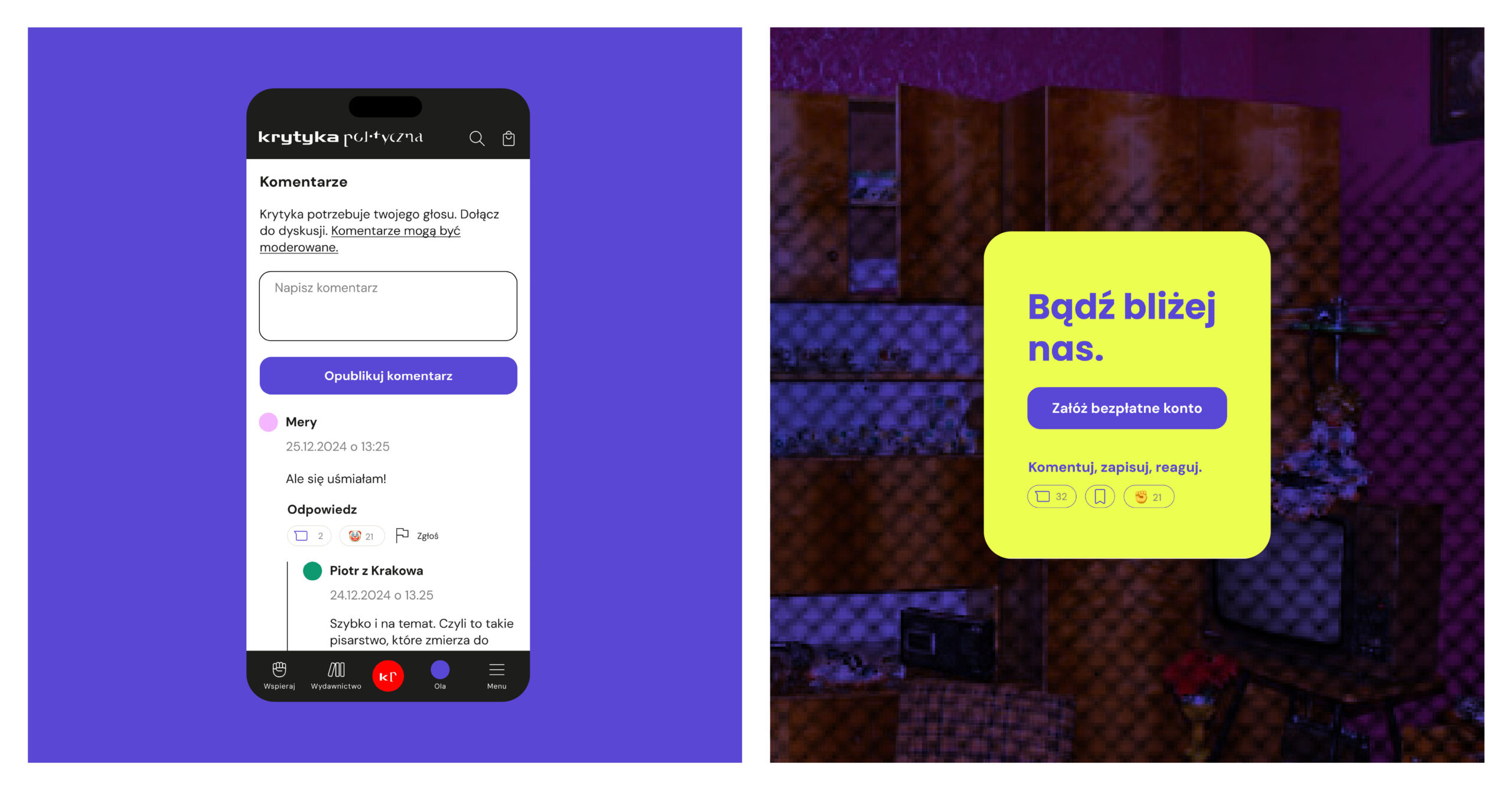
The team’s main objective was to address fragmentation through a unified user portal. The idea was to give people a single place to manage all their relationships with KP, their newsletter subscriptions, their donations, their book purchases, their tickets for events, etc. and to bring together databases that had previously been kept separate. To encourage people to log in, the plan included introducing features such as social-media-style reactions and comments for registered users, as well as marketing automations to deliver more relevant content and offers across the organisation.
Where implementation got tricky
New components had to be introduced while existing systems remained in place. Development work therefore had to be coordinated carefully with day-to-day operations, which limited how quickly changes could be tested and rolled out. One contributing factor was the way user data was distributed across multiple systems, making it harder to understand how changes in one place would affect users elsewhere
This became particularly evident in the handling of recurring donors. Existing records and payment setups could not be migrated automatically into the new CRM without risking disruption. Rather than forcing a transition that could have affected income, the team decided to keep the old and new systems running in parallel while gradually introducing the new setup. Accepting additional complexity in order to protect financial stability was a pragmatic choice.
Conditions like these affected how the rest of the implementation unfolded. Several elements had to be adjusted along the way, including the launch date, which was postponed from September to October 2025. Planning timelines rarely account for every issue that emerges during implementation, which makes flexibility an important part of the process. In this case, it meant avoiding the temptation to push changes faster than the system could absorb, even if that required taking more time.
What started to show
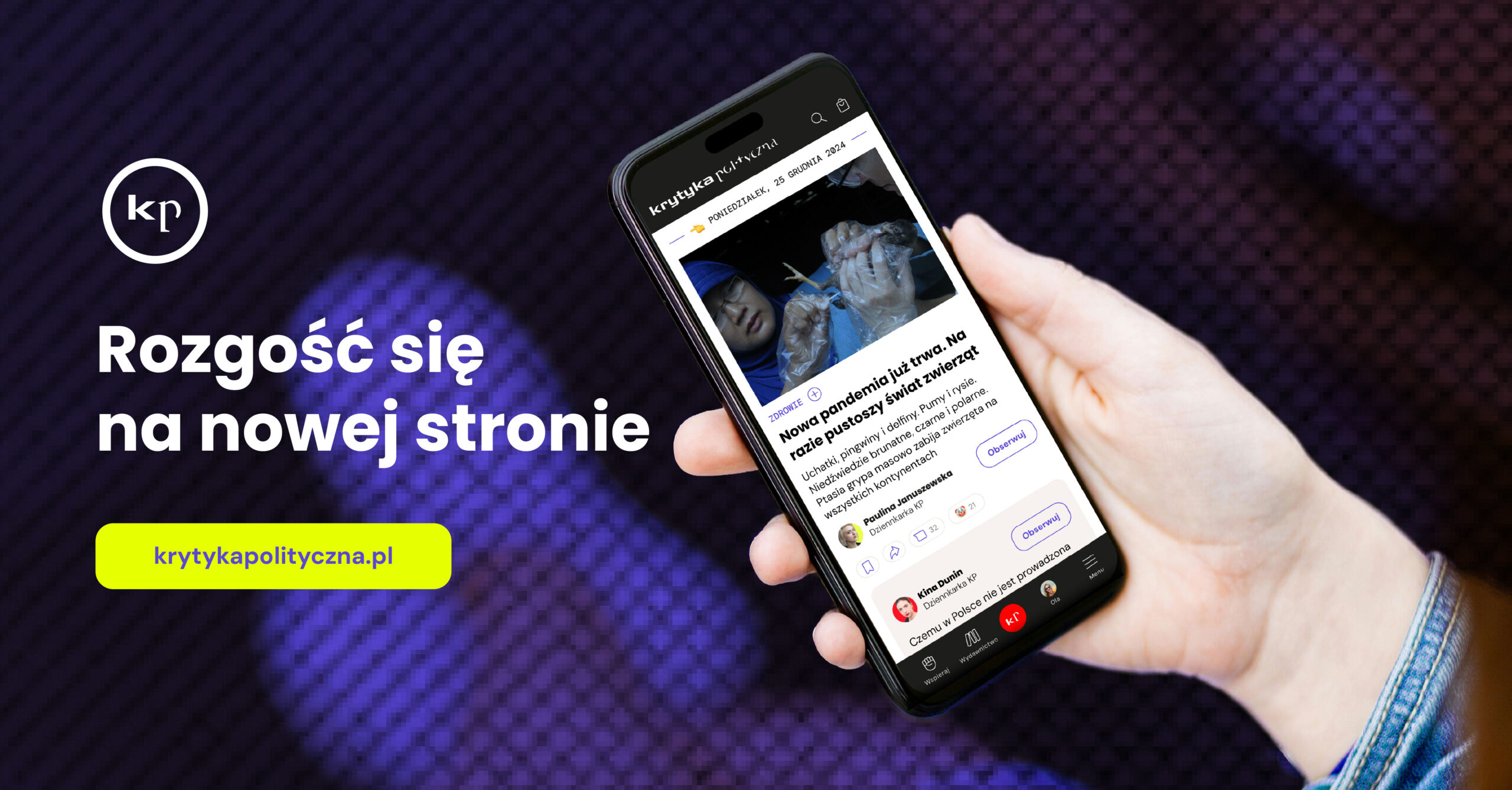
The following figures reflect early uptake of the portal and its underlying infrastructure and are current as of January 2026, three months after the rollout of new features in October 2025:
- The new website introduced organization-wide user accounts for the first time, resulting in 1,773 registrations so far.
- Registered users are actively engaging with the new features, with 2,509 instances of following authors and topics.
- The new commenting feature has generated 910 moderated and accepted contributions.
- The relaunch made it possible to deliver automated, personalised communications, reaching over 10,000 people.
- Reader support included 94 one-time donations and 126 recurring monthly donations.
- In addition, 190 donations occurred at checkout during book purchases, representing income beyond standard one-off donations.
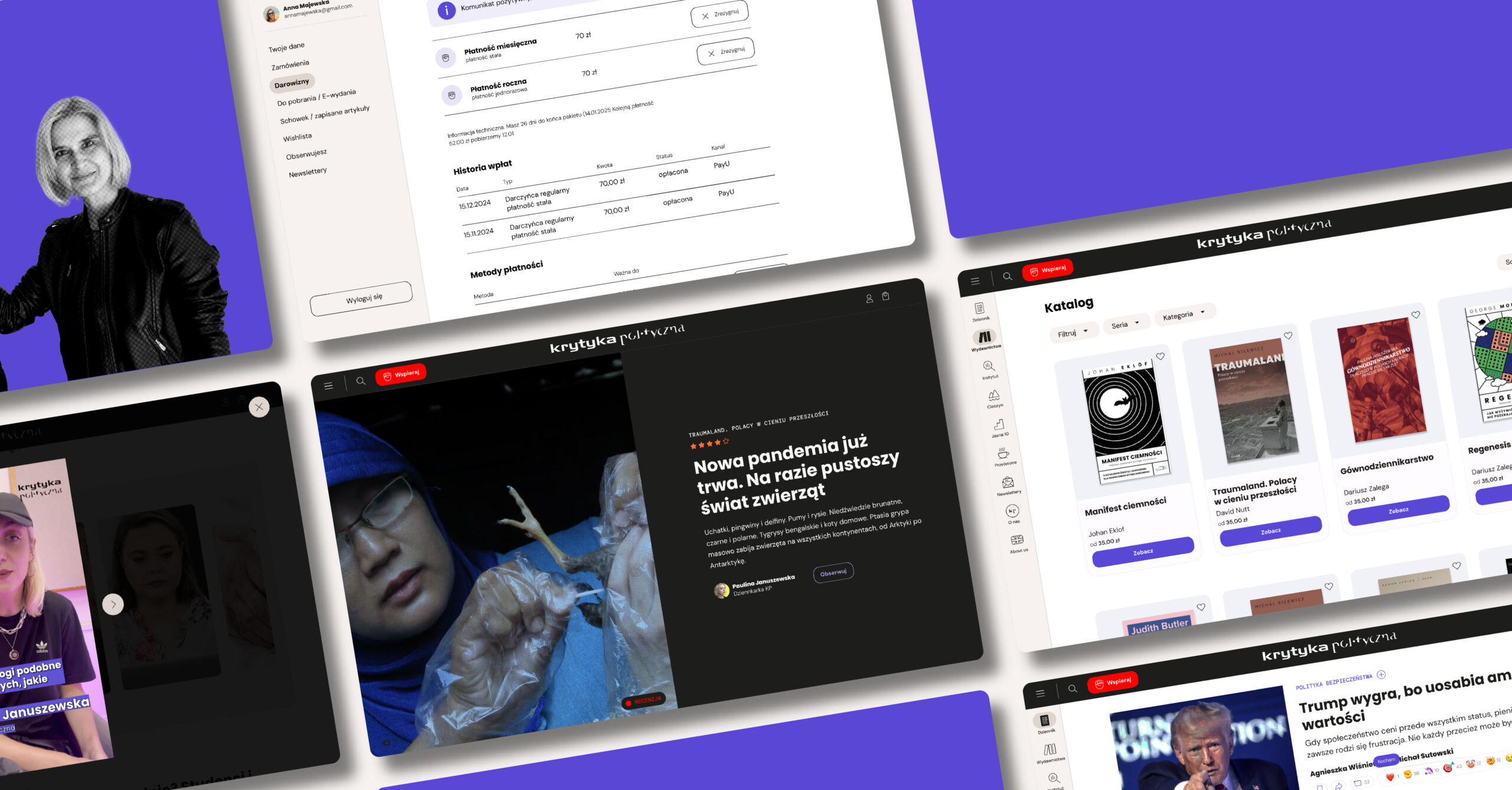
This setup was a way of connecting KP’s various activities. A book purchase could now lead to a newsletter invitation, which in turn could lower the friction around donating. Instead of separate touchpoints disappearing into different systems, interactions began feeding into a shared structure.
Longer-term effects on engagement and revenue remain to be assessed. For now, these early patterns suggest that the infrastructure is making relationships with KP’s audience more visible and easier to work with.
What shifted in practice
Beyond the technical and operational learning, the project led to some adjustments in how KP approached its audience and infrastructure. Rather than treating audience interactions as separate by product or channel, the team began paying more attention to how the same people move across journalism, books, events, and forms of support.
Internal systems began to play a more visible role in everyday decisions by providing additional context. This made it easier to consider how choices in one area might affect others, and to align discussions around a more shared view of the audience.
The process also contributed, in a modest but tangible way, to internal capacity building. Working through the technical transition required closer coordination across roles and more direct engagement with data. For example, the product team developed a more practical understanding of how user data, system constraints, and editorial goals interact, and began using that perspective when making decisions.
What became clearer
One of the clearer lessons was that innovation does not always come from adding more layers or features, but from doing the slower, less visible work of stabilising infrastructure and accepting trade-offs.
The main value of this work was not delivering a “finished” system, but making the organisation’s internal logic more legible. With clearer links between systems, decisions no longer had to be taken in isolation or based only on assumptions. Infrastructure did not dictate outcomes, but it began to provide context, helping the team see how choices in one area might affect others.
“Infrastructure alone isn’t innovation, but without it, innovation is impossible.” – Sławek Blich, Head of Product at KP
This also changed how KP could relate to its audience in practice. Interactions that had previously appeared as separate transactions started to be visible as part of a continuous relationship. Consolidating first-party audience data reduces reliance on external platforms as the main source of insight and makes the existing community easier to work with.
KP continues to operate in a difficult financial environment. What changed through this process was the organisation’s ability to see how its systems, audiences, and decisions connect. That clarity does not guarantee sustainability, but it reduces fragility and provides a more solid basis for navigating ongoing uncertainty.
This mentorship process was conducted as a part of the Business Innovation Synergizer programme through the Media Innovation Europe project.
Business Innovation Synergizer is implemented by Thomson Media as a part of Media Innovation Europe led by the Vienna-based International Press Institute (IPI), the consortium brings together Thomson Media (TM), The Fix Foundation (TFF), and the Balkan Investigative Reporting Network (BIRN). The programme is co-funded by the European Union.