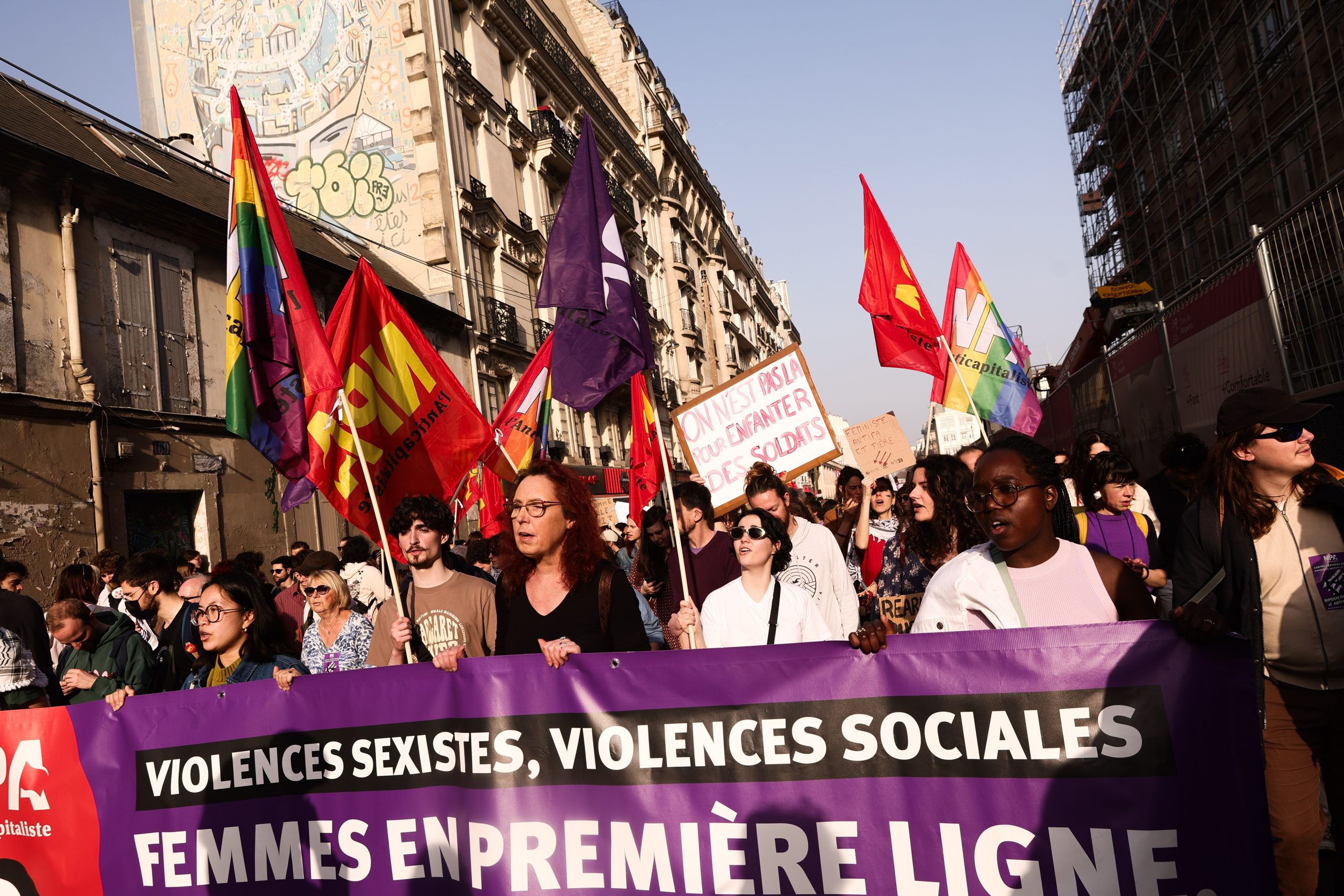
To mark International Women’s Day on 8 March, IPI and partners of the Media Freedom Rapid Response (MFRR) today publish alarming data highlighting how women journalists across Europe continued to face enhanced risk through systematic gender-based violence in the past year.
Our 2025 monitoring documented 53 cases of gender-based violence targeting women media professionals across EU Member States and candidate countries, including online smear campaigns, threats of sexual violence and derogatory comments about physical appearance. This data, recorded on the MFRR’s Mapping Media Freedom platform, reaffirms that women journalists are disproportionately affected by gender-based violence. Although it is evident that these cases capture only a limited snapshot of reality, they reveal clear and concerning trends for media freedom and the safety of journalists particularly amidst the growth of generative AI tools.
From online abuse to offline harassment
According to our monitoring, gender-based violence against women journalists occurred predominantly online (59%), and more specifically on social media. The majority of these attacks can therefore be categorised as tech-facilitated gender-based violence, where digital platforms, messaging apps or AI tools are used to harass and discredit women journalists.
One example involved the circulation of AI-generated nude photos of two Italian journalists. In another case, a Spanish journalist working for RTVE was recently cyberharassed after a photo of her was taken out of context and weaponised to undermine her professional credibility. Although such incidents are still emerging in Europe, they demonstrate the extent to which digital tools can be abused to facilitate and amplify already existing gender inequalities as well as physical gender-based violence.
In 2025, MapMF also recorded serious cases of gender-based violence taking place offline. Several attacks were reported during sporting, political events, as well as demonstrations, and even at a journalist’s private residence. A serious example in France was that of Nora Bouazzouni, who specialises in gender. After years of cyberharassment, she received a letter at her home containing hateful, racist, and misogynistic messages.
Gender-based violence, a discrediting tool by public officials
Although many of the incidents are perpetrated by private individuals, public officials also play a significant role in spreading misogynistic rhetoric that is used to discredit women journalists and divert public and professional attention away from their work. In Spain, for example, the far-right party Vox launched a coordinated smear campaign against journalist Cristina Fallarás, which seriously exacerbated the ongoing harassment she has faced for years.
Online threats and smear campaigns in the Balkans: A worsening climate in Serbia
The situation of women journalists remains particularly tense in the Balkans. In 2025, our 21 cases documented across the region reflect a growing, worrying trend in online threats, smear campaigns, and other forms of harassment. Serbia accounts for the highest number of registered incidents, underscoring the particularly hostile environment facing journalists there. Independent journalists, frequently targeted by the Serbian government and tabloids with criticism, are facing threats and sexual harassment by private individuals. This trend has become even more pronounced since the deadly collapse of the Novi Sad glass roof and the intensified crackdown on media reporting on anti-corruption protests such as N1.
In this contexts, gender-based violence can also extends beyond journalists themselves to their female family members, who are subjected to misogynistic insults and, in some cases, explicit threats of rape.
Gender-based violence requires swift response
On the occasion of International Women’s Day, the MFRR partners express their unwavering solidarity with all women working in the media sector who face enhanced risk in doing their job due to their gender.
Gender-based attacks, both offline and online, require tailored action from EU Member States, candidate countries and the European Commission. This includes stronger implementation and enforcement of the Digital Services Act and the review of the Recommendation on the Safety of Journalists.
Authorities must recognise that such attacks are not isolated incidents, but part of a broader strategy to silence voices and expressions of structural gender inequalities both offline and online. This is especially concerning when the misogynistic behaviour comes from or is propelled by the state and public officials. When backed or legitimised by a public figure, such attacks undermine journalists’ credibility, foster self-censorship, and create a permissive environment for further gender-based violence.
The undersigned organisations therefore remind public officials that they bear a heightened responsibility and call on them to refrain from all forms of stigmatising, sexist or misogynistic rhetoric. They must also unequivocally and publicly condemn all attacks against women journalists.
Effective reporting mechanisms are a cornerstone of protecting women journalists. We encourage women journalists to report incidents to initiatives such as Mapping Media Freedom, as well as to law enforcement authorities. Systematic documentation is essential to exposing abuse and triggering effective institutional responses. In addition, access to justice and thorough investigation into cases must be strengthened.
Only through accountability and concrete safeguards can women journalists work safely and citizens’ right to information be fully protected.
Signed
European Federation of Journalists (EFJ)
European Centre for Press and Media Freedom (ECPMF)
ARTICLE 19 Europe
International Press Institute (IPI)
Osservatorio Balcani Caucaso Transeuropa (OBCT)
Free Press Unlimited (FPU)
