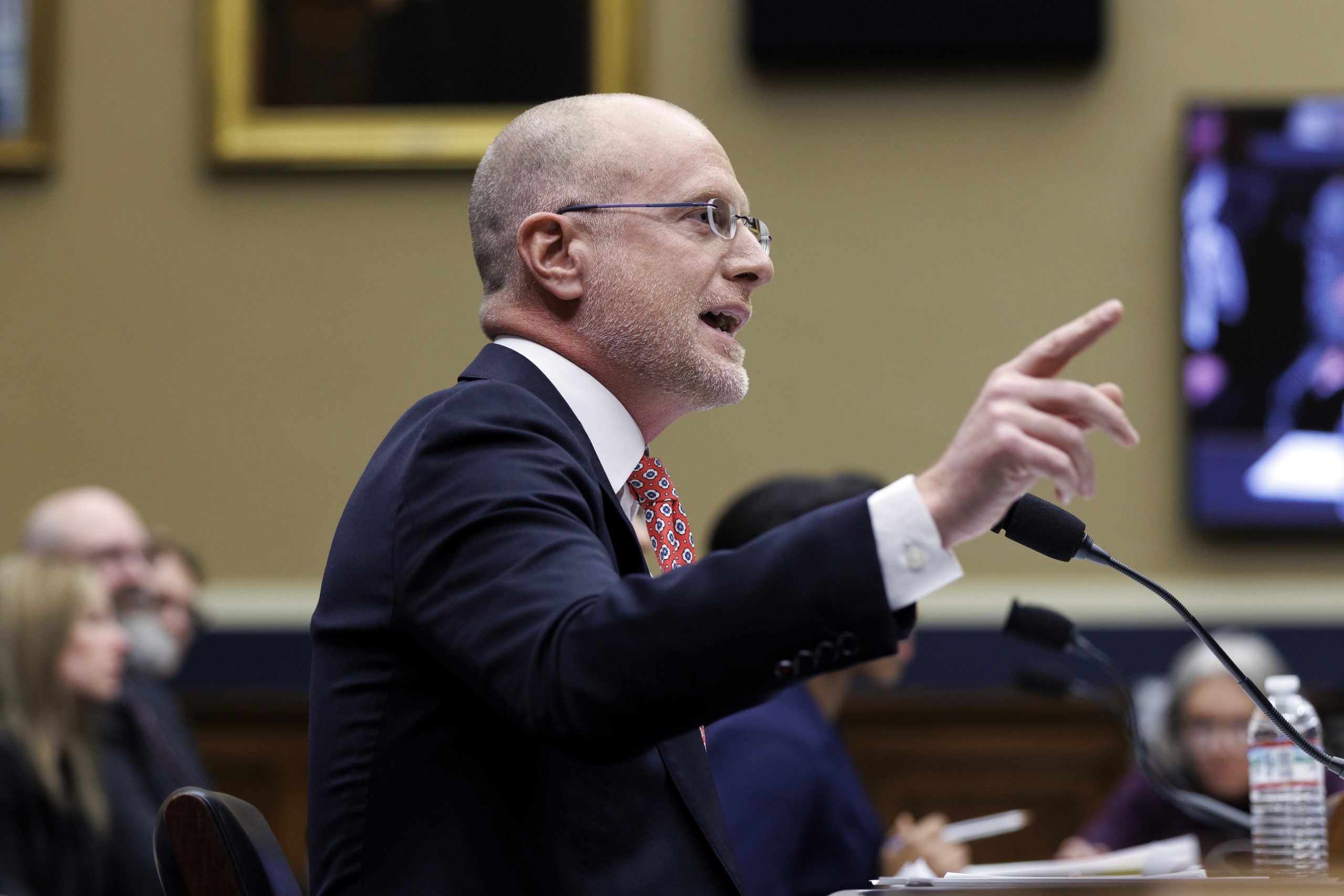
The International Press Institute (IPI) condemns threats made by U.S. Federal Communications Commission (FCC) Chairman Brendan Carr and supported by President Donald Trump to revoke broadcasting licenses in retaliation for independent reporting on the U.S.-Israeli war in Iran. IPI warns that the continued weaponization of the FCC against the media is a threat to the First Amendment and deeply damaging to the state of press freedom and free speech in the United States.
In a March 14 social media post on X, Carr responded to a Truth Social post from Trump which complained about media coverage of his administration’s war against Iran. Carr’s post, made after a visit to U.S. President Donald Trump’s Mar-a-Lago resort, accused broadcasters of “running hoaxes and news distortions,” ordering them to “correct course before their license renewals come up.”
In a follow-up Truth Social post criticising a Wall Street Journal report on Iranian strikes that damaged five U.S. Air Force refueling planes as “fake news,” Trump praised Carr’s threats to revoke the broadcasting licenses of “some of these Corrupt and Highly Unpatriotic ‘News’ Organizations.”
Carr’s threats, and Trump’s support of them, appear to be a violation of Trump’s own January 2025 Executive Order on freedom of speech and censorship, which expressly prohibits any officer or agency of the federal government from engaging in or facilitating “any conduct that would unconstitutionally abridge the free speech of any American citizen.”
“This administration’s threats against American broadcasters demonstrates a blatant disregard for the First Amendment of the U.S. Constitution, and for the President’s own Executive Order on freedom of expression,” said IPI Executive Director Scott Griffen. “Administration officials do not have the power to dictate what broadcasters can and cannot cover – the right of journalists and media outlets to cover the news independently, without fear or favor, has been a bedrock of U.S. democracy that is protected by the Constitution and by the courts for 250 years. Even the threat of regulatory retaliation is regarded as a violation of these rights, and of the founding principles of the United States, for its potential chilling effect on press freedom and the right to express ideas and opinions.”
The threats from the FCC come alongside a wider Trump administration effort to “reshape” U.S. media, as Trump has publicly stated, through ownership changes, regulatory mechanisms, and legal pressure. Echoing the president’s criticisms of media coverage of the war against Iran, U.S. Secretary of Defense Pete Hegseth on Friday took aim at a CNN report, praising Paramount’s looming acquisition of CNN parent company Warner Bros. Discovery.
It is uncertain how much legal authority Carr has to carry out his threats. The FCC has no jurisdiction over print and online media like the Wall Street Journal and does not license national news networks like ABC, NBC, CBS, or Fox. The FCC only has the authority to license the local broadcast stations that use network content in their programming. It also has the power to review mergers and acquisitions in the broadcast space that involve the transfer of licenses.
The FCC also does not have the legal authority to regulate the content of news networks. According to the FCC’s own website, broadcasters alone are “responsible for selecting the material they air,” as the “First Amendment and the Communications Act expressly prohibit the Commission from censoring broadcast matter.”
Any attempts to revoke broadcast licenses based on news content would spark First Amendment challenges and would be unlikely to succeed, according to FCC commissioner Anna Gomez.
Yet while the FCC largely lacks the power to carry out Carr’s latest threat, his repeated efforts to weaponize the agency against independent reporting and entertainment content have raised bipartisan concerns and have already resulted in damaging outcomes for press freedom and free speech in the United States.
Since his appointment in January 2025 by Trump, Carr has reopened several separate, older investigations into major broadcasters including ABC, CBS and NBC. The investigations involve previously-dismissed complaints of alleged violations of the equal time rule, which requires broadcasters to provide equivalent access to competing political candidates, and the FCC’s little-used policy against news distortion. Carr declined to revive a complaint against Fox News.
Though none of these investigations have yielded formal enforcement measures, the threat of governmental investigations has been enough to compel station owners to self-censor and take preemptive actions in order to avoid provoking the administration’s ire.
In February, late-night host Stephen Colbert said CBS lawyers barred him from airing an interview with Senate candidate James Talarico over concerns about the equal time rule. Though the rule has historically exempted news and talk shows, the FCC said in January that such shows do not automatically qualify for the exemption and must abide by the rule – a sharp departure from decades of precedent. Colbert’s interview with Talarico was instead posted on YouTube, which the FCC does not have jurisdiction over.
Separately in February, Carr confirmed that the FCC had begun an investigation of ABC daytime talk show “The View” over the equal time rule, following the show’s own interview with Talarico.
In September, Nexstar Media Group and Sinclair Broadcasting Group – the two largest television station operators in the U.S. – temporarily pulled Jimmy Kimmel Live! from their local ABC affiliate stations after Carr warned they may be in violation of the news distortion policy following remarks Kimmel made on the shooting of right-wing political activist Charlie Kirk.
In November, a bipartisan group of former FCC members petitioned the agency to repeal the news distortion policy, arguing it violates the First Amendment and has been improperly used by Carr to punish independent reporting the Trump administration finds objectionable.