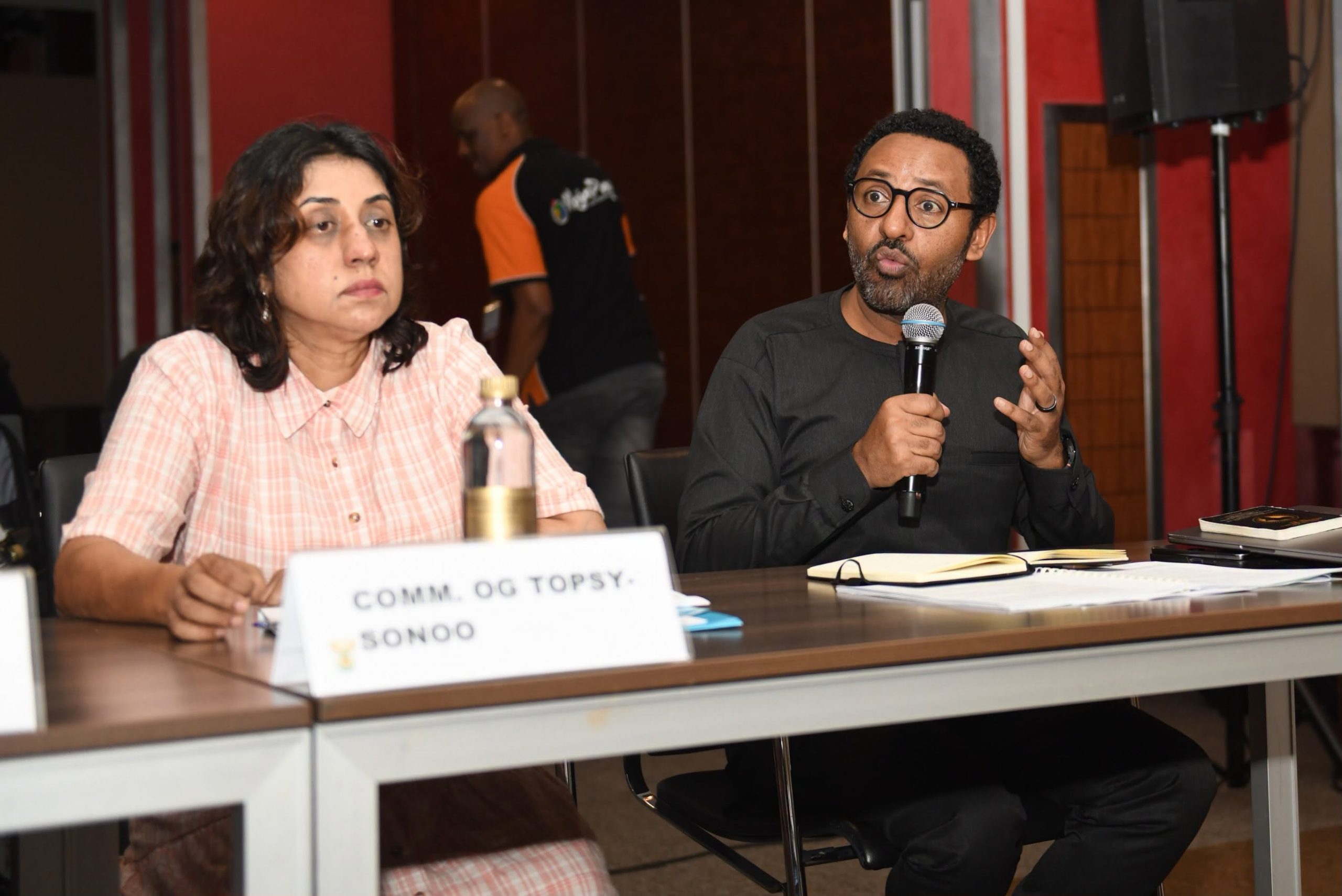
The International Press Institute (IPI) calls on South African authorities to act on the concerns that the African Commission on Human and Peoples’ Rights (ACHPR) identified during its promotion mission to South Africa from September 28 to October 2, 2026. IPI urges the government to conduct thorough and independent investigations into cases of abusive litigation against journalists and environmental defenders, and to hold perpetrators to account.
In its preliminary observations and recommendations, the ACHPR identified the need to strengthen protections for journalists and environmental human rights defenders and address the use of Strategic Lawsuits Against Public Participation (SLAPPs). These concerns match what IPI has documented, including through its work to strengthen climate and environmental journalism across Africa.
The ACHPR mission included Solomon Ayele Dersso, who serves as Commissioner Rapporteur on the human rights situation in South Africa and as Chairperson of the Working Group on Extractive Industries, Environment and Human Rights Violations in Africa, and Ourveena Geereesha Topsy-Sonoo, the Special Rapporteur on Freedom of Expression and Access to Information in Africa. The mission assessed the state of human rights in the country, including freedom of expression, access to information, and peoples’ rights to natural resources and a healthy environment.
The delegation noted the use of SLAPPs and a rise in violence against environmental defenders and journalists, among other aspects. In May 2026, IPI published a report examining the use of SLAPPs against climate and environmental journalists across Africa, including in South Africa. Judicial harassment of journalists in South Africa is on the rise, taking various forms including SLAPPs, protection orders, and gag orders among others. Such legal actions impose significant financial and legal burdens on journalists and media organisations, and can discourage reporting on powerful business interests, environmental damage, and the use of natural resources.
The mission also noted increased violence surrounding the anti-immigrant protests, which echoes IPI’s own findings.
IPI documented an increase in attacks against journalists covering these protests in South Africa between April and June 2026. News24 investigative journalist Khaya Koko has faced online harassment and death threats this month after Jacinta Ngobese-Zuma, leader of the March and March anti-immigration movement, published his phone number on her Facebook page. Climate and environmental journalists in South Africa also struggle to access environmental information, as highlighted in IPI’s latest report. These incidents underscore the need for effective measures to prevent threats and attacks, investigate abuses, and ensure that journalists can meaningfully carry out their work without fear of intimidation or violence.
The ACHPR’s call for effective measures to protect journalists and environmental human rights defenders, and to review existing protection frameworks to reduce violent attacks and exposure to SLAPPs by large companies, is an important recognition of the risks faced by those reporting on matters of public interest.
In July 2026, the ACHPR adopted a resolution on the need to undertake a study on the use of SLAPPs in Africa. South Africa should engage with regional mechanisms to advance regional dialogue and coordinated responses to abusive litigation. The government should also enact anti-SLAPP legislation to protect journalists, activists, and human rights defenders, and also convene a multi-stakeholder working group to assess the prevalence, patterns, and impacts of SLAPPs and identify gaps in existing legal and policy frameworks.
IPI also urges the authorities to review existing frameworks for the protection of journalists and environmental human rights defenders, strengthen prevention and accountability mechanisms, and ensure that those who threaten or attack journalists are held accountable.