Media freedom in Serbia remains trapped in a downward spiral amidst record levels of physical violence against journalists, death threats and online smear campaigns, alarming levels of impunity, and tight political control over the media landscape, a coalition of media freedom organisations including IPI concluded.
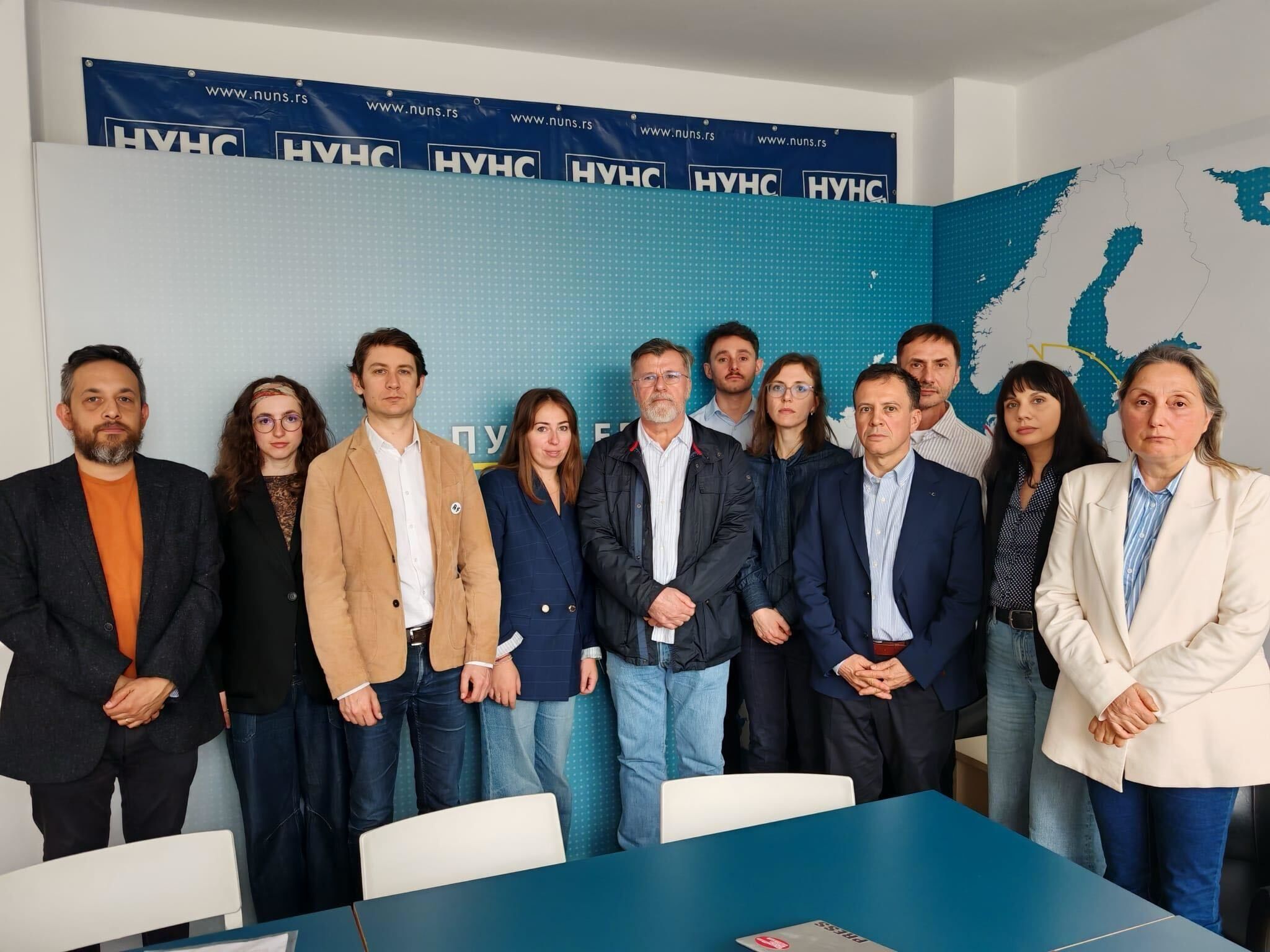
Following a two-day mission to Belgrade on 26-27 March, IPI and fellow partner organisations of the Council of Europe’s Platform for the Safety of Journalists and the Media Freedom Rapid Response (MFRR) assessed that the past year had seen a continued deterioration, leaving the country in a prolonged and worsening press freedom crisis.
In absence of the recognition by state officials about the severity of the current situation for the safety of journalists, the delegation warns that chances of further escalation in the severity of attacks against journalists remain dangerously high.
Multiple reports of journalists being attacked while reporting on the local elections held in 10 municipalities on Sunday 29 March, after the mission concluded, reinforce the delegation’s findings. The use of violence to restrict reporting and the absence of protections fosters a toxic environment that severely hinders the ability of journalists to work.
——————-
The mission came at a time of unprecedented physical attacks on journalists and rampant online smear campaigns, led or amplified by influential members of the ruling party. Following the solidarity mission conducted by the MFRR in April 2025, the situation has worsened, despite repeated calls for action. Since the deadly collapse of Novi Sad train station canopy in November 2024 and the nationwide protests that followed, 294 press freedom violations targeting 513 media professionals and entities have been documented on the Mapping Media Freedom platform. During this time, Serbia has also been among the countries in Europe with the highest number of press freedom alerts on the CoE Platform.
Following meetings with journalists, editors, trade unions and associations, the Supreme Public Prosecution office, the police, government and parliamentary officials, media outlets, the public service broadcaster, the international community and civil society bodies, the delegation is fearful that journalists are caught in a spiral of violence with few protections in place.
The media freedom environment in Serbia is defined by physical attacks – often perpetrated by those charged with protecting journalists – verbal threats, including death threats, incitement to violence and divisive rhetoric, as well as extensive media capture. Violations also extend online; alongside online smear campaigns, coordinated bot attacks on social media accounts of independent media outlets and journalists, and Distributed Denial of Service (DDoS) attacks on news websites have emerged as new weapons of censorship. Unaccountable use of spyware against journalists and media workers, and the lack of swift and independent investigation into the cases remain an alarming concern that deserves serious attention from the authorities. So far, no accountability has been secured. The widespread violations have been documented in the alerts published on the Council of Europe Platform and Mapping Media Freedom platform, and confirmed by first hand testimony from journalists from print, broadcast and online media.
During a meeting with Ana Brnabić, the President of the National Assembly of Serbia, the delegation discussed the climate for media freedom in Serbia and called on the authorities to live up to the heightened responsibilities of those in power to avoid discrediting, demonising and targeting journalists and condemn all attacks. While she told the delegation she was aware of specific high-profile threats to journalists and the heinous legacy of impunity exemplified by the killing of Slavko Ćuruvija, this did not appear to extend to the full spectrum of threats made to journalists, including by the ruling party and amplified by pro-government media tabloids, social media and supporters of the party.
Ms Brnabić committed to improve the government’s response rate to alerts published on the Council of Europe Platform. Since the platform’s launch in 2015, 61% of alerts from Serbia have not been responded to. The non-response rate in 2025, coinciding with the documented increase in alerts, was 85%. The delegation welcomed this commitment, but reiterated our request that Ms. Brnabic halt political attacks and condemn them, if they come from others, as a vital first step in rebuilding trust in the state’s willingness to improve media freedom in the country.
The increased violence against the press sparked by the nationwide protests in response to the November 2024 Novi Sad canopy tragedy, and the heavy state response that followed, has worsened through 2025 and continues into 2026. The Supreme Public Prosecution Office confirmed that there had been a 115% increase in the number of cases referred to it regarding media workers and a 367% increase in those related to physical attacks. This spike in criminal threats has been met with shocking levels of impunity. In 2025, only three convictions of those responsible for criminal attacks on journalists were secured by judicial authorities. A key factor, the delegation concluded, has been the continued breakdown of both the rule or law and the dedicated systems for the protection of journalists in Serbia. Poor response by the police to prosecutors’ requests concerning attacks on journalists results in the systematic failure to gather sufficient evidence to allow public prosecutions.
The role of police is central to the question of journalist safety. However, when meeting the Ministry of Interior, the Belgrade City Police Directorate and the Criminal Police Directorate, the delegation was alarmed by the absence of any acknowledgement of the severity of the issue and the failings of the police force when protecting journalists or investigating violations aimed at journalists. The delegation was not informed about a single case of a police officer who has been held responsible for allegations of misconduct or their failure to act. Even when presented with concrete and well-documented examples of police perpetrating attacks, the law enforcement representatives did not respond in a manner that would suggest a willingness to learn from these failings to fulfil their legal responsibility to protect journalists.
At the systemic level, the delegation expressed continued concern over the non-functioning of the Regulatory Authority for Electronic Media (REM) Council. The absence of a functional and independent REM Council represents a severe hindrance for the effective regulation of the overall electronic media and the licensing process. The situation also impacts the governance of Radio Television of Serbia (RTS), the public service broadcaster, as well as its oversight mechanisms. With the tenure of four members of the RTS board expiring in June, as well as a general election expected soon, the absence of the REM Council or any timeline by which it will be appointed will continue to embed uncertainty within RTS and the broader media space. In the meeting, Ms Brnabic expressed frustration over the situation and the desire to find a solution, in cooperation with international bodies. The delegation stresses that for credibility of the process to be acceptable under both Serbian law and EU accession progress mechanisms, the election must result in the appointment of a professional, pluralistic and ultimately independent body which acts in the public interest rather than in defence of political interests. These principles are absolutely non-negotiable for the process.
The threat landscape facing journalists is diverse and complex. Increasingly, civil and criminal legal actions are deployed against journalists to curtail their reporting, through the threat of costly and time intensive court proceedings. Data held by the National Anti-SLAPP Working Group has identified 48 SLAPPs targeting journalists, editors, publishers and the media since 2020. Investigative outlet KRIK is currently facing 14 legal actions. While prominent outlets may be able to respond through public solidarity actions and receive funding support secured through crowdfunders to mount a defence, for local outlets, who are already struggling economically, an abusive legal action may be enough to shut down their reporting. The Council of Europe Recommendation on countering the use of SLAPPs establishes a detailed roadmap to ensure member states, such as Serbia, can meaningfully tackle abusive lawsuits and protect journalism. Ms Brnabić referenced an eagerness to address this issue and these recommendations provide a strong starting point.
Despite clear data from Serbia’s own judicial authorities about the high numbers of attacks on journalists, following its meetings, the mission identified a fundamental disconnect between the seriousness of the situation on the ground and the assessment and response of the authorities. Clear political will is needed to break the downward spiral and ensure all attacks on the media are properly sanctioned under the law. Until then, and until political pressures on independent journalism are reduced, media freedom will continue to suffer, undermining Serbia’s EU accession aspirations.
The mission partners will publish a report outlining findings and providing recommendations to the Serbian authorities, which will also be shared with the Council of Europe, European Union and the Organisation for the Security and Cooperation (OSCE).
The mission was led by Article 19 Europe and joined by the Association of European Journalists (AEJ), Committee to Protect Journalists (CPJ), European Broadcasting Union (EBU), European Federation of Journalists (EFJ), European Centre for Press and Media Freedom (ECPMF), Index on Censorship, International Press Institute (IPI), Osservatorio Balcani Caucaso Transeuropa (OBCT) and Reporters Without Borders (RSF).
Serbia: Media freedom mission to probe longstanding challenges and advocate for reform
The mission was jointly conducted as part of the Media Freedom Rapid Response (MFRR), a Europe-wide mechanism which tracks, monitors and responds to violations of press and media freedom in EU Member States and Candidate Countries.