The European Correspondent is a not-for-profit pan-European media outlet that creates high-quality, independent journalism for their community of 80,000 newsletter subscribers. They are driven by the belief that Europe’s biggest challenges – climate change, migration, and AI – can only be solved if Europe acts together. Through their correspondents from every country in Europe, the outlet combines local expertise with a European perspective to help readers grasp the institutions and patterns that affect them.
In the Incubator, The European Correspondent will work on a monthly print magazine to diversify their content delivery and the media’s revenue model.
Evergreen journalism made for your pocket
The team noticed a growing desire among their community to engage more deeply. Many of their articles are evergreen, better suited to a magazine format than for breaking news. Yet, launching a traditional magazine felt impractical. It takes a lot of extra resources, and producing images and figuring out logistical and economic models behind it, especially to be distributed at a European scale.
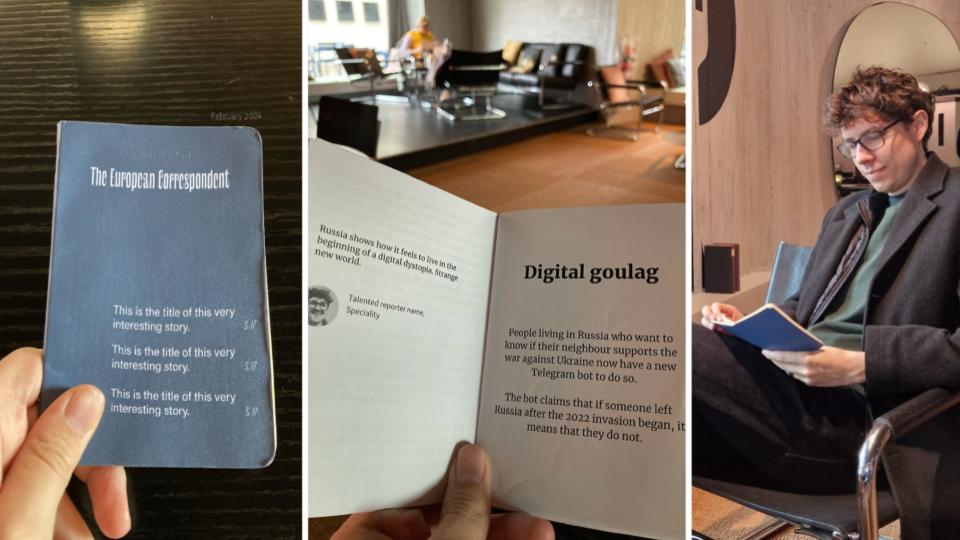
To nail down what this product can look like, European Correspondent surveyed over 2000 readers and held internal discussions, landing on a unique format: the “Pocket Paper.” Designed to fit in a purse or pocket, it’s meant for those small moments, like waiting for a friend at a café, where readers might otherwise reach for their phones and scroll mindlessly.
From market research to prototyping and launching
European Correspondent set a benchmark of approximately 3,000 paid yearly subscriptions as the threshold for a confident launch. However, their financial modelling indicates the project can be self-sustaining—including editorial costs—at 1,200 to 2,000 subscribers, with a monthly price point of €7–10.
Demand side of the equation was validated throughout the incubator: informal audience testing during and after the Vienna bootcamp revealed immediate understanding of the format, with €7–9.99 seen as a fair price and strong enthusiasm for the pocket-sized concept. Market research also highlighted growing evidence of demand for physical journalism products, for example The Onion’s print edition and letter-based subscriptions like The Cloud Report or The Atlantic in print —all suggesting strong potential for high-quality, analogue journalism.
Fitting the Pocket Paper into the revenue model
The European Correspondent is reader-funded, but their current donation model has a structural limitation: most contributions are one-time and relatively small. The Pocket Paper is designed as a retention tool converting free newsletter readers into recurring-paying subscribers through a tangible, physical connection to their journalism.
“It deepens the bond with our most engaged readers”, explains Philippe Kramer, Publisher and co-founder, “something you own and carry with you works differently from another email; it acts as a visible, word-of-mouth marketing asset, and establishes a third revenue pillar alongside donations and advertising”.
What’s next?
After running the numbers and found that for the project to be viable, production and shipping costs needed to stay below three euros per issue. They also discovered that achieving high quality was surprisingly challenging, given the format’s uniqueness.
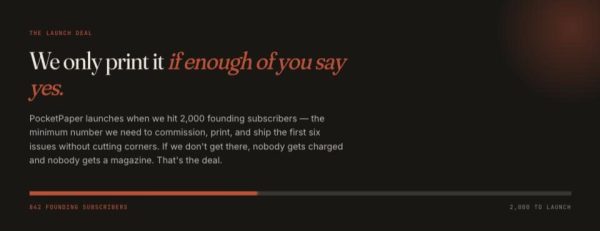
Once launched and in the long term, the Pocket Paper has the potential to help fund the newsroom: the team estimates that within three years, it could contribute one-third of their annual revenue. Right now, the European Correspondent has secured a printing partner and a shipping solution, and the margins are sufficient to make the project sustainable. Their next step is asking the readers: they will launch only if 3,000 people commit to a yearly subscription upfront. If not, the idea will be set aside for another time.
Helping the team in the process is their IPI coach, Yerbolat Bekbau, who is now also a Head of Marketing for the European Correspondent, as a result of their productive collaboration.
 Source: European Correspondent
The New Media Incubator is part of the Media Innovation Europe programme (MIE), made possible with the support of the European Union.