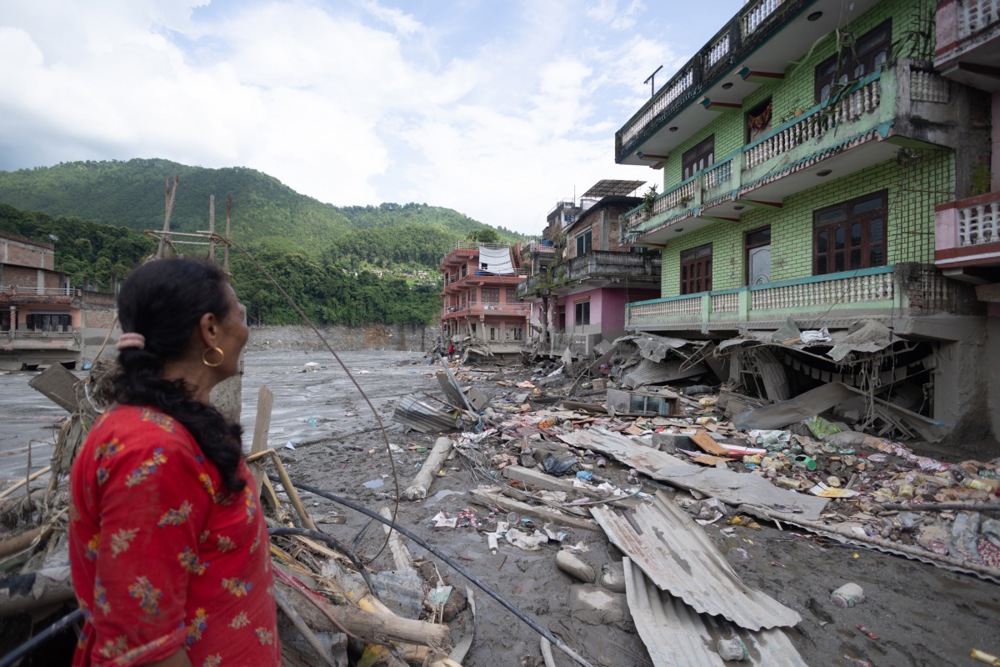
The International Press Institute (IPI) stands with the journalists of Nepal affected by the Himalayan flood disaster and calls on the international community to ensure support for local media is part of the humanitarian response. IPI also strongly condemns the Chinese government’s censorship of news from Tibet, and urges the diplomatic community to press for journalists’ access to the affected areas.
On the morning of August 26, flash floods swept a stretch of the Trishuli River in Nepal and destroyed the Gyirong border crossing with neighboring Tibet. At least 1,114 people have died in Nepal and nearly 4,000 more are missing, according to Nepal’s disaster agency. Chinese authorities reported 21 deaths and at least 546 missing in Tibet.
The situation remains fluid, but four Nepali journalists, including the owner of the local outlet Shilapatra, are still out of contact, according to Press Council Nepal. Thirteen media outlets also sustained damage in the floods and have been unable to resume operations, according to local reports. Most are local radio stations serving the worst-hit districts, among them Radio Trishuli, Radio Rasuwa FM, Radio Langtang, and Nuwakot FM.
“The government should be proactive in supporting local media, determining the whereabouts of missing journalists, and assisting their families,” IPI Nepal National Committee Chair Taranath Dahal said.
Across the border, Chinese authorities moved within a day of the flood to control what could be published. Censors deleted eyewitness videos from social media, and the Ministry of Public Security announced 10 cases against people who had posted figures for the dead and missing.
Human Rights Watch reported that state media journalists and social media influencers were warned not to report on casualties unless their accounts matched official announcements. Several smaller state outlets reached the disaster zone and published witness interviews. Those articles came down within hours.
Foreign journalists cannot report from Tibet independently. Beijing has restricted their entry since 2007 and rarely grants permission to travel there. The Australian Broadcasting Corporation’s China correspondent was refused a permit to cover the disaster, and reported that other foreign journalists were turned down as well.
“Journalists are part of the emergency response in a disaster and they cannot do that work without support and resources,” IPI Executive Director Scott Griffen said. “Rebuilding media outlets that have been damaged or destroyed must be central to the recovery effort. Chinese authorities should also let journalists into the affected areas of Tibet so that people there can be heard.”
With communications infrastructure down, the full scale of the destruction remains unclear on both sides of the border. Nepal’s forecasters warned on September 1 of further flash floods in Nuwakot and Rasuwa, and China’s Ministry of Water Resources has warned of ongoing risk of fresh glacier collapse near the border.